The U.S Space Force has awarded a series of contracts to five companies as it looks to reap the benefits of a a more diverse multi-vendor architecture approach related to its Space Data Network (SDN). The five companies selected were Amazon LEO for Government, Lockheed Martin, Northrop Grumman, Rocket Lab and York Space Systems. The agreements were valued at $12 million each for a total of $60 million. The U.S. Space Force announced these awards, Aug. 13.
The agreements come under an acquisition strategy under the Space-Based Sensing and Targeting (SBST) Portfolio Acquisition Executive (PAE). This strategy is designed to evolve how the military procures and integrates satellite communication technologies. These awards are the outcome of the SBST PAE and Space Systems Command (SSC) establishing the groundwork for a highly resilient, open-architecture SDN.
To transition to a fully diversified, resilient architecture, the U.S. Space Force is utilizing multi-vendor integration efforts to plan the onboarding of new providers. This approach it says requires deliberate planning, strategic investment, and deep cooperation across the industry to build the standardized physical and data interfaces, digital models, and security protocols needed to integrate new entrants. To execute this transition, the SBST PAE leveraged the recently established Space Data Network consortium to competitively award five companies with a two-part complementary set of OTA agreements to form a unified strategy.
In May of this year, SpaceX won a huge $2.29 billion deal to deliver this SDN Backbone. The SDN Backbone is a pLEO satellite constellation which functions as an integrated network, providing robust, resilient, high-capacity, and low-latency data transport for the Joint Force.
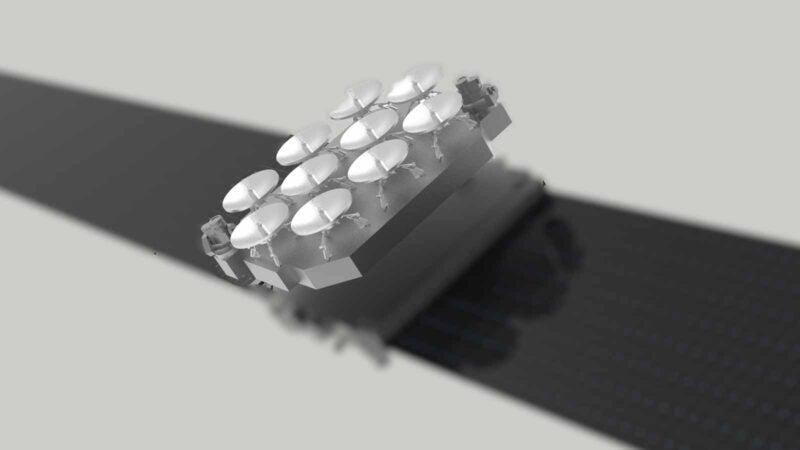
The first part (of these deals) focuses on demonstrating both ground-to-space and space-to-space data transport between vendor systems. To achieve this, five fixed-price contracts with a six-to-nine-month period of performance were awarded to prototype and demonstrate multi-vendor interconnectivity across the SDN Backbone. These contracts will be valued at $10 million each. The second part operationalizes these connections in orbit. To achieve this, five OTA agreements with a six-month period of performance were awarded to seed the development and fielding of Space Exchange Point (SEP) satellites. These OTAs will be valued at $2 million each
“We have to break away from the old way of doing business, which too often locked the government into single-source vendors for decades. By investing in standardized interfaces now, we are creating a clear runway for any capable and innovative company to come in and compete. It keeps the playing field level and ensures we can constantly bring the best commercial technology to our missions,” U.S. Space Force Col. Ryan Frazier, acting Portfolio Acquisition Executive for SBST, said in a statement.