Measat calls for sovereign space capabilities to be a national investment priority in the country’s 2027 budget process. The Malaysian regional satellite operator released five priorities for the budget process on Tuesday, calling for long-term infrastructure investment in the nation’s space industry, including public-private partnerships for multi-orbit satellite infrastructure.
In his five priorities, Measat COO Yau Chyong Lim also highlighted the potential for expanding the use of Earth Observation (EO), satellite IoT and AI for disaster management, maritime surveillance, precision agriculture, and rural healthcare. He also called for the government to facilitate access to regional and international markets for Malaysian companies.
The operator reports the country’s space industry generated 6.2 billion Malaysian ringgit ($1.5 billion) in revenue from 2017 to 2024, and is expected to exceed 10 billion ringgit ($2.5 billion) by 2030.
“Budget 2027 can play a pivotal role in translating this ambition into sustainable economic growth, technological advancement and national resilience,” Lim said. “Malaysia already possesses a strong foundation of sovereign orbital rights and spectrum resources, satellites and ground infrastructure, engineering expertise and regulatory capability.”
Lim recently spoke about the importance of national priorities during World Space Business Week.
“We believe we’re going to be the trusted partner for our government, and we focus a lot on the sovereign capability, and to ensure that all of this critical and strategic infrastructure is there when we need it,” Lim said. “We continue to leverage on our strength in the country.”
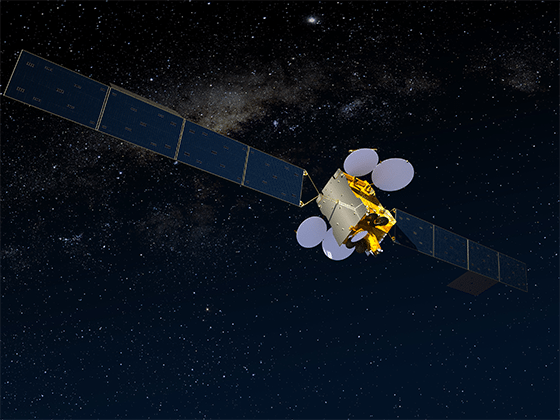
Measat has a near-term CapEx focus to replace MEASAT-3b, which is expected to reach end of life around 2029 to 2030. Earlier this year, Lim told Via Satellite the operator is in the RFP stage and expects to conclude the evaluation process “in the near term.” The goal is to anchor the company’s core services at the 91.5 degrees East orbital slot while incorporating more advanced, flexible payload capabilities, including in-orbit frequency reconfiguration, Lim said.