PARIS — Space launch competitors think it’s time for a new model of pricing in the launch market. Against the backdrop of SpaceX winding down the Falcon 9 launch program, other launchers say the market is on the verge of a reset.
“The customer got comfortable with a high reliability and a low price, that frankly did not support the launch market,” Firefly Aerospace Vice President of Strategy Michael Creech said this week at World Space Business Week. “You’re seeing launchers move away to developing solutions with better revenue. This tells you this subsidized cost-per-kilo model wasn’t supporting launch companies, which led to the current day crisis of a supply shortage.
Creech said the industry will “reset” over the next six months to two years. “Hopefully the new normal will be a growth environment for launch technologies and not another race to the bottom on price,” he added.
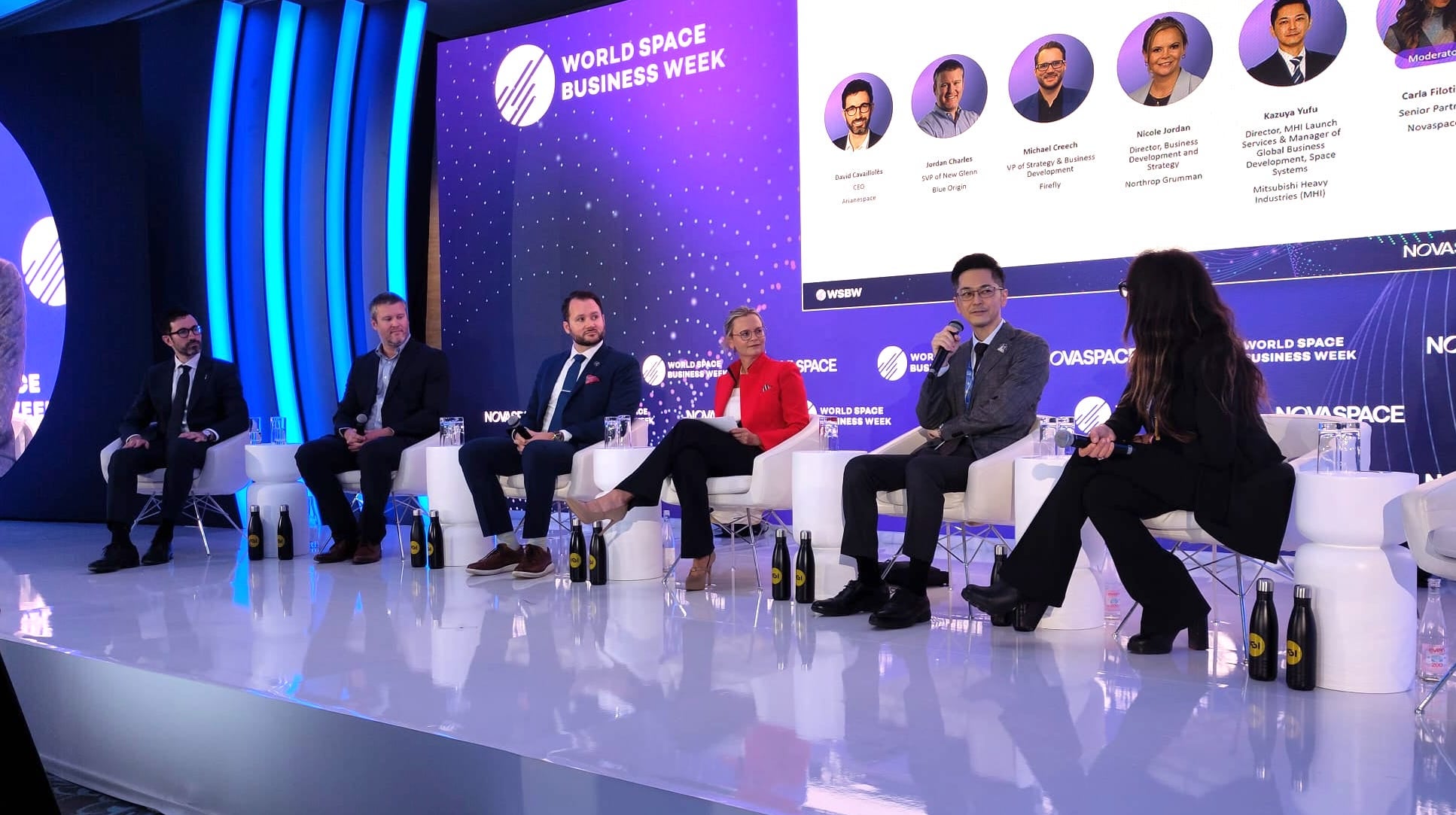
With SpaceX leadership notably absent from the panel to address either Falcon 9 or Starship, launch competitors all eager to ramp up their cadence analyzed how the market is changing.
“If and when our cadence aspirations come true, the players on this stage 10 years from now [we] won’t be talking about price-per-kilogram — they’ll be talking about a whole different orbital logistics model,” said Jordan Charles, senior vice president of New Glenn for Blue Origin.
Creech’s revolutionary position also convinced Nicole Jordan, director of Global Business Development and Strategy for Space Launch and Missile Defense at Northrop Grumman.
“Price per kilo has been a useful metric in the past, but our customers are now telling us they’re concerned about risk and access to non-congested launch sites,” she said.
Creech was adamant that rock bottom launch prices were an unsustainable, nascent weak link in the space market. “The race to the bottom is breaking right now, and it has to change,” he explained.
While reluctant to mention SpaceX, the reset that Creech alludes to references the “winding down” of Falcon 9 and Falcon Heavy that Elon Musk has warned about this summer. This week, Space Intel Report reported that prospective SpaceX customers are being told the company is no longer accepting orders new commercial Falcon 9 reservations.
Last year, SpaceX completed 165 orbital launches, accounting for nearly 51% of the global total of launches, according to a BryceTech report. While most of those launches and satellites were for SpaceX’s own Starlink constellation, SpaceX performed 43 commercial missions in 2025.
The Path to Cadence
All panel speakers were eager to assure the market of their trajectory toward a fast and reliable cadence of launch:
- Blue Origin said it is now rapidly rebuilding its launch pad after the explosion of the New Glenn rocket in May earlier this year, explaining it was days away from re-stacking its access tower. Charles explained that progress toward its future flight rate starts in the factory, where production has not stopped. Its 9-4 super-heavy configuration for the New Glenn is being built fast, with a goal to “operate north of 100 launches a year.”
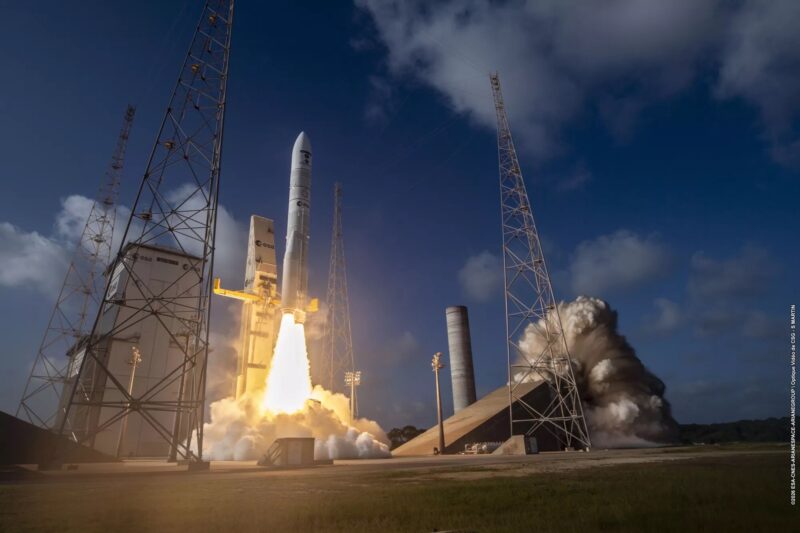
- Arianespace CEO David Cavaillolès explained “Plan A” for Arianespace is to stabilize at nine to 10 launches per year beginning in 2027. The launcher is also mulling over a “Plan B to go beyond,” which could involve 15 or more missions a year.
- Firefly Aerospace is targeting “at least” 12 launches a year, and intends to “grow rapidly beyond that,” Creech said.
- Kazuya Yufu, director of Mitsubishi Heavy Industries Launch Services cited MHI’s original target of six launches per year, which is being ramped up to seven to eight, roughly half institutional and half commercial. The company experienced a launch failure last December, Yufu insisted the company is now “back on track,” returning to flight in June.
- Jordan pointed to Northrop Grumman’s record of almost 100 launches with its Minotaur and Pegasus platforms, and its work with the Antares A330 and Eclipse rocket with Firefly, building toward a solution for the medium-lift market.
“The economics are pretty simple, it’s about getting to rate production,” Creech explained. “The higher the rate the more you can drive down the unit cost to potentially pass on to customers. The goal with Eclipse is reusability, which is another cost-cutter.”
Asked if he felt Blue Origin’s system can meaningfully compete with SpaceX, Charles said: “Sure, if you want to view it that way. We’re very focused on serving our customers and the competitive landscape is all concentrating on the same thing.”
Charles said he doesn’t expect much consolidation in the launch market, given the demand signals show there is more than enough to go around, including for smaller or new players.