Katalyst Space has been selected by a Pentagon energy investment program to take part in a space-based power beaming to remote locations, working with the U.S. Naval Research Laboratory (NRL).
Under the Advanced Scalable Growth Architecture for Robotic Deployment (ASGARD) program, Katalyst will develop and launch a robotic spacecraft that will assemble a large-format power beaming system on orbit and transmit power back to Earth, the company announced Monday.
Katalyst was selected by the Operational Energy Capability Improvement Fund (OECIF), which issues awards focused on maturing first-of-its-kind energy technologies for future warfighting platforms. Quantum space also recently received an OECIF award.
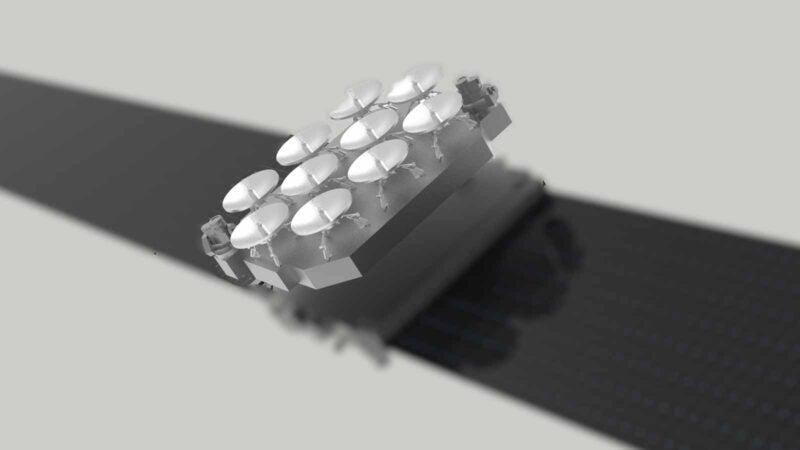
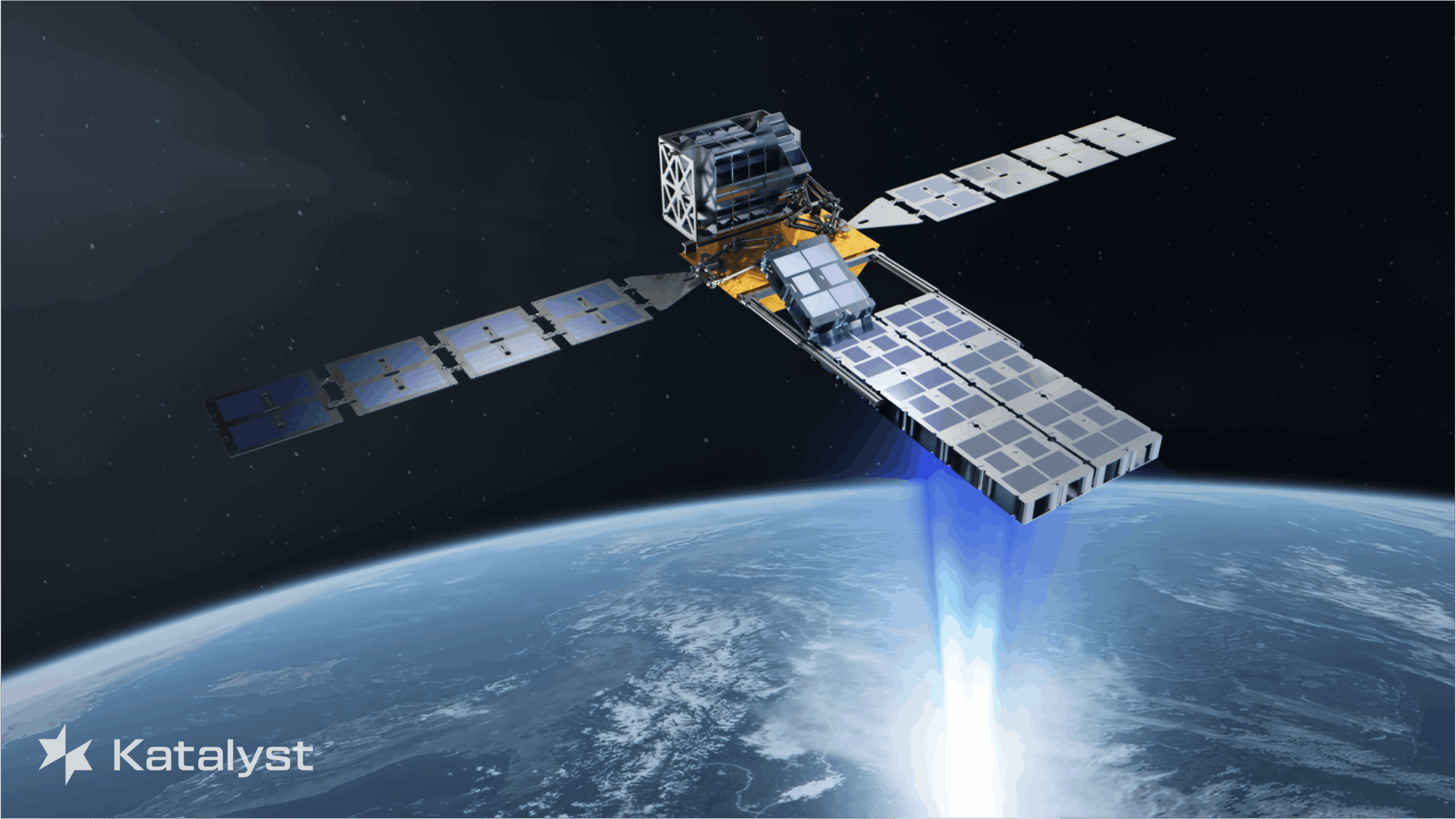
The NRL is developing modular tiles to form a large-format power beaming system. In the ASGARD mission, a Katalyst Nexus spacecraft will use robotic arms to assemble the tiles on-orbit to create the power beaming system. The tiles will then harness solar energy, convert it to radio frequency microwave energy, and transmit that energy down to Earth.
Katalyst recently had tech issues with a servicing spacecraft launched to rescue NASA’s Swift Observatory. The company has also recently won a Defense Innovation Unit (DIU) contract for a deorbit-as-a-service program. Katalyst highlighted how its Nexus spacecraft is able to serve multiple types of missions.
“This important, first-of-a-kind technology opens new pathways for operational energy in space,” Director of Operational Energy – Innovation RuthAnne Darling said. “Demonstrating this groundbreaking technology, autonomously assembling large-scale power and energy collectors in space, is the first step and a foundational one.”