As Europe works to move faster in its space defense capabilities, leaders at the Space and Defense & Security Summit say Ukraine accelerated a shift in institutional urgency yet challenges remain with building consensus, reforming procurement, and integrating dual-use capabilities.
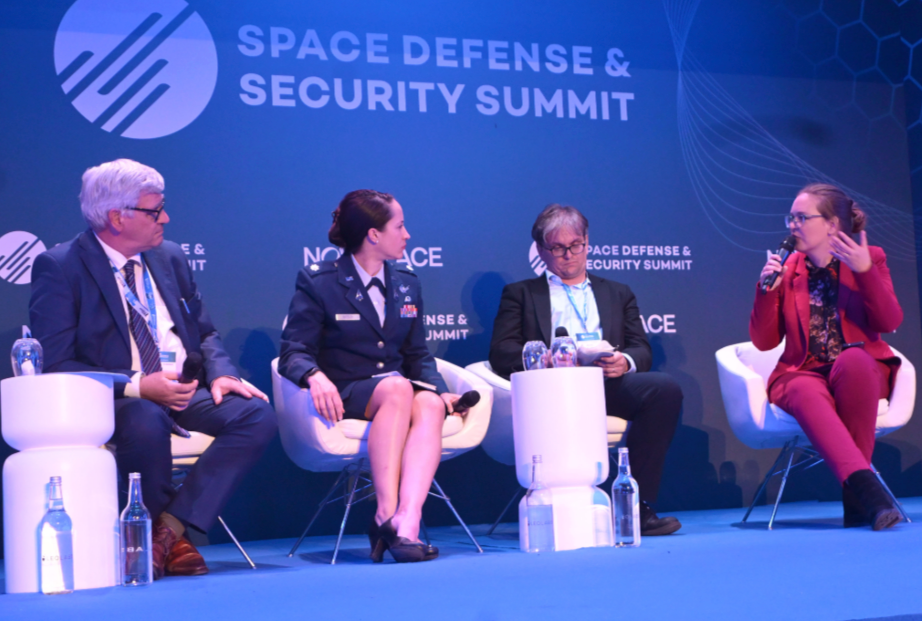
David Byrne, head of unit, Information Superiority / Capability, Armament and Planning Directorate, European Defence Agency (EDA), spoke of the importance of having the end user in the room, and given the number of member states, there are some unique challenges. Byrne said one of the key challenges was getting all 27 member states to agree on the requirements.
The conflict in Ukraine has significantly sped things up here. “Ukraine has made things much quicker to do things. Agreed military requirements used to take up to 1.5 years minimum. Recently, we have got certain requirements in about six months. Everybody realizes we need to move faster. It is speeding up relatively quickly,” Byrne said.
Byrne also spoke about the importance of standardization and certification. He called certification “a major issue” in the past, and something that still needs to be addressed.
The other big issue from an EDA perspective is access to space which Byrne said needed to be developed “yesterday.”
Nicolas Guillermin, policy officer for the European Commission, said one of the biggest challenges for the EC is to combine engineering expertise and flexible procurement capabilities.
“If we look at the satcom domain, we need to figure out the essential needs such as the guarantee of the capacity. These technologies are dual-use. This is what we discovered in Ukraine,” he said. “All of this leads to IRIS². We want a system that meets our needs. We want the private sector to invest, as they are developing the technologies. Traditionally, MoD’s have two ways to procure services, they own the satellite or procure the satellite capacity. We believe IRIS² is something in the middle. It can provide the sovereignty in the middle.”
While a number of European speakers at SDSS spoke of the need to move faster and bring times to bring capabilities down, they often look enviably at the United States and their abilities to develop space technologies quicker.
Lt. Col. Caitlin Diffley, space director and director of U.S. Space Force Innovation at the Defense Innovation Unit (DIU), said, “We build what we must and buy what we can. DIU is going to look to bring technology forward. I think we are able to succeed is recognizing there is more than one player in the discussion. We work with industry, government, etc. We ask questions like what is the flexibility on the industry piece? We want to bring the best to the warfighter. We are not looking for one solution, so using agnostic platforms, and bringing in multiple vendors and solutions.”
Making things work can be difficult, an integrating latest tech into key programs is a challenge. “I think integration is really hard and takes a lot of hard work. Ideas and tech are the fun part of what we do. Integration is a hard problem, but when it works, it is really magical,” said Diffley.
More from the Space Defense & Security Summit:
- Space Security: How Can Europe Connect the Dots Better?
- Sovereign EO Space Capabilities Are Ready to Go to the Next Level