Direct-to-device was heralded as a win for mobile network operators as a way to expand their networks without building infrastructure in remote places. Many MNOs have struck partnerships with satellite operators, or multiple satellite operators to deploy services.
Despite the partnerships underway there are still a lot of questions about how MNOs will work with satellite operators. In the U.S. and Europe, top telcos are considering banding together for satellite-to-mobile services, which is seen as a way to combat SpaceX’s dominant presence in the market and plans to go after their customers more directly. The CEO of T-Mobile recently said he expects the service to be standard in the future and “no longer a source of differentiation.”
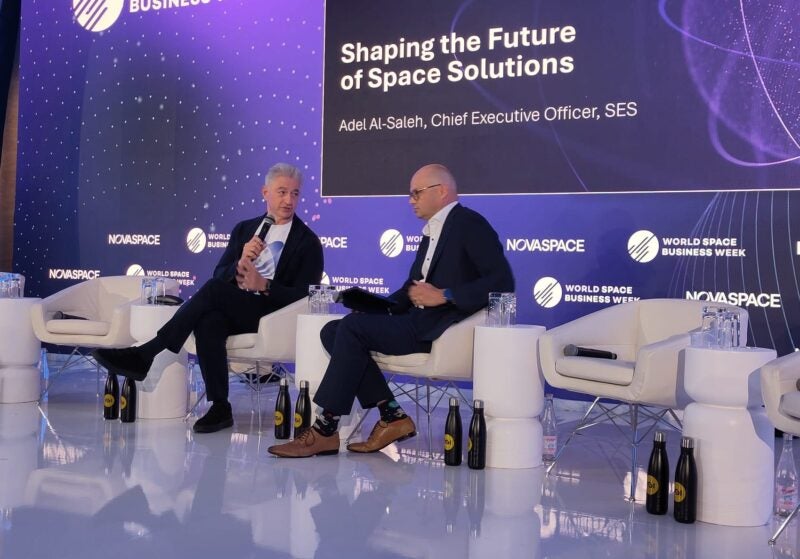
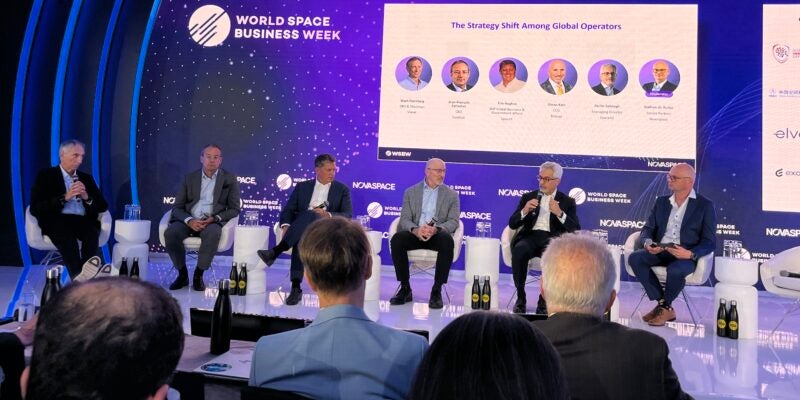
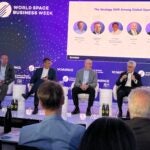
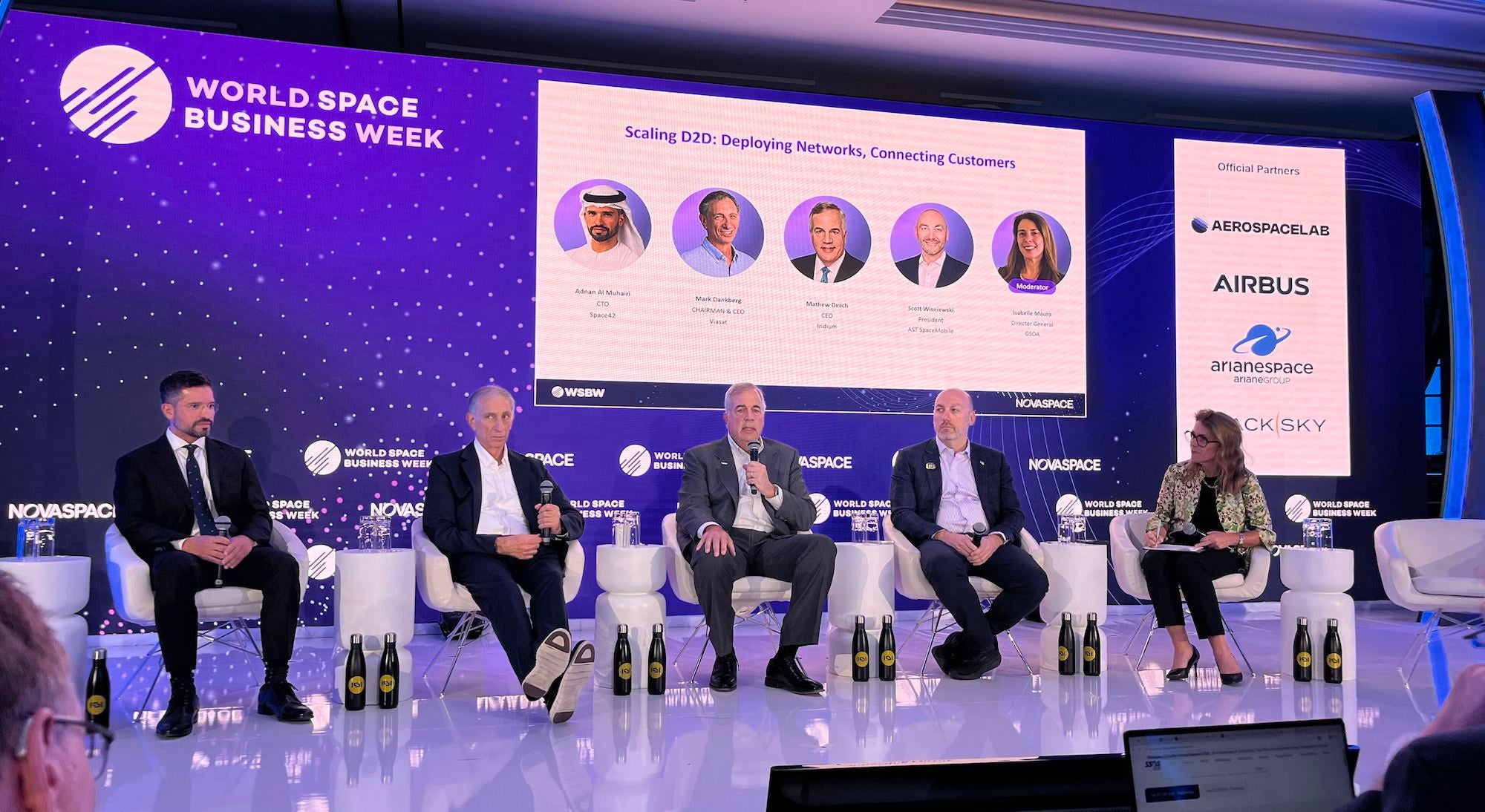
The relationship between satellite and MNOs in regards to D2D service is still being worked out. MNOs are keeping their options open, Iridium CEO Matt Desch said in a D2D discussion Tuesday during World Space Business Week.
“Vodafone is integrating multiple technologies, so is AT&T, so is Verizon. I think there’s going to be a lot of products offered to customers, and they’re not really pushing any because they don’t know which is going to win,” Desch said. They don’t know what is going to be most cost effective. They don’t know what the end users are going to prefer.”
Iridium, which is in the process of being acquired by Rocket Lab, is working toward the commercial launch of its Iridium NTN Direct service in the fourth quarter of this year. Desch said Iridium isn’t looking for new MNO and IoT operator partnerships anymore. With many agreements in the pipeline, the focus has shifted to getting them up and running, he said.
Watching the MNOs look to strike partnerships with one another, Desch said he’s fascinated as to how this market will play out.
“The mobile network operators are starting to band together in the U.S. and Europe, I find that interesting. I have no dog in any of those hunts. I think the question of who owns the customer is interesting because you don’t spend that kind of money and not own the customer,” Desch said. “Getting a little bit of revenue at the tail end somehow isn’t enough to justify some of the investments being made.”
GSOA General Director Isabelle Mauro pointed to some pending tension on the horizon between satelltie and the mobile industry on the regulatory front. MNOs have called for regulatory parity; for satellite to be regulated in the same way as terrestrial.
“Clearly, the industries are both very different in terms of business model, infrastructure, [and] investment models. Really, we are talking of two different worlds,” Mauro said. “Our members are working really hard in trying to have this dialog with policymakers to understand that.
For AST SpaceMobile, MNOs have been “in the room with us for almost a decade,” and own about 15% equity in the network, said AST SpaceMobile President Scott Wisniewski.
“Working with the wireless industry [is] something we’ve always prioritized. It’s in our DNA,” Wisniewski said. “We view ourselves as a partner of choice for the operators and D2D, and that’s just how you need to think about it. And frankly, if we don’t value us as a company or us as an industry, then others will vertically integrate over us with brands and AI.”
“For us, we think this is a land grab. We think this is a big run on building the fast and best solution,” Wisniewski added.
Equatys, the new and yet-to-be officially formed shared infrastructure company that has Viasat and Space42 as the founding partners, is meant to be built for the MNO experience and to help MNOs deploy D2D.
Adnan Al Muhairi, CTO of Space42, said the partnership approach is built to ensure the most affordable service for “hundreds of millions” of customers, to reduce barriers to entry to make the service affordable for customers.
“The infrastructure providers could really complement the MNOs by providing them the service and making the spectrum available, so that MNOs do not have to give up their existing spectrum — they would have the best of both worlds,” Al Muhairi said. “They have their existing terrestrial, and they have additional spectrum to serve for the extended coverage, these towers that we’re building in space. Ultimately, this model of success is the most efficient one that can connect billions of users seamlessly across the world.”