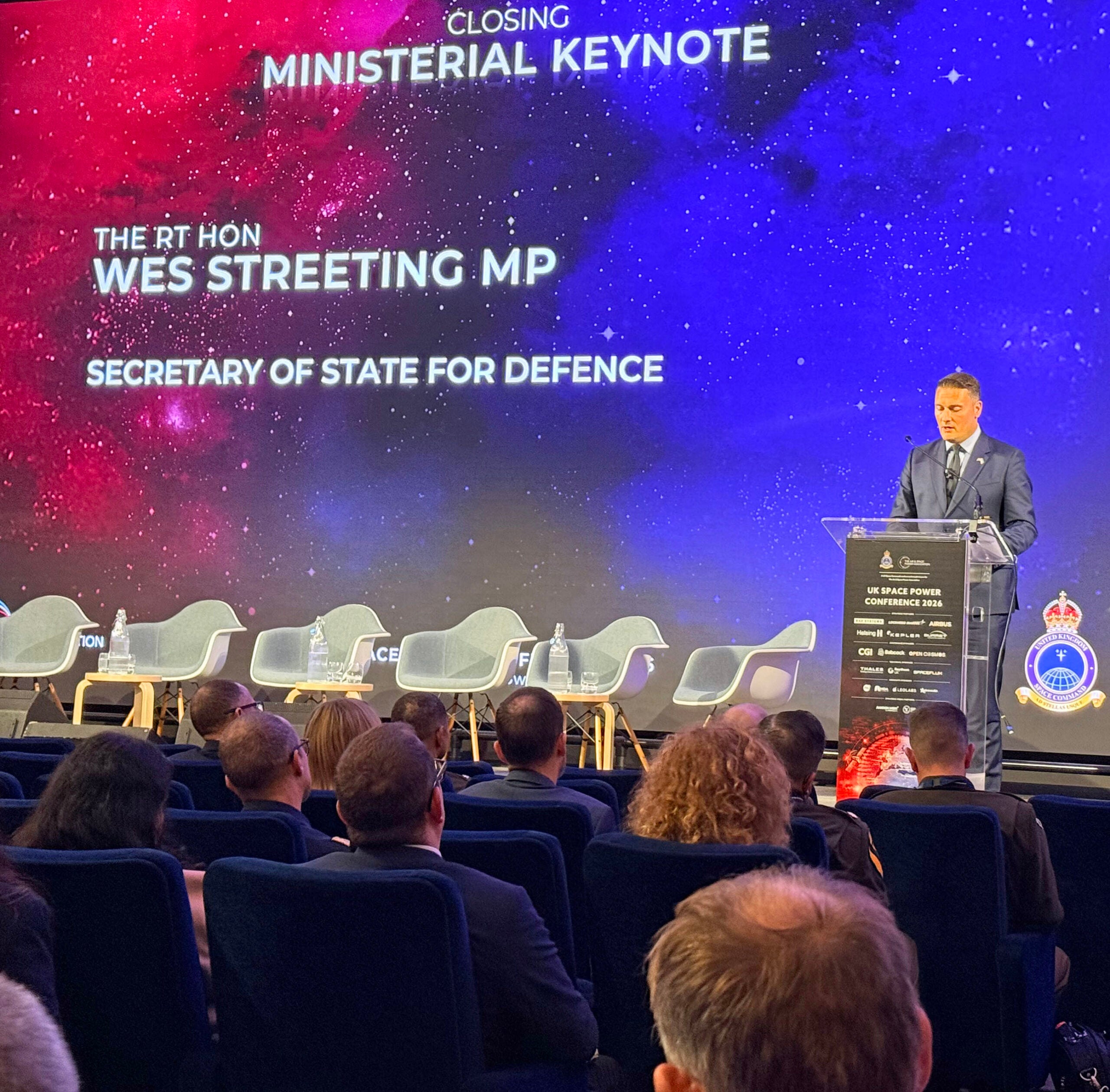
(London) U.K. Defense Secretary Wes Streeting said that the U.K. government considers satellites critical to intelligence gathering and missile warnings, and that they now underpin almost a fifth of the U.K. economy. During a keynote speech at the first ever UK Space Power Event, Streeting said the loss of GPS alone would cost the U.K economy £1.4 billion ($1.9 billion) a day. He spoke of how the U.K’s adversaries are investing heavily in weaponry that can take out its satellite systems and technology.
“Between 2019 and 2021, the combined Chinese and Russian operational satellite fleets grew by 70 percent. This year, it was revealed that two Russian satellites had intercepted the communications of at least a dozen European ones since Russia’s invasion of Ukraine in 2022. What this shows is that not only do our adversaries have the capability to threaten our national interests and national security, they also unsurprisingly have the intent and that requires us to act,” Streeting said.
Streeting admitted that in terms of conflict domains, things are moving at “warp speed”. He added, “We have to be ready for space as the next battleground. Our security is under threat in a way we haven’t had to contend with for many years. Our adversaries are seeking to divide and undermine us and the risk of miscalculation is all too real. This is as much a challenge in space as anywhere else. This domain is critical to our national security, our military operations and our everyday lives,” he said.
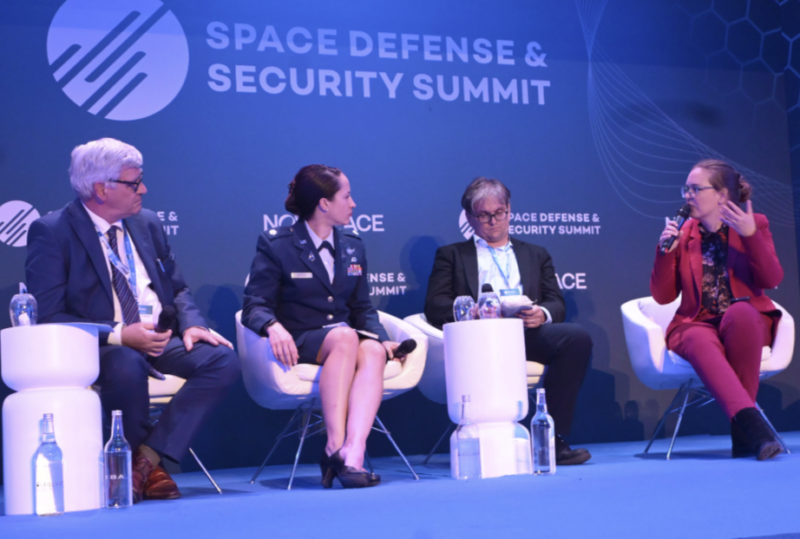
Panel Discussions
In a panel titled ‘UK Space Power in 2026’, Air Marshal Mark Flewin, Air & Space Commander, Royal Air Force spoke of “emboldened adversaries” and said we are in the midst of the “most dangerous decade”. He spoke of how the Ukraine/Russia conflict has outlasted the first world war now in terms of time. The conflict has shown the importance of space in conflict. Flewin said that integrated force is now “built on space”. There is a new thinking now as a result. In previous generations, it was all about controlling land, sea and air. “Now, we are looking at how we can control space. It is an enabler of sixth generation capabilities. Ukraine has seen massive pivots on the use of space. Ukraine is the most space enabled conflict we have ever seen. Every single element from Ukraine is ultimately based on a space proposition,” Flewin said.
He admitted that adversaries “are really testing us on a daily basis in the space domain”. Working with the commercial industry will be key here. “We will not be able to deliver the acceleration people are talking about if we don’t work with industry. I only see that thickening as we go forward. We are starting to get our arms around where the vulnerabilities are,” Flewin added.
Kata Escott, Head of Country UK and Managing Director, Airbus Defence and Space also said that the threats have changed, and that the theme that overhangs all of this is geopolitics. “This has driven huge spending in space and a much stronger need for sovereign capabilities in space. Space is extremely complex. You need to get the right blend of sovereign capabilities,” she said.
In a panel titled, ‘National Armaments Director Group Space Systems Portfolio’, speakers spoke more about investments around space and what they felt needed to happen. Rear Admiral Tony Williams, Space Portfolio Director, National Armaments Director Group said the U.K. needed to be prepared to take more risks in order to get better outcomes. “If we are truly going to embrace innovation, we are going to have to embrace the concept of failure. Decisions have been too risk averse in the past. We need to have a different response to failure. We need to have a more VC response to failure. We need to start engaging with that reality,” he said.
Kash Patel, Director Sense, Decide, Communicate and Synthetic Training, National Armaments Director Group, said with threats evolving at such a pace, there is work to do. “We have quite a lot of ground to make up. We are not agile and responsive. So, I think the simple answer is we are learning as we go. We need to be much more adaptable in recognizing those threats and adapting to them,” he said.
Michael Dowell, Director of Business Development and Product, Kepler Communications said he has seen a “noticeable shift” on behalf of governments to be more dynamic, and a “strong desire” to accommodate new technologies.
Sir Johnny Stringer, Deputy Supreme Allied Commander, Europe, NATO said one of the big issues was around training and testing exercises. “We have to invest in our commanders and staff. We have to do far more testing so we can find out what our Plan B is. Space-centric exercises are only just about becoming a thing in NATO,” he said.
In a panel titled, ‘National Security Space Investment – Is the City Asleep?’ Josh Broom, Space Policy Lead & Deputy head Strategic Effects, the U.K. MoD echoed this theme throughout the event of moving faster to respond to challenges. “We do recognize we need to move faster, industrializing faster. If we do this, then the investment and the confidence of the investment community will be there. The strategic priority of space is only going to increase in importance. Space is now an operational domain. Space is fundamental to our economic security,” he said.