This weekend, a Northrop Grumman Pegasus rocket is set to launch a servicing spacecraft in a mission to reboost NASA’s Swift Observatory before it re-enters Earth’s atmosphere.
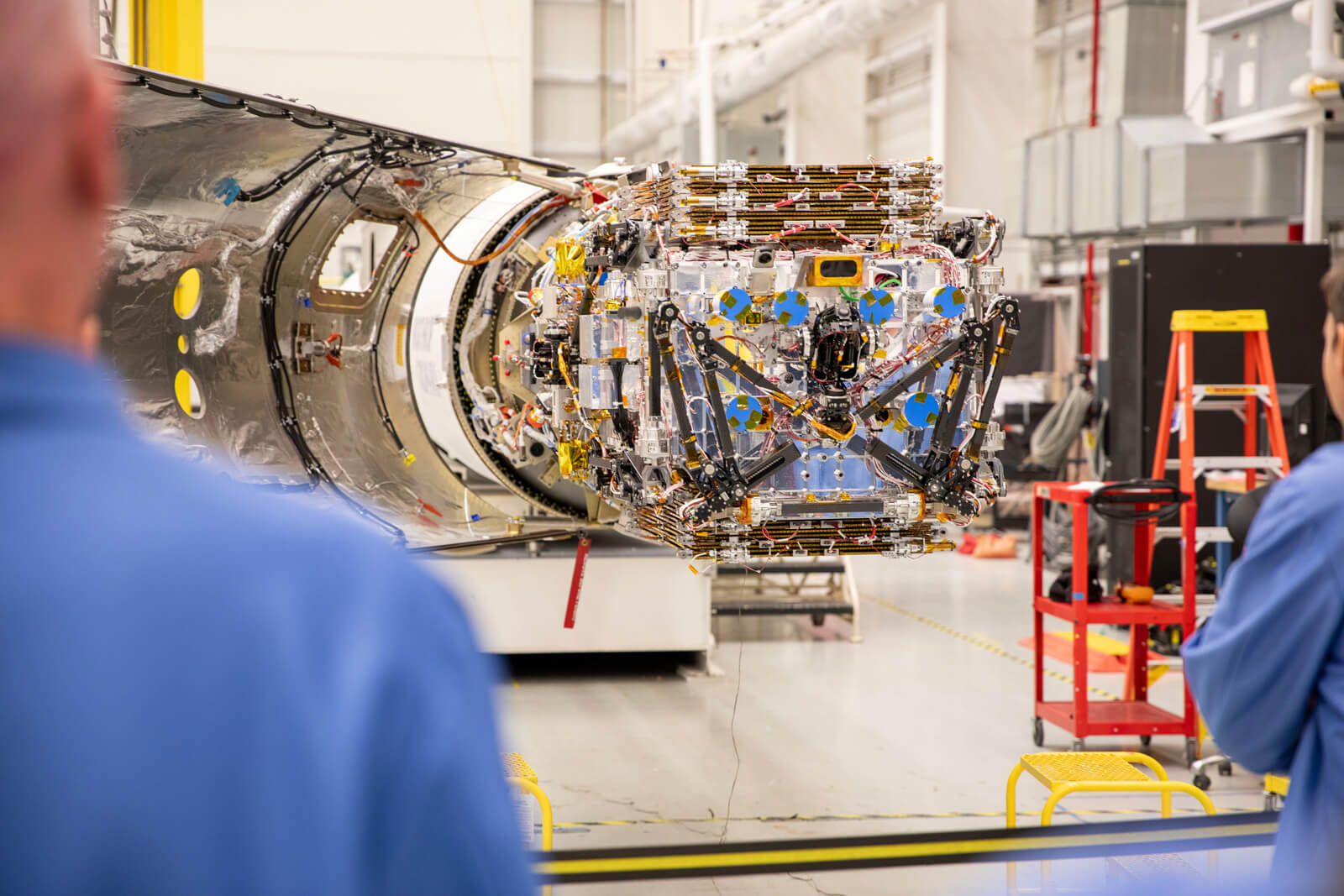
Pegasus will launch Katalyst Space’s LINK robotic servicing spacecraft, which will rendezvous with Swift and boost the observatory to a higher altitude.
If successful, this mission will be the first time a commercial robotic spacecraft captures a government satellite that is uncrewed, or not originally designed to be serviced in space, NASA said.
NASA awarded Katalyst the $30 million contract less than a year ago, in September 2025, in a bid to “race against the clock” and advance commercial servicing technology.
“What the Katalyst team has accomplished in just eight months is extraordinary,” said Ghonhee Lee, CEO of Katalyst Space. “The team designed, built, tested, and integrated a robotic spacecraft capable of performing one of the most ambitious commercial servicing missions ever attempted.”
The NASA Neil Gehrels Swift Observatory launched in 2004 and leads NASA’s fleet of telescopes in studying changes in the high-energy universe, like gamma-ray bursts. The observatory’s Low Earth Orbit is decaying rapidly because of increased solar activity.
The Pegasus XL rocket is an air-launched rocket that is released from the Stargazer L-1011 carrier aircraft. It was attached to the Stargazer aircraft at NASA’s Wallops Flight Facility in Virginia on Friday, June 12. It is set to launch from Kwajalein Atoll in the Marshall Islands, targeted for June 27.
This will be the first flight of Pegasus since 2021 and is the last planned flight for the rocket. Pegasus has launched more than 45 times since 1990, but has only had three missions in the last 10 years.
Northrop Grumman said in a statement that Pegasus was “deemed the only system able to meet all orbit, timeline, and budget requirements.”
“Pegasus has been instrumental in launching science satellites over the years, and doing this as a rapid response mission from Kwajalein Atoll truly highlights what Pegasus can do: quick assembly, testing, and global repositioning,” Steve Hollo, Northrop Grumman’s chief engineer of Pegasus, said in a statement. “The latest mission features a complete avionics upgrade to modernize the rocket while carrying forward decades of technological heritage. Plus, not being tied to a single launch site gives us incredible flexibility and responsiveness that few other vehicles can match.”