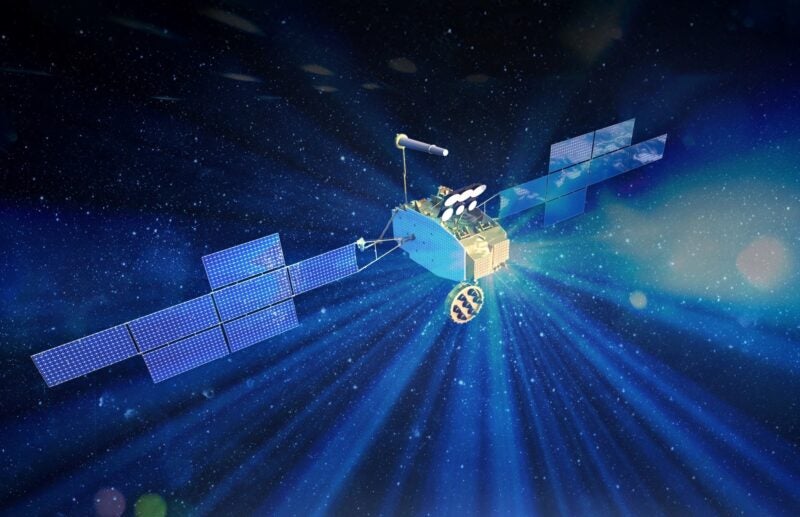
Telesat signed a $1.9 billion (U.S. dollar) contract with the government of Canada for Arctic military satcom connectivity and will expand the Lightspeed constellation by 69 satellites to fulfill the contract. Telesat announced the expansion on Tuesday, ordering the additional satellites from prime contractor MDA Space.
This is the largest contract in Telesat’s history. Telesat will provide secure military Ka-band Arctic connectivity to the Canadian Armed Forces (CAF) for the Enhanced Satellite Communications Project – Polar (ESCP-P) program.
The contract awarded by Canada’s Defence Investment Agency (DIA) is for 15 years of service including two, five-year option periods. Service is set to begin in 2028 alongside the service start of Telesat Lightspeed.
Telesat CEO Dan Goldberg told investors on Tuesday that $1.5 billion of the contract will be paid prior to the start of service, to fund the satellite expansion.
“We applaud the significant investment the government of Canada is making to protect and defend the Arctic,” Goldberg said. “The government recognizes space as a strategic sovereign capability, and as such, fast-tracked the ESCP-P program to ensure Canada could advance and protect its and its allies’ interest in the Arctic.”
This contract announcement comes after the Canadian government previously awarded Telesat an initial contract for engineering and options analysis work for the ESCP-P in December. Last month, Canadian Prime Minister Mark Carney announced the government reached an agreement with Telesat during the 2026 NATO Summit in Ankara, Turkey.
The Canadian government has also contracted MDA Space to serve as the prime contractor for an ultra-high frequency (UHF) and X-band constellation in Medium-Earth Orbit (MEO) for the ESCP-P program. Contract details are being finalized, MDA Space said.
Telesat also expects a separate agreement with the DIA for end-to-end network integration services including user terminals, ground and control infrastructure, training, and support services.
Ramping Up Lightspeed Investment
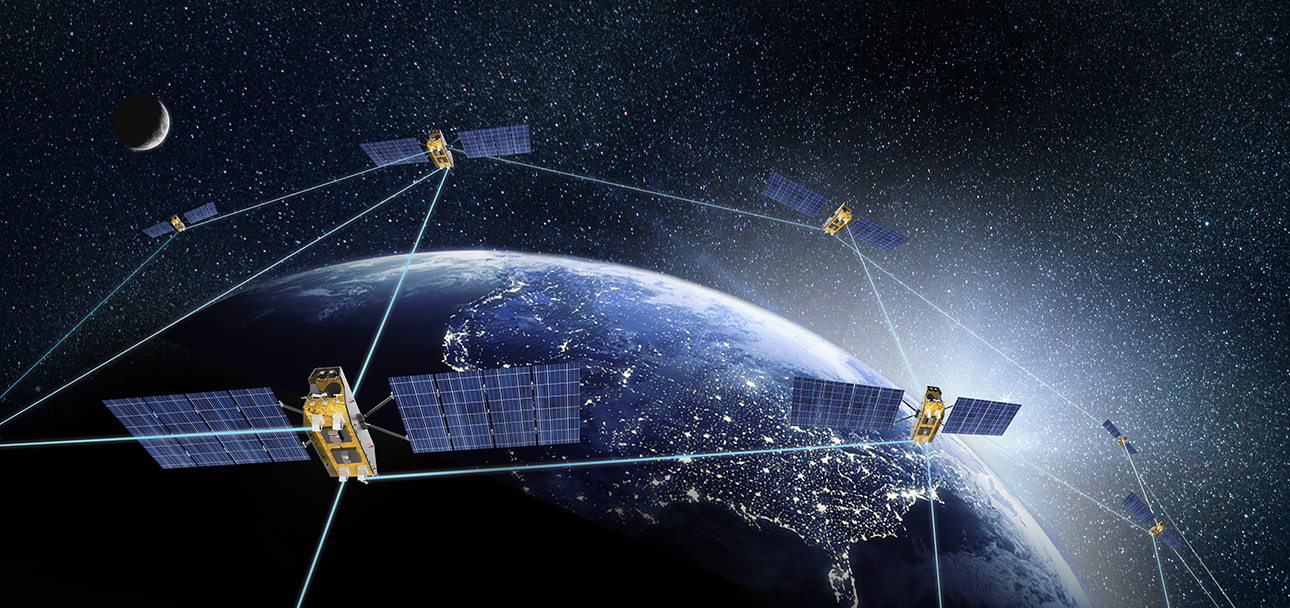
Adding 69 satellites expands the Telesat Lightspeed constellation from 156 satellites to 225 satellites that are fully funded. MDA Space’s contract expansion is worth $474 million. The additional satellites will be built in MDA Space’s manufacturing facility in Montréal, based on the Aurora broadband satellite platform.
Telesat’s previous full plan for Lightspeed was 198 satellites, but only 156 were fully funded until this announcement.
“ESCP-P effectively pulls that expansion forward, adds to it significantly, and has all of that fully funded today,” Goldberg said. “As demand continues to grow in both commercial and military verticals, and as the capacity of our initial 225 satellites starts to fill up, we expect to deploy by the end of 2032 another 70 incremental next-gen satellites, which would bring the constellation to 295 satellites.”
Telesat CFO Donald Tremblay told investors the 69-satellite expansion brings Telesat’s total expected investment in its network of approximately $5.2 billion with a contingency of $500 million — up from $3.8 billion, which included a $300 million contingency.
Telesat has already secured additional SpaceX Falcon 9 rockets to launch the additional satellites, with the exception of one final Falcon 9 launch which is being finalized.
Broader Demand for Mil-Ka
Telesat said that integrating secure Mil-Ka capabilities into Lightspeed also positions the company to support NATO members and other allied partners. Goldberg said that amid a “dramatic increase” in defense spending in NATO and allied governments, Telesat has conversations already underway to support satcom requirements for allies and partners.
“Demand for military satcom is growing at an unprecedented pace, and we believe LEO Mil-Ka capacity will be particularly useful for allied defense requirements across air, land, and sea, including unmanned platforms, as well as sovereign infrastructure to underpin military AI adoption,” Goldberg said. “Because the Mil-Ka band is exclusive to government use in most areas, it further enhances quality of service, and consumption is forecast to grow sharply.”
Telesat previously moved to add 500 MHz of Mil-Ka band spectrum to the Lightspeed program to support defense and sovereignty programs.
Goldberg cited potential opportunities beyond Canada in Germany, Italy, and Korea, all of which have sovereign LEO programs of record, in addition to the EU’s IRIS² program.
Telesat estimates the addressable market for satellite defense broadband connectivity will be approximately $43 billion by 2032.
Goldberg also cited the opportunity to use Lightspeed as a data relay network and support backhaul needs for other satellites in orbit.
Editor’s note: All dollar amounts are in U.S. dollars and are sourced from Telesat’s statements during the Aug. 4 investor call.