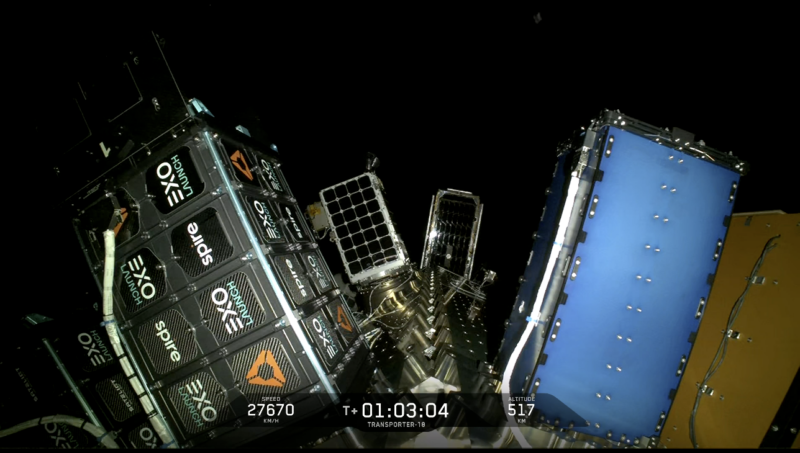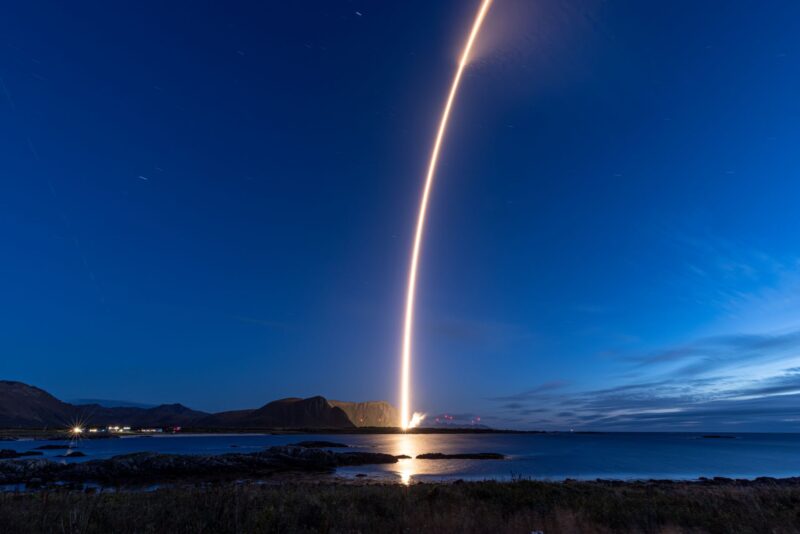
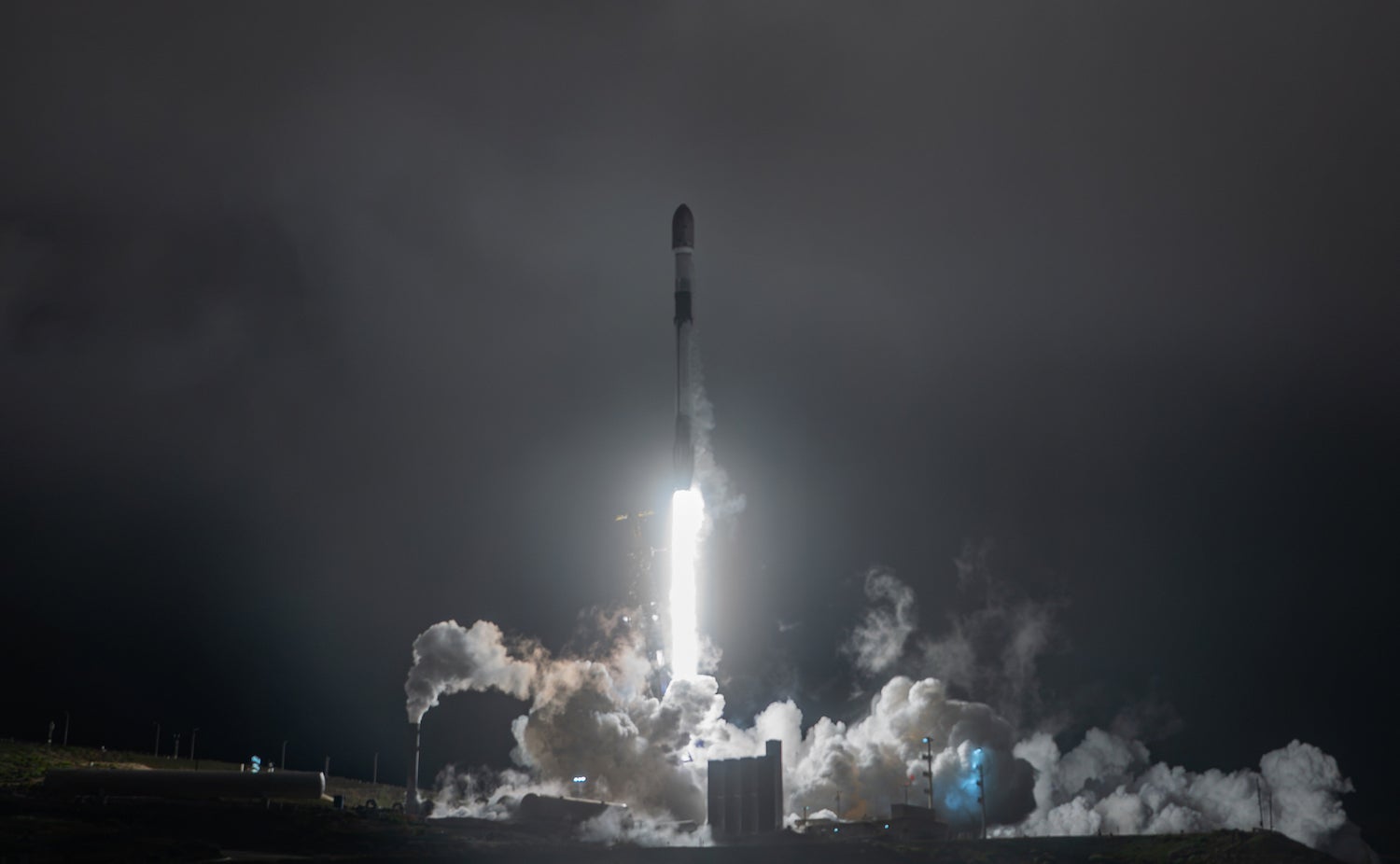
SpaceX launched 81 payloads on the latest launch in its rideshare series, Transporter-17. The mission launched early Tuesday morning from Vandenberg Space Force Base in California on a Falcon 9 rocket, taking off at 12:12 a.m. PT (3:12 a.m. ET).
The mission had a number of notable milestones onboard, including the first Nova satellite from Apex Space, which is set to demonstrate the Nova platform architecture.
Another first included the tech demonstration satellite for Planet’s second-generation Pelican fleet, Pelican-11.
It included the first operational satellites of the Earth Fire Alliance’s (EFA) FireSat constellation, built by Muon Space. These satellites are designed to identify early wildfire ignitions and track active fires.
French radio frequency detection company Unseenlabs launched the first satellite in its second-generation (Gen 2) constellation, built to expand its RF detection capabilities to multi-domain awareness spanning maritime, land, and space.
Another interesting first onboard was City Lab’s BOHR satellite, which the company called the world’s first commercial nuclear-power satellite and first nuclear cubesat. The mission will use City Labs’ NanoTritium betavoltaic technology in orbit as a dedicated payload power source.
NearSpace Launch, Inc. (NSL) launched three satellites in the SPEAR-1 mission to support U.S. national security.
Open Cosmos had two satellites on the mission, Posidònia, the first satellite of the Balearic Islands, and Hyperion GR-1 the first of seven satellites for Open Cosmos’ Greek constellation.
Spire Global had 10 Lemur-2 satellites onboard for various customers including three for Deloitte.
Rideshare integrator Exolaunch deployed 49 customer satellites on the mission, including four satellites for Iceye.
Another rideshare integrator SEOPS integrated 10 customer spacecraft, including a satellite for FOSSA Systems, the NearSpaceLaunch satellite, and R5 Spacecraft 9, which comes from a partnership between Sandia National Laboratory and NASA.