Northrop Grumman’s next-generation space vehicle for on-orbit refueling and satellite life extension is on its way to orbit after a SpaceX launch on Tuesday.
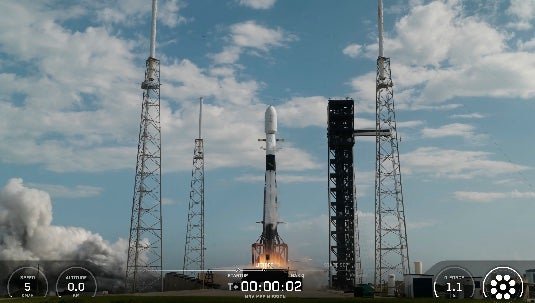
SpaceX launched the MRV-MEP mission on Tuesday from Cape Canaveral Space Force Station in Florida on a Falcon 9 rocket at 5:15 p.m. ET.
The mission includes the Mission Robotics Vehicle, which is equipped with two robotic arms to perform refueling and life extension capabilities. The MRV’s robotic arms were developed in partnership with the Naval Research Lab and NASA.
It also includes three Mission Extension Pods, designed to extend the life of satellites in Geostationary Orbit (GEO) for at least six years. Both are from Northrop Grumman subsidiary SpaceLogistics.
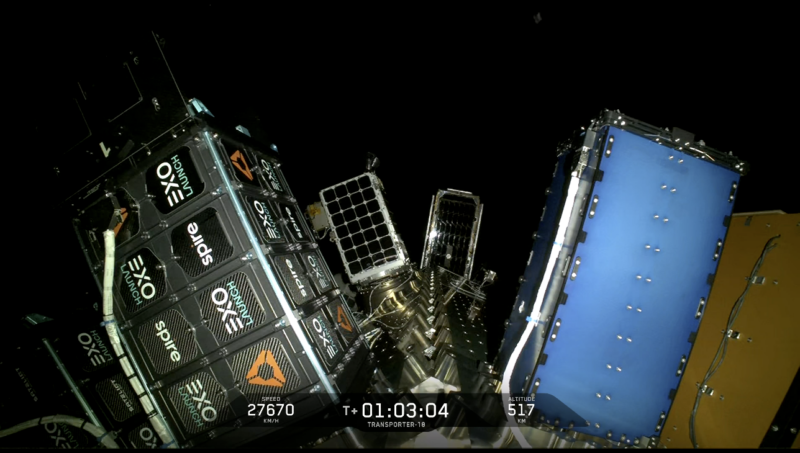
Northrop’s servicers were released in a deployment sequence starting with the Mission Robotic Vehicle at 35 minutes into the mission. This was followed by three Mission Extension Pods at 45 minutes, 55 minutes, and 1 hour and 5 minutes. SpaceX confirmed post-launch that all payloads were deployed.
Via Satellite previewed the MRV’s dual mission capabilities of refueling and life extension at a Northrop Grumman facility earlier this year before it shipped for launch. Program leaders said the MRV will set a baseline capability for satellite life extension and refueling and pave the way toward future services, such as in-orbit inspection, repairs and assembly.
“The toolkit that we have right now when there are problems in space is very, very limited,” Ryan Tintner, vice president and general manager of Northrop Grumman’s Space Superiority Division said in May. “It’s about to be widely expanded.”
These missions build on the history that SpaceLogistics made in 2020 when it demonstrated the first time two commercial satellites docked in orbit, docking with Intelsat 901. A subsequent Mission Extension Vehicle docked with Intelsat 10-02 in 2021.