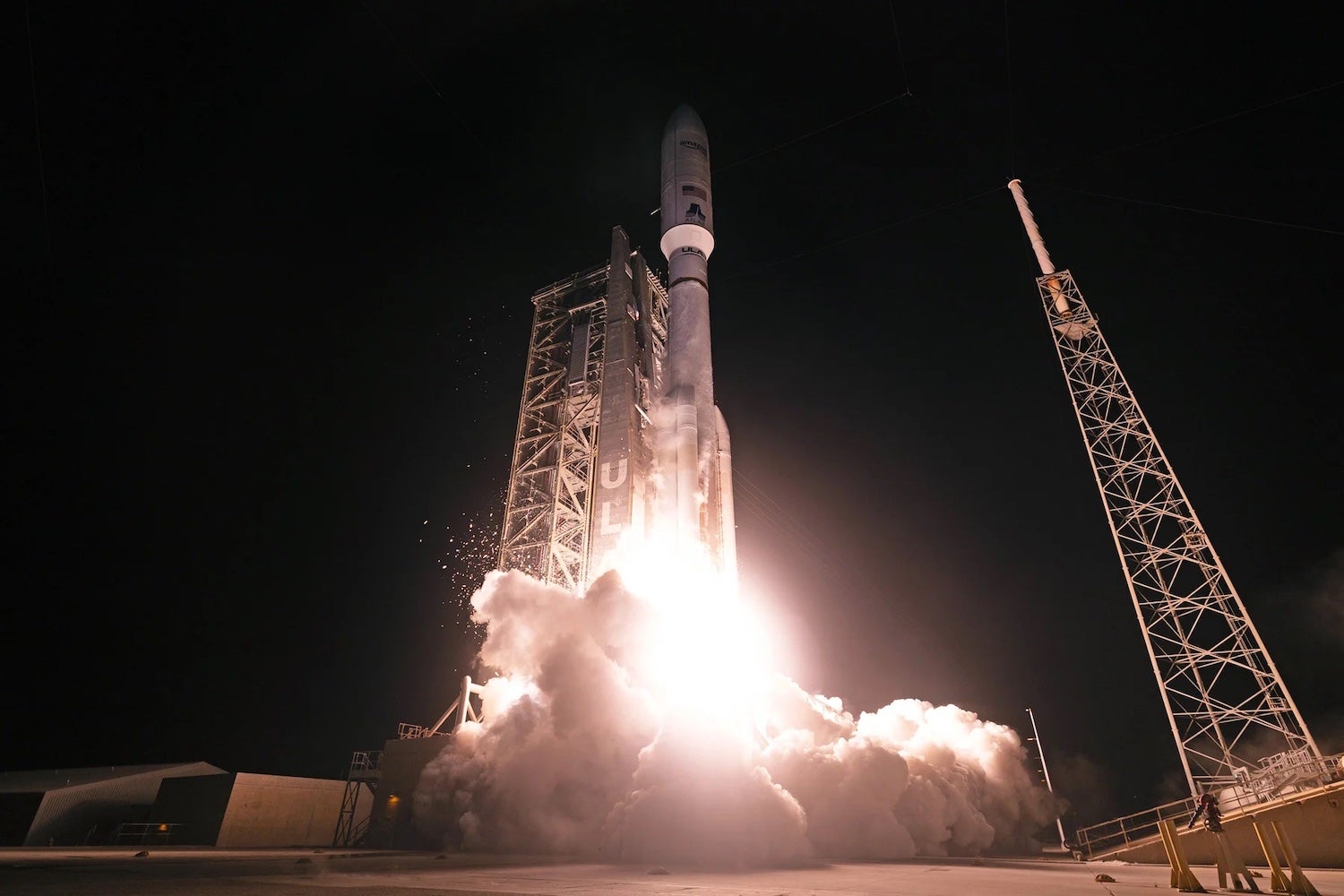
The Amazon Leo constellation now has enough satellites in orbit to support “continuous service across initial latitudes,” after a United Launch Alliance (ULA) mission in the early hours of Thursday.
ULA launched 29 satellites for Amazon Leo in an Atlas V mission that took off from Cape Canaveral Space Force Station in Florida at 12:30 a.m. ET on July 2.
This mission takes the constellation to 396 satellites, which is “enough to support continuous service across initial latitudes,” Amazon Leo Business Vice President Chris Weber said in a statement after the launch.
“Still lots of work ahead – including raising all these new satellites to their assigned altitude – but we’ve completed enough launches for initial service this year, and future missions just add coverage and capacity,” Weber added.
This was ULA’s eighth mission supporting the operational deployment of Amazon Leo, and the fourth of this year.
Earlier this year during SATShow Week, Weber shared that Amazon initially plans to start service in two bands, one in the northern hemisphere and one in the south. As more satellites are launched, expanding the coverage zones, the bands will extend toward the equator and the poles. When a geography goes live, it will provide services to all categories of customers: consumers, businesses, and governments.