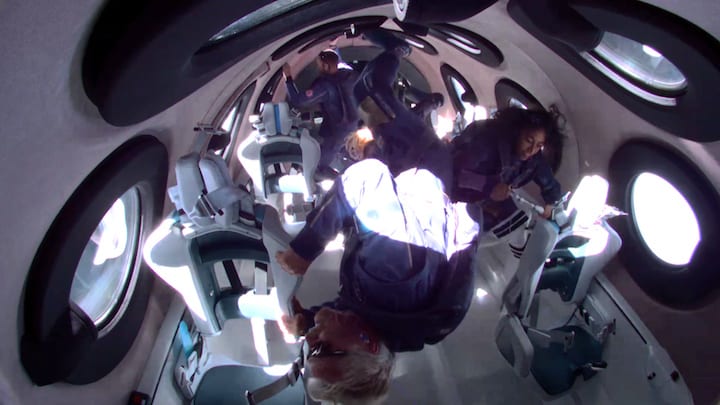
On July 11, nearly a minute into the rocket trip carrying Richard Branson, the British billionaire, to space, a yellow caution light appeared on the ship’s console. The craft was about twenty miles in the air above the White Sands Missile Range, in New Mexico, and climbing, travelling more than twice the speed of sound. But it was veering off course, and the light was a warning to the pilots that their flight path was too shallow and the nose of the ship was insufficiently vertical. If they didn’t fix it, they risked a perilous emergency landing in the desert on their descent.
The New Yorker Reports: FAA Investigating Virgin Galactic Flight



MaiaSpace Wins First Long-Term Asia Customer Deal
Institute for Q-shu Pioneers of Space (iQPS) has tapped MaiaSpace, the up-and-coming French launch provider, to launch a range of SAR (synthetic aperture radar) satellites starting in 2029. This is […]



Trending Now
-
 Government/Military
FCC Continues Deregulation Push with Environmental Regulations and More Spectrum
-
 Imagery and Sensing
BlackSky CEO: Sovereign is the No. 1 Market Opportunity Right Now
-
 Government/Military
NSSLGlobal Acquires MetOcean Telematics