
When I first entered the commercial space industry in 2012, we spent a lot of time explaining why small satellites mattered and the concept of disruptive innovation: a technology that may look objectively worse initially improves rapidly (in this case exponentially) and displaces industry incumbents. We faced broad-based skepticism about whether very tiny satellites could deliver meaningful performance over time and whether commercial companies could eventually be trusted with missions that governments had traditionally kept in-house. Investors hadn’t forgotten the satellite bankruptcies of the late 1990s, and it was far from certain they’d trust commercial constellations as an investable business model.
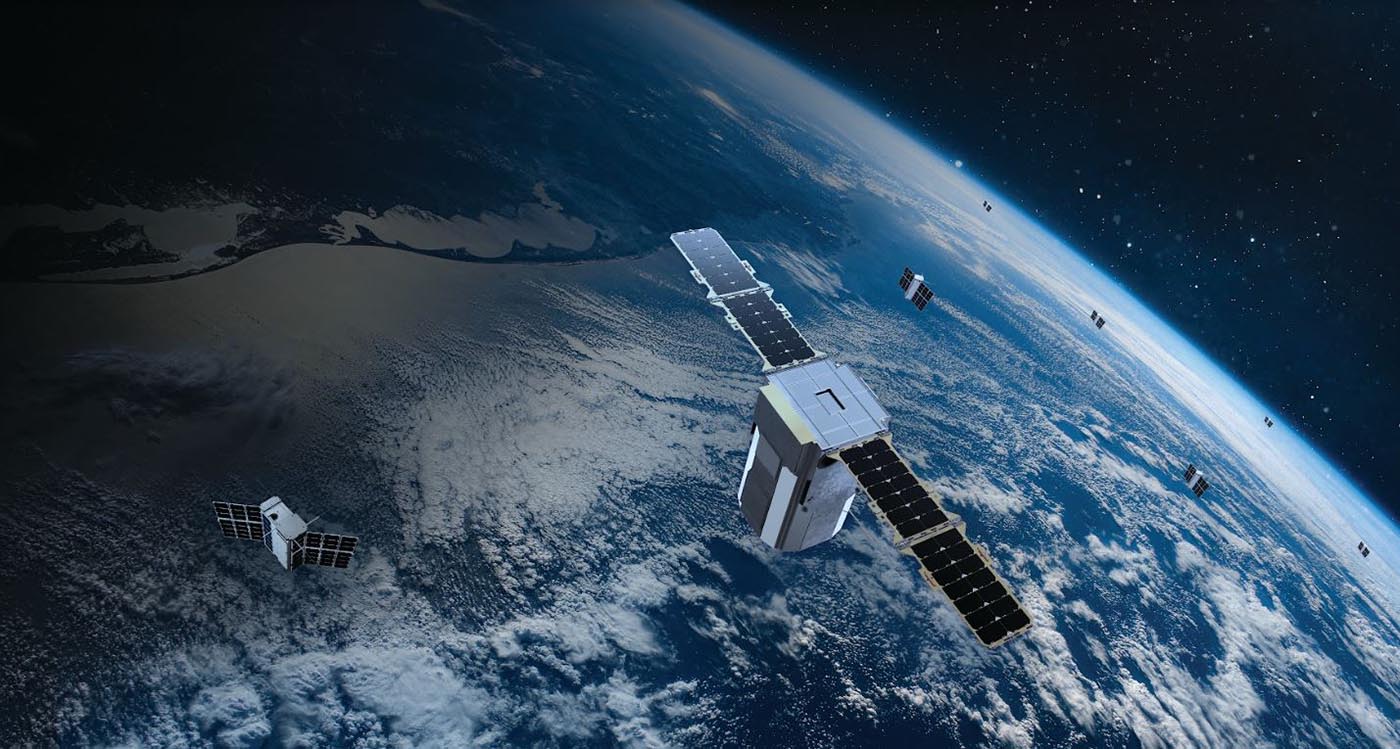
These were fair questions. Governments had spent decades investing in highly specialized, billion-dollar satellites designed to operate for years – extraordinary engineering achievements, built with layers of redundancy because replacing them was difficult and expensive. At the time, many viewed it as an impossibility that a constellation of smaller satellites, operating in Low Earth Orbit (LEO) and regularly replaced, could deliver operationally meaningful capabilities.

Explore the September 2026 Issue
Check out more from this issue and find your next story to read.
In May of this year, we opened a new satellite manufacturing facility in Munich, Germany. As government leaders, customers, and industry partners toured the facility, I was struck by how different the conversations had become. No one questioned whether small satellites could do serious work anymore. Instead, people wanted to know how quickly we could build more satellites, how rapidly production could scale, and what capabilities would come next.
That shift says more about how this industry has evolved than any single technological breakthrough.
When people look back at the last decade, they’ll likely point to falling launch costs, advances in satellite technology, or the rapid growth of commercial constellations. Those developments certainly mattered. But what has interested me most isn’t the technology itself. It’s how fundamentally the industry’s relationship with trust has changed.
I’ve come to appreciate that the hardest part of building a space company isn’t necessarily building satellites. The more complicated challenge is proving, over and over again, that customers can rely on your data, your services, and your people when those systems become part of mission-critical decisions.
Weather data and forecasting are among the clearest examples of this.
For decades, national weather services have relied on sophisticated government satellites carrying some of the most technically demanding instruments. The assumption was that this level of performance could only come from a handful of exquisite satellites, developed over many years and operated for decades.
Today, that assumption is beginning to change. Governments are increasingly looking to complement or replace those systems with commercial data. It’s a recognition that commercial operators have demonstrated the quality, consistency, and reliability needed to support operational forecasting, at a time scale and cost that is beneficial to the government and its citizens. Earlier this year at Spire, we successfully launched and began delivering data from our first hyperspectral microwave sounder, marking another step in demonstrating that advanced weather capabilities can be delivered through small form factor commercial constellations in orbit.
To me, that’s one of the most meaningful changes our industry has experienced. Commercial space is no longer simply proving what is possible. Increasingly, it’s becoming trusted infrastructure.
I’ve seen another shift emerge over the past few years, particularly across Europe.
Not long ago, conversations about satellite programs focused almost entirely on technical capability, schedule, and cost. Those questions remain important, but another one now appears remarkably early in almost every discussion: where will this be built and who controls it?
Governments are thinking differently about resilience. Space infrastructure has become a strategic capability that supports national security, weather forecasting, transportation, agriculture, environmental monitoring, and countless other decisions that shape daily life. As a result, sovereign capability has become a much more significant consideration than it was even a few years ago.
That thinking is one reason our investment in manufacturing in Europe matters. It’s about more than expanding production capacity. It’s about building closer partnerships, strengthening regional capabilities and supply chains, and recognizing that the future of commercial space will increasingly be shaped not only by what companies can build, but also where and how they build it. It will also be shaped by how effectively companies deliver operational value to end users. For too long, the space sector talked to itself, employed the same group of people, and held space specific conferences that were very technology focused. As the geopolitical situation has brought broader awareness to the role of space assets across many facets of life and an influx of capital, it is also driving the integration of space into every other industry as an enabling technology and as an important, but not the only, data input. This process is still ongoing and is interesting to watch.
What has struck me most throughout all of these changes is that the industry’s biggest advances rarely happen all at once.
Progress usually feels incremental, and sometimes even backwards, while you’re living through it. Another successful launch. Another customer. Another manufacturing milestone. Another constellation expansion. Another contract renewal. Another roadblock that needs to be overcome. Each achievement builds on the last. None feels revolutionary in isolation.
Only later do you realize they collectively changed what people believe is possible.
Looking back, the evolution is just as visible in the people as it is in the technology. When I started, the sector was dominated by a fairly narrow set of technical backgrounds, largely engineers who had come up through traditional aerospace and government programs. As commercial space has matured, so has the range of expertise required to make it successful. Now, building great satellites is only part of the equation. We also need people who understand policy and geopolitics, who can build lasting customer relationships, who know how to turn technical capability into products customers will actually use, and who can communicate why it matters in the first place. I notice the contrast most at investor conferences, where attendees often share similar professional backgrounds and communication styles. Space, by comparison, has become genuinely cross-disciplinary, bringing together people with different experiences, perspectives, and ways of thinking. To me, that’s another sign of how far the industry has come: from a collection of ambitious R&D projects to an industry that now underpins and enables so many others.
Perhaps that’s why I’ve become cautious about making predictions. One lesson this industry has taught me is that its biggest transformations often aren’t the ones dominating conference agendas or headlines. They’re the quieter shifts in expectations that happen after years of consistent execution.
If someone had told me 10 years ago that commercial companies would routinely build and operate constellations of hundreds of satellites, provide weather data for operational forecasting, manufacture spacecraft at industrial scale, and increasingly serve as long-term partners to governments around the world, I might have believed each of those developments individually.
I’m not sure I would have believed how quickly they would all happen together.
It’s remarkable to consider how much this industry has evolved. Commercial satellites helped lay the foundation for today’s space economy. Today, commercial space capabilities underpin everything from weather forecasting and environmental monitoring to national security and supply chains.
The next 40 years will undoubtedly bring technologies that are difficult to imagine today. But if the last decade has taught me anything, it’s that the most significant changes may not be the technologies themselves. They’ll be the moments when an idea that once required explaining simply becomes accepted, trusted, and expected. Looking back, that’s the transformation I’ve been most fortunate to witness, and I suspect it’s only the beginning. VS
Theresa Condor is the CEO of Spire Global