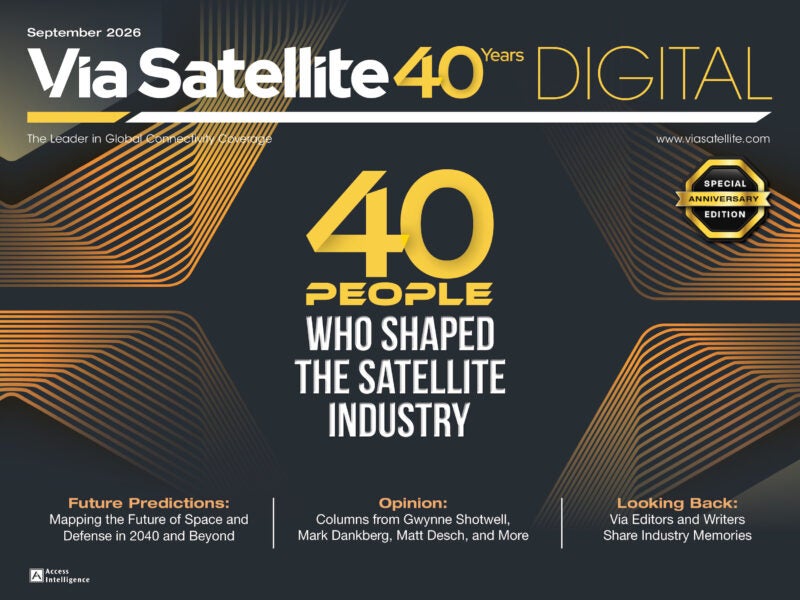


As Via Satellite marks its 40-year anniversary in 2026, we’re celebrating with a special feature: 40 People Who Shaped the Satellite Industry, to mark visionaries both past and present that have made the satellite industry what it is today.
This feature is meant to be part tribute, part history lesson, with some anecdotes from some of the supporting characters along the way. The list has been published in batches of 10 people over the last few months. Here is the full list of 40 people:
Explore the September 2026 Issue
Check out more from this issue and find your next story to read.
Masanori Akiyama
Japan has long been one of the most vibrant markets for satellite. One of the key executives in the Japanese space market over the last 30 years has been Masanori Akiyama of JSAT, who was around when the first commercial Japanese satellite was launched and then led the efforts in 2007 when JSAT merged with Sky Perfect Communications to create the modern-day powerhouse that is Sky Perfect JSAT. Akiyama joined Japan Satellite Systems (later re-named JSAT) in 1999 and led the company through a huge period of change up until 2011 when he retired.
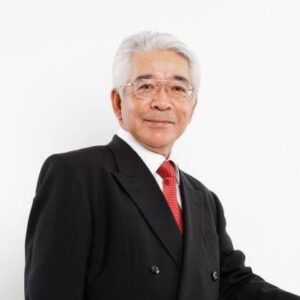
At the time of this acquisition, it created the number one satellite operator in the Asia-Pacific region and the fifth largest in the world in terms of turnover and satellite ownership. Akiyama was a visionary who also moved the operator beyond its pay-TV roots and worked with the likes of Iridium and Inmarsat back in the day to tap into mobile satellite services (MSS). Sky Perfect JSAT has remained one of the strongest players in the market to this day. Akiyama was the catalyst for the modern Sky Perfect JSAT and thanks to his efforts, the company remains one of the strongest regional operators around.
Jeff Bezos
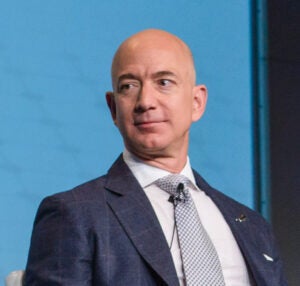
While Jeff Bezos is most known for reshaping global commerce and founding the world’s largest company in Amazon, he’s had a deep impact on the space industry through both Blue Origin and Amazon Leo. Both have long been in the works — Bezos founded Blue Origin in 2000, when Amazon was just transitioning from a bookstore to a full e-commerce retailer, and Amazon revealed plans for a massive satellite constellation back in 2019. Now, both are on the cusp of playing a much larger role in the space industry. Amazon Leo will bring a new dimension to the LEO market as a satellite constellation integrated with the world’s largest retailer and cloud service provider. And while Blue Origin has had setbacks with New Glenn this year, the rocket will bring much needed capacity to the launch market, and Blue Origin is set to play a major role in NASA’s return to the Moon.
Bezos has talked of his genuine love of space — evident in the names he gave Blue Origin’s launch vehicles, which pay tribute to astronauts Alan Shepard and John Glenn. He memorably flew on the very first crewed flight of the New Shepard rocket. In a 2018 interview with Via Satellite, Bezos compared Amazon’s core “Day One” philosophy to the space industry. “This is ‘Day One’ for the space industry. We will find new uses for space that people haven’t even figured out yet. I want to see that entrepreneurial explosion in space, I want to see dynamism,” Bezos said. “Great industries are not built by single participants. They’re not built by one company. Great industries are built by a multitude of companies and that is what’s going to happen in space.”
Mark Boggett
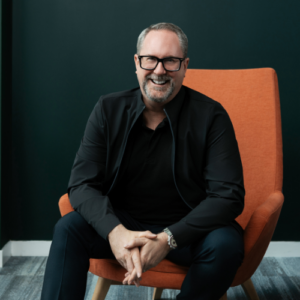
Over the last decade as the space industry has become more popular to investors, one firm that stands out in this arena is Seraphim Space, a company that has backed many startups and has a highly impressive track record in picking the next big thing in space. At the heart of Seraphim’s success has been Mark Boggett, the CEO of the company and someone with a great eye for identifying trends and the next generation of talent in the industry. Seraphim has backed companies such as Iceye, All.Space, Skylo, Xona Space Systems and HawkEye 360. The company has had a huge impact on the startup scene. When a startup is backed by Seraphim, it’s an indicator they are on the right path. It has become the gold standard in the satellite investment arena.
“Early on, Mark recognized space as the next frontier for innovation and economic transformation. He’s been a passionate advocate for space startups and directed investment into many emerging companies, including HawkEye 360. His steadfast spotlight on the sector has drawn attention and further funding, which reinforces the positive upward trends we’ve seen in our industry,” John Serafini, CEO of HawkEye360, told Via Satellite.
Frédéric D’Allest
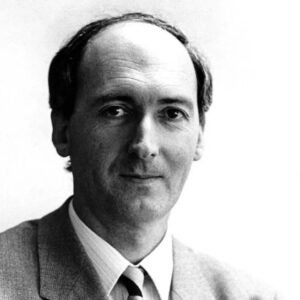
The story of the Ariane rocket is one of the most important in our industry. Frédéric D’Allest was CEO of Arianespace from its founding in 1980 for around 10 years. He spearheaded the initial vision that would become Arianespace. During this time, he left an indelible mark on the company. He was behind the first successful launches of the first Ariane vehicles and is a key component in one of Europe’s biggest space stories over the last 40+ years.
Jean-Michel Desobeau who was at Arianespace for almost 33 years and was there during the time that D’Allest was CEO hailed his influence. “Rocket visionary is a name perfectly fitting for D’Allest since he was key to shaping the European world of launch vehicles. Starting within the French program Diamant, then with the defunct Europa one, he then had the conviction that a stronger organization could lead to a better launcher line: this idea gave birth to the Ariane family,” he told Via Satellite. “Then in 1980, D’Allest had the intuition to create the first commercial space transport company, Arianespace. As a good skipper and revered team leader, he knew how to navigate between the initial launch failures to reach the long series of successes that put Arianespace in a leading position during several decades.”
Mark Dankberg

As the founder and the longtime CEO of Viasat, Mark Dankberg stands as the satellite industry’s longest-running CEO. He co-founded the company in 1986 and has shaped the direction of technology in the satellite industry for the last 40 years. Viasat started out developing new technology for defense satellite applications and then ventured into broadband in the late ‘90s and early 2000s. Viasat has set records for the highest capacity single satellites with Viasat-1 in 2011 and now with the second and third ViaSat-3 satellites. Dankberg is an engineer’s engineer and it’s evident in his interviews that he’s driven by solving problems and pushing technology forward. He was recognized in 2003 as Satellite Executive of the Year. After the acquisition of Inmarsat, Viasat has grown to revenue of $4.6 billion a year.
Viasat co-founder Mark Miller says that many of the advances of high-throughput satellite communications can be traced back to ideas that Dankberg advocated for decades ago. “Mark has had a rare ability to see where communications technology was headed years before the rest of the industry and then build the innovations needed to get there. From the earliest days of Viasat, he championed the idea that satellite networks could deliver dramatically more capacity and capability than anyone thought possible,” Miller says.
Fellow co-founder Steve Hart says that while Dankberg’s brilliance, strategic vision, and technical genius have been critical to Viasat’s success, his greatest gift is unwavering optimism. “No setback has ever shaken his confidence, and that confidence becomes contagious — boosting morale through both wins and losses, reassuring our customers, and inspiring all of us to keep moving forward,” Hart says.
Fellow longtime satellite industry CEO Dan Goldberg of Telesat spoke to Dankberg’s long-time influence in the satellite industry as well. “Mark Dankberg is that rare leader who combines deep technical expertise, strong commercial instincts, and the ability to communicate complex ideas with clarity and conviction. Through his decades of leadership at Viasat, he has helped shape the modern satellite industry and demonstrated how vision, innovation, and disciplined execution can expand the reach and impact of space-based communications,” Goldberg says.
Will Marshall

Over the past 26 years, Planet has become one of the standard-bearers of the New Space era — from building the first satellite in a garage in California to maintaining around 200 satellites in orbit. Planet CEO Will Marshall co-founded the company in 2010 with fellow former NASA engineers Chris Boshuizen and Robbie Schingler with a vision to image the entire Earth every day and democratize access to information. Planet has realized that goal, bringing the benefits of satellite data to industries like energy, insurance, agriculture, and mapping, as well as governments around the world. Marshall has remained a humble and steady leader at the helm of Planet, while pushing the company forward into next-generation technologies like onboard AI.
“From assembling our first prototypes in a garage to launching more than 600 satellites into orbit, I’ve seen firsthand how Will’s relentless vision to image the entire world every day turned what many thought was impossible into the standard for modern Earth Observation,” says Mike Safyan, Planet’s vice president of Launch & Strategic Initiatives, who was one of the company’s original employees and worked with Marshall at NASA before Planet. “Will is always steps ahead of everyone else, thinking about what’s coming 5, 10, 15 years from now to position Planet for the future. Having worked alongside him since Planet’s earliest days, I’ve been constantly inspired by his drive to iterate faster, democratize satellite data, and use space to help us better understand our changing planet,” he adds.
General John W. “Jay” Raymond
When the U.S. Space Force was officially established in 2019 as the sixth branch of the armed forces under the Air Force, Gen. John “Jay” Raymond was appointed first Chief of Space Operations. As the first Guardian, Raymond was tasked with standing up the Space Force, including consolidating space units from other services and setting the culture of the newly established force.
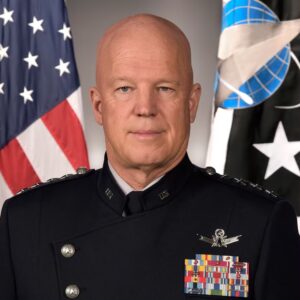
Setting out on this task, Raymond later said he sought to be bold, and not to let bureaucracy stifle bold thinking. He saw his role as an opportunity to establish the United States’ leadership in space and to shape the norms of behavior in the space domain. One area Raymond leaned into bold thinking was in shaking up traditional acquisition structures and embracing commercial – a mindset he summarized in the widely-cited phrase, “Exploit what we have, buy what we can, build what we must.” One indicator of Raymond’s influence and the success of standing up the Space Force is how many nations around the world have followed suit and established dedicated space commands. Gen. B. Chance Saltzman succeeded Raymond as Chief of Space Operations in 2022, and Raymond retired from military service in 2023. He is still active in the space industry, serving on the boards of a number of companies.
“Gen. Raymond’s 38 years of service to our country were critical to the satellite industry, with none more important than his last three years spent doing the heavy lifting to establish the United States Space Force. His passion, dedication, and vision built a strong foundation for all of us who benefited from his mentoring and leadership. It was an honor to follow in his footsteps,” U.S. Space Force Chief of Space Operations Gen. Saltzman tells Via Satellite.
Flavia Tata Nardini
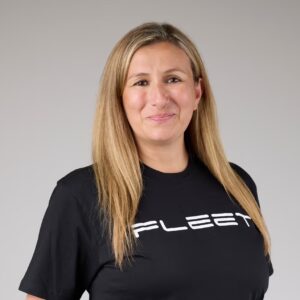
In 2015, Flavia Tata Nardini co-founded Fleet Space Technologies with a mission to change Earth from space and to connect every single device on the planet. Over the past 10 years, Fleet Space Technologies has grown into one of the cornerstones of Australia’s developing space industry. The company operates at the intersection of space, agile geoscience, and AI. It built Australia’s first LEO satellite constellation. The constellation provides connectivity for the company’s ExoSphere platform which combines satellite connectivity, 3D subsurface data-acquisition, and AI to aid the discovery of critical minerals while reducing environmental impact. The company has had particular success bringing its technology to the mining sector. Yet it’s also applying this technology to the future of space exploration — its Spider smart seismic station will be deployed by the Blue Ghost lunar lander on the Moon to collect data on the lunar subsurface.
A trained rocket scientist, Tata Nardini is one of the few female CEOs and founders in the space industry, particularly remarkable for founding and growing a space company in a country not known for its space heritage. She is an advocate for women in STEM and has served in leadership roles including mission chair of the Seven Sisters Moon Mission and chair of the Australian Space Agency Space Industry Leaders Forum.
Rachel Villain
As the space industry has got bigger and diversified over the last decades, the satellite consulting business is one that has seen many companies and analysts emerge. Euroconsult (now NovaSpace) is one of the longtime leaders in space consulting. It has led the industry for years in cutting-edge research as well as hosting one of the biggest space events in the industry – World Space Business Week. Rachel Villain, one of the founders of Euroconsult, has been one of the most prominent consultants in the industry over the last three decades. She was hugely influential at Euroconsult and played a key role in mentoring a number of consultants that have come through the ranks. Villain was at Euroconsult at the start in 1983 when the firm was focused on science and aerospace, and was the chief editor of the flagship report, “Satellites to be Built & Launched,” for more than 20 years, an impressive achievement. As well as doing these reports, Villain also worked with governments, particularly in emerging markets, to help shape their space strategies.
Maxime Puteaux, who is now director of Earth Observation Markets for Safran Space and worked at Euroconsult/Novaspace between 2012 and 2026, said Villain “set the standard” for analysts at the company. He added, “As chief editor of “Satellites to be Built & Launched” for more than 20 years, she built methodologies so disciplined that they shaped the way our entire industry is analyzed and the whole market relies on. Her eye for detail was legendary. Rachel also gave an enormous amount of her time to newcomers, training the younger generation. The combination of endless curiosity, uncompromising method, and genuine generosity is exactly why she has shaped this industry.”
Emeline Bardoux, vice president of Connectivity & Navigation for Safran, who worked at Euroconsult/Novaspace between 2018 and 2024 said, “Rachel was/has always been kind and patient when anyone new joined the company. She holds a very special place for me.”
Greg Wyler
When the history of space in the 2000s is written, it is clear that Greg Wyler’s name will appear in it. The formation of O3b Networks in 2007 created a buzz rarely seen in this industry, and it could be argued that it heralded the start of a new era for the satellite industry. It was the main conversation at industry events. After O3b Networks was sold to SES, Wyler was back at it, creating another much-talked about company – OneWeb in 2012. OneWeb also had a period of turbulence going into bankruptcy before its assets were ultimately acquired by Eutelsat.
Wyler would always speak about the mission of connecting the unconnected as his motivation to create these companies. The jury in some ways is still out on whether this was accomplished. After all, O3b didn’t really connect the other 3 billion people without connectivity. But what it did do was usher in the modern era of new satellite constellations. Wyler as the founder of both companies played a pivotal role in shaping the modern satellite industry. In essence, both the modern Eutelsat and SES are benefiting from acquiring these assets and they are at the heart of the operators’ strategies. Wyler will go down in history as a hugely influential and somewhat polarizing figure within the industry. Whether he was successful as he would have wanted to be, that can be debated. But there is little doubt that in a 10-year spell, Wyler was one of the most talked about executives this industry has ever seen.
“In creating O3b Networks and OneWeb, Wyler formed two of the most consequential companies in the satellite industry. Both companies proved that orbits closer than GEO could radically improve the quality of service satellites could provide, allowing people to dream big about the art of the possible from space. Every megaconstellation we see today was influenced, directly or indirectly, by Wyler and his championing of NGSO,” says Quilty Space Research Director Caleb Henry, who cataloged the OneWeb story in a soon-to-be-published book.
Part Four, published on Sept. 1
Theresa Condor

Just over a decade ago, the New Space movement engulfed the satellite industry. With the industry slowly moving away from traditional models and looking beyond broadcast, a slew of new companies emerged with great anticipation and a lot of hype. One of the poster children for this new movement was Spire, a next-generation data and AI analytics company that identifies, tracks, and predicts the movement of the world’s resources and weather systems, using its constantly improving global constellation of satellites. One of the key figures behind the company’s success has been Theresa Condor, longtime chief operating officer and now the current CEO. Condor was part of the founding team and has helped build a satellite data powerhouse that is now truly a global company. Spire has become one of the pioneers in satellite meteorology datasets and bringing intelligence to a wide range of commercial and government customers worldwide. In the early days, she’s credited with building the initial business case and leading business development when Spire was transitioning from a crowd-funded satellite project to an operational company.
Condor has been at Spire almost 14 years, holding a number of leadership positions including leading Spire’s international expansion and signing the company’s first million-dollar contract. Condor has been a highly influential figure within the industry, always advocating for the extraordinary value of small satellites. Companies like Spire Global have led the way for others, and have been one of the biggest success stories of the New Space movement.
Candace Johnson

Candace Johnson is a pioneer of the commercial satellite industry and a firm believer in the power of satellites to democratize communications and access to information. In the 1980s, Johnson championed the development of the Astra satellite system for Europe at the behest of the former Prime Minister of Luxembourg Pierre Werner, who asked for her help to establish an independent satellite system for Europe. Johnson co-founded the Société Européenne des Satellites (European Satellite Company), the precursor to what is now SES. Recounting the story in a TEDx talk, Johnson shared her pride that when the Berlin Wall fell in 1989, the Astra satellite was the only satellite capable of broadcasting the message to all of Europe. Her impact has spanned companies across the industry — founding Loral-Teleport Europe, and Europe Online, organizations including Global Telecom Women’s Network, and the Global Board Ready Women Task Force, and countless companies as an angel investor.
“Candace pioneered connecting the world by co-founding SES, but her true legacy lives in all of the people she’s connected to success along the way. She has personally opened doors for thousands of founders, companies, and leaders, especially women, across telecom, space, and venture capital. Her impact is measured not in satellites or lifetime awards, but in the perpetually growing number of careers, ventures, mentors, and technologies that exist today because she created, inspired, advocated, and always made room for the best of us,” says Rafferty Jackson, a member of the Independent Investment Committee for Seraphim Space Venture Fund II, which Johnson is also a member of.
OQ Technology CEO Omar Qaise, one of the founders whom Johnson has mentored, says: “What has always impressed me is her genuine curiosity about new entrepreneurs and her willingness to invest her time in listening, challenging, and encouraging them. She has had a lasting influence on generations of founders, including myself. Her ability to bring people together, spark meaningful discussions, and inspire bold thinking has made her one of the defining figures of our industry.”
Jean-Yves Le Gall
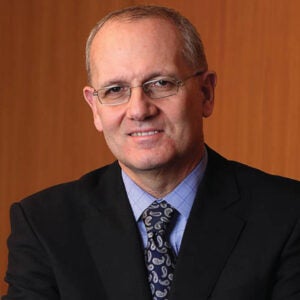
Jean-Yves Le Gall, the former CEO of Arianespace and former head of the CNES (French Space Agency), has been one of the biggest figures in the French and global space industry. As the CEO of Arianespace, he was responsible for a huge number of successful launches. During his time as the CEO, the company was at its zenith with Arianespace being the go-to launch operator for companies in need of reliable, successful launches. While SpaceX came in and would ultimately shake up the market, Le Gall took Arianespace to the very peak of the launch market. He was the CEO of Arianespace for over a decade before he became the president of CNES. Le Gall is hugely respected by his peers. SpaceX President Gwynne Shotwell tells Via Satellite, “Monsieur Le Gall is a true engineer, statesman, and a gentleman. He fights tirelessly for the industry with a keen international perspective, while remaining deeply loyal to his country. I am proud to call him a friend.”
Kjell Karlsen, the former CEO of Sea Launch, says: “I always found Jean-Yves to be incredibly prepared for every discussion we had and with a brilliant mindset. Not only was he a fierce competitor, but he was also willing to step outside his comfort zone and embrace new situations, such as his proposal to Sea Launch to form a launch alliance after the early failure of Ariane 5. In this alliance, he moved some of the launches that were contracted with Ariane to Sea Launch — an unheard of move at that time.”
Rafal Modrzewski

The old-world order of satellite has changed in recent years. After SpaceX, one of the big questions is — when will European equivalents shake up the industry? One of the companies that has emerged is Iceye, led by CEO and co-founder Rafal Modrzewski, who is now one of the most influential CEOs in the industry. Iceye has had a huge influence working with Ukraine providing satellite imaging to help Ukraine as it fights the Russian invasion. The company has transformed how space companies work with MoDs in Europe and around the world, and is frequently referenced by others at defense conferences as making a real-world difference with its high-resolution synthetic aperture radar (SAR) imagery. “Iceye not only miniaturized SAR satellites, but also made them sellable. Under Rafal, Iceye went from a Finnish university spinout to the supplier of sovereign SAR capability globally, while also building a commercial business in insurance. His vision meant that countries worldwide could now own and operate SAR satellites. Europe has spent a decade asking why it cannot produce founders who build at this scale — he is one,” Aravind Ravichandran, founder and CEO of TerraWatch Space, tells Via Satellite.
Elon Musk

There’s likely no one in the space industry that’s as influential and as polarizing as Elon Musk. Twice, the SpaceX founder has realized what the space industry said was impossible — regular reusable launch vehicles and a global broadband internet constellation in Low-Earth Orbit (LEO). When Musk founded the company in 2001 and in its early days, the space industry said that affordable, reusable launch was not possible. Detractors had no idea that SpaceX would go from a plucky startup to the most powerful company in the space industry. The Falcon 9 changed the economics of what’s possible in space, opening the door to new businesses made possible by lower cost of launch. The Starlink constellation broadened the reach of low latency connectivity around the world, raising expectations for what satellite services should be.
Musk has always set a bold vision for the future — from living on Mars to data centers in space, although many times, his deadlines and predictions don’t come true. Many analysts said the company’s recent massive IPO was buoyed by investor faith in Musk. When one person is so influential, it carries plenty of risks. Polarizing as Musk is with his billionaire status and promotion of right-wing politics — the space industry depends on him. Nearly every single company that operates satellites in orbit has launched with SpaceX. And the U.S. government depends on SpaceX to build and launch its satellites, and NASA depends on SpaceX to transport astronauts to and from the ISS. Musk and SpaceX have had an outsized influence on the space industry in the last decade.
Dean Olmstead

Dean Olmstead had a storied career in the satellite sector that was tragically cut short when he died of cancer at age 55 in 2010. He held a number of key leadership positions in the industry such as president of EchoStar and president and CEO of SES Americom. He also held leadership positions with the likes of DirecTV Japan, NASA, and the U.S. State Department. He was a driving force in globalizing what had been a very regionally focused industry. Romain Bausch, former CEO of SES, told Via Satellite, “I hired Dean in the late ‘90s with the objective to help me diversify SES from a European DTH satellite operator into a global and diversified player. Based on his strong experience and knowledge of the industry, Dean was very efficient in identifying opportunities and making deals. We succeeded in expanding into Asia with AsiaSat, into Latin America with Star One, and into the U.S. and beyond with Americom, all of this in a couple of years. Together we shaped the fixed satellite service (FSS) industry and established a strong competitor to the then intergovernmental consortium Intelsat.”
Christopher Stott, founder and executive chairman of Lonestar Data Holdings tells Via Satellite, “A true founder of our industry in so many ways, Dean drove the globalization of our industry with passion and professionalism. I was fortunate to have competed with him and then to have worked with him. Both experiences were learning experiences. Dean was a gentleman and scholar of the old school. He is much missed. I can still see him in my minds’ eye when negotiating deals today.”
Harold Rosen
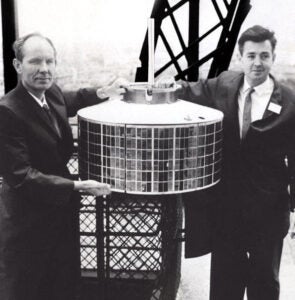
Like Arthur C. Clarke, Harold Rosen is also known as the “Father of the Geostationary Satellite,” for his work on the world’s first Geosynchronous communications satellite, a precursor to Early Bird. While working at Hughes Aircraft Company in the 1950s, Rosen was part of the team to develop a prototype Geosynchronous communication satellite, spurred by the Soviet Sputnik launch. In a piece called “The Syncom Story,” Rosen recounted his belief that GEO communications could be accomplished. Rosen, working with fellow engineers Thomas Hudspeth and Don Williams, designed a spin-stabilized communication satellite that could transmit transoceanic bandwidth at a relatively low cost. After much difficulty securing commercial or government funding for the project, Hughes secured a contract with NASA to build three Syncom satellites, an abbreviation for synchronous communication. The program faced a setback when the first Syncom satellite launched in 1963 was lost during a Delta rocket launch. Thankfully, Syncom 2 was launched successfully later that year.
“The new era of continuous space communications had begun,” Rosen wrote. “These five years clearly demonstrated that, despite many predictions that it wouldn’t be reliable enough, Syncom proved that a Geosynchronous satellite could have the necessary reliability for communications.” Syncom 2 and Syncom 3, which famously broadcast from the 1964 Tokyo Olympics, led to Comsat contracting Hughes for the commercial variant, which became Early Bird. Rosen’s legacy continued as he oversaw the development of more than 150 communications satellites at Hughes and with Boeing after the company purchased Hughes. Rosen passed away at age 90 in 2017.
Scott Smith

Scott Smith contributed to the development and launch of many top satellite programs in both satcom and Earth Observation, and he left a deep legacy of leadership across the industry. Smith helped found Space Imaging Inc., the first U.S. company to orbit a commercial imagery satellite, Ikonos. His impact continued in the EO sector as COO of DigitalGlobe in the mid-2000s where he oversaw the development and launch of WorldView-1 and WorldView-2.
Smith then joined Iridium in 2010 as COO with the daunting task of overseeing the design, development, and launch of the Iridium Next constellation refresh. He was successful in that mission, leading technology and operations for nearly 10 years until 2019, through the final launch of the constellation refresh. Smith was also an operating partner at Bessemer Venture Partners, where he helped develop the firm’s aerospace practice and served as a board member for Rocket Lab. He’s credited with sharing his expertise and making a key impact for Rocket Lab in the company’s crucial early years. Smith passed away in 2020 at age 61.
Iridium CEO Matt Desch tells Via Satellite that Smith provided the leadership that allowed the company to nearly flawlessly execute the $3 billion Iridium Next program. “It was like the proverbial changing of the tires on a moving fleet of trucks without ever slowing down – and it was all accomplished without our customer base even noticing it. He commanded respect from everyone involved, and his experience was instrumental in this critical transition towards the success we enjoy today. The industry lost a visionary too soon, and he’s missed by all the companies and colleagues he touched,” Desch says.
Martin Sweeting
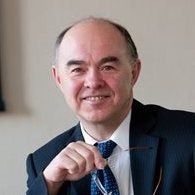
Martin Sweeting may be the most influential figure in the U.K. space industry over the last 50 years. His work in the area of small satellites has been pioneering. In 1979, he started designing and building UoSAT-1, the first modern 70 kilogram microsatellite, and persuaded NASA to launch it piggyback on a Delta rocket. UoSAT-1 was controlled in orbit after launch in 1981 from the ground station on the Surrey campus and its transmissions were monitored by thousands of radio amateurs and schools worldwide. In the mid-1980s, he founded Surrey Satellite Technology Ltd (SSTL), a company that became a key barometer in the small satellites market. There are very few that have had the influence in the small satellite arena as Sweeting has.
“Sir Martin Sweeting is the pioneer of small lightweight satellites. He also recognized that some mass-produced electronic components could be used in space — the skill was in working out which ones. He created Surrey Satellites in which Elon Musk took a stake to learn about NewSpace,” David Willets, president of Resolution Foundation, tells Via Satellite.
“Martin has made a unique and unprecedented contribution to the U.K. space sector, pioneering an innovative approach to the manufacture of small satellites. This has left an enduring legacy in the U.K. for over 30 years now and has transformed small satellite manufacturing globally, from the largest economies in the world through to many developing countries,” says Alice Bunn, UKSpace president and incoming co-director of UK Space Agency.
David Thompson
As a co-founder and CEO of Orbital Sciences Corporation, David Thompson has left a deep impact on the space and satellite industry across launch, communications and imagery satellites, and civil space missions. From Orbital’s origins as a startup, the company carried out more than 1,000 rocket launches and satellite missions over a 36-year period. The company’s GEOStar platform serves as a reliable platform for communications GEO satellites to this day. Orbital sciences developed the Pegasus, Antares, and Taurus/Minotaur launch vehicles and provided Commercial Resupply Services (CRS) to NASA with the Cygnus spacecraft as well as numerous science and environmental satellites for NASA.
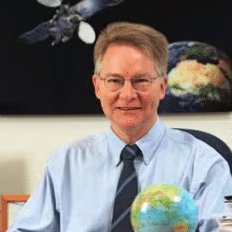
After the merger with ATK in 2014, Thompson and the company pioneered satellite servicing by developing the Mission Extension Vehicle, which made history in 2020, marking the first time two commercial satellites were docked in orbit. Thompson led Orbital ATK as president and CEO until the company was purchased by Northrop Grumman in 2018. He currently serves as vice chair of the board of trustees of The Aerospace Corporation. Thompson is widely recognized as a tech luminary and has won numerous awards, including being named the third honoree of Satellite Executive of the Year in 1990. Blake Larson, retired president of Northrop Grumman Space Systems and former COO Orbital ATK described Thompson as a humble and selfless leader, calling him “a visionary ahead of his time.”
Part Three, published on August 5
Robert Bednarek
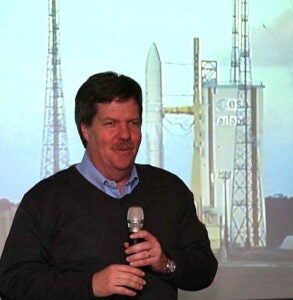
Robert Bednarek was one of the top executives of PanAmSat and SES and one of the key architects of the satellite broadcast movement from the 1990s onwards. Bednarek played pivotal roles at both SES and PanAmSat, industry giants of the time, and was one of the architects of some of the most significant consolidation in the industry. He held top technical positions at PanAmSat, before making his way to SES and becoming even more of a household name there. He left PanAmSat to join SES in 2002, and served as president and CEO of SES New Skies, later SES World Skies including SES Americom. His legacy in the industry through his work at PanAmSat and SES remains a strong one. Sadly, Bednarek died at age 55 in 2013 after a long battle with cancer.
Romain Bausch, former SES CEO, who worked with Bednarek and appointed him as executive advisor in 2011, credits Bednarek with leading the acquisition of New Skies and recalls his friendship and impact on the satellite industry. “Rob will be remembered as a dedicated professional who helped shape the world of modern satellite communications. On a more personal note, I will always remember him as a friend with personal warmth who treated all those who were fortunate enough to know him with dignity and respect,” Bausch says.
Joseph V. Charyk
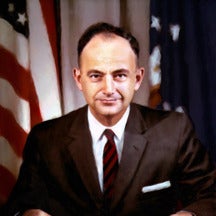
As an early pioneer of the satellite industry, Joseph Charyk had a deep impact on both government satellite programs and the formation of the commercial satellite industry. Charyk served as undersecretary of the Air Force from 1961 to 1963. During that time, President John F. Kennedy appointed Charyk to also serve as the first director of the National Reconnaissance Office. He is credited with consolidating the CIA, Air Force, and Navy space programs into the NRO and bringing the first U.S. imagery satellite, CORONA, into operation.
After the Communication Satellite Act was passed in 1962, Charyk took the helm of the newly formed Communications Satellite Corporation (COMSAT) as its second president in 1963. As the first private satellite corporation authorized by Congress, COMSAT was tasked with developing commercial communications satellite systems, and was the U.S. representative to the Intelsat consortium. Leading COMSAT from 1963 to 1985, Charyk oversaw the launch of Early Bird, the first communications satellite, which launched in 1965. He was one of participants on the six-nation conference call that inaugurated the first-ever commercial telephone service by satellite via Early Bird in 1965, marking the start of a new era of telecommunications with his statement, “I now officially declare these satellite circuits open for use.”
Charyk passed away at age 96 in 2016, and his obituary sums up his impact: “He fought skepticism that this untested technology would not work for voice transmission because of a half-second time delay. He also raised funds to support this new industry and enlisted the cooperation of countries around the world. His efforts launched a global system that would eventually seem commonplace to billions of people around the world.”
Matt Desch

When Matt Desch joined Iridium in 2006, the company was in a strong position after its rescue from bankruptcy, turning a profit with more than 100,000 subscribers. But he faced the ticking time bomb of an aging satellite network and the challenge to chart the path forward. At the helm for two decades, Desch guided Iridium through going public in 2008, financing the Iridium Next constellation, the constellation build-out and Iridium’s subsequent growth. There were a few road bumps along the way, like when a dead Russian satellite collided with Iridium-33, and launch provider SpaceX suffered a major failure just before the first Iridium Next launch. But Desch has built Iridium into the most stable satellite operator with years of revenue growth, profitability, and share buybacks.
“Back in 2006, Matt saw in Iridium something others thought was impossible — that our unique LEO architecture, with its mesh of crosslinks, global reach, and L‑band spectrum, wasn’t just resilient, but a platform for growth,” Iridium COO Suzi McBride tells Via Satellite. “He went on to make LEO cool again, proving that global satellite connectivity could scale, endure, and be profitable. Over the years, I watched him turn conviction into execution, ultimately shaping Iridium into the company it is today.”
With Iridium’s unique niche of globally available mobile satellite services (MSS) business, the company is known for reliable, mission-critical communications. An active pilot, Desch provides a calm counter to more bombastic industry CEOs—often cautioning against hype and over-valuing that can be so common in the space industry—perhaps in a nod to Iridium‘s origin story. After serving as one of the longest running CEOs in the satellite industry, Desch now leads Iridium into its next phase to be acquired by Rocket Lab that values the company at $8 billion.
Peter de Selding

If there is one journalist that is synonymous with the satellite industry over the last 30 years then that journalist would be Peter de Selding. First as Paris bureau chief for Space News and then founding Space Intel Report just under a decade ago, de Selding has been a fixture on the satellite scene for around three decades now. He is a formidable adversary and is not afraid to ask tough questions to C-Suite executives across the industry. In fact, at most big satellite shows, there is almost a sense of anticipation when the Q&A part of a panel arrives, where industry insiders wonder what angles de Selding will take with his line of questions. de Selding has broken numerous exclusives and is one of the most respected journalists in the industry. In many ways, he has set the standards for other young journalists entering the space industry to follow.
Stéphane Israël, the former CEO of Arianespace, said over time he came to admire the sharpness of de Selding’s questions, his exceptional knowledge of the space sector in all its dimensions, and his unwavering commitment to getting to the truth without ever seeking controversy for its own sake. “Peter’s questions were both feared and eagerly anticipated. Peter was also a bridge between the United States and Europe—one of the very few journalists with a truly deep understanding of both space ecosystems. That perspective made him invaluable to our industry,” Israël says.
Charlie Ergen
Charlie Ergen was one of three co-founders of EchoStar that founded the company in 1980 with the ambition of becoming a C-band satellite distributor. It is fair to say that 46 years later, Charlie Ergen’s impact on the satellite and broadcast markets has been huge. DISH Network, a subsidiary of EchoStar, became one of the largest pay-TV operators, and Ergen has been behind some of the most ambitious moves in the industry. A great example of this was acquiring Hughes Communications that enabled it to play far more in the broadband arena. It has also launched some of the largest, most advanced satellites in recent years. In 2016, the launch of EchoStar XIX was one the biggest satellites ever launched at the time, then surpassed by the Jupiter 3 launch in 2023.
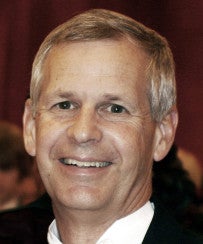
Ergen is one of the most well-known entrepreneurs in this sector and has been behind some of the biggest moves. Whether broadcast, broadband, wireless, the company has been at the forefront of shaping a communications revolution in the United States. From humble beginnings in 1980, Charlie Ergen has been a powerhouse of our industry with breathtaking moves and pivots. He is one of the boldest entrepreneurs we have seen in the last 40+ years and he is still going strong. EchoStar is a name that resonates throughout the industry and one that is transcending the boundaries of satellite, wireless, telecoms, and broadband.
Lori Garver
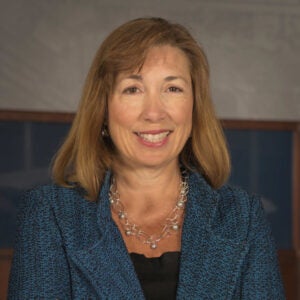
Today, NASA embraces commercial solutions for everything from transporting astronauts to the International Space Station, landing experiments on the Moon, to supplying satellite imagery. It’s easy to forget this wasn’t always the way of doing things. Lori Garver is one of the agents of change who worked to bring the government agency into the 21st century and embrace the innovation happening in the commercial space industry. Over her years of working at NASA and serving as deputy administrator from 2009 to 2013, Garver worked for Congressional funding for the Commercial Crew program, which now sees SpaceX regularly transport astronauts to and from the ISS. Her work brought her many detractors in NASA, the space industry, and Congress — but Garver persevered, and the approaches she championed have largely been embraced today. Garver remained an outspoken advocate for progress after NASA, and went on to make a huge impact for gender diversity in the space industry by co-founding the Brooke Owens Fellowship, which now has more than 350 alumni since its founding.
“It’s hard to think of any space policy decision that’s occurred in my lifetime with a bigger, more positive effect than NASA’s Commercial Crew and Cargo programs; and it’s impossible to imagine those programs happening without Lori Garver. She’s never been afraid to take big shots, and she’s always been willing to put in the work on the little things behind the scenes, as well. Her work at NASA created huge ripples with profound effects that are still shaping our industry. And she’s had a similarly outsized effect on the future of aerospace with her incredible personal impact on so many young professionals through the Brooke Owens Fellowship,” says William Pomerantz, head of Space Ventures at AeroVironment, who co-founded the fellowship with Garver, along with Cassie Kloberdanz Lee in 2016.
Hugh Panero

Every so often in the satellite industry a new market becomes apparent. Recently, we have seen much talk about direct-to-device (D2D). Almost three decades ago one of the hottest markets in satellite was satellite radio, ad-free radio that was tailor-made for the U.S. consumer. Hugh Panero co-founded XM Radio in the late 1990s and was the CEO until 2007. He was Via Satellite’s Satellite Executive of the Year for 2002. The company became a key player with close to 10 million subscribers. Panero, while not in the industry as long as some others, left a lasting impact. “Many executives launch new technologies; relatively few build an entirely new industry and attract millions of loyal paying customers from essentially a blank sheet of paper. Hugh’s vision, strategic leadership, and relentless execution made that possible, and his contributions helped redefine how Americans experience audio entertainment,” Tom Watts, founder and managing partner of Sawtooth Capital Advisors, tells Via Satellite.
Armand Musey, president and founder of Summit Ridge Group, was equally effusive of his impact. He adds, “It is easy to forget how uncertain satellite radio looked when XM started. Hugh Panero removed that uncertainty by building a real business with millions of paying subscribers. The company he led became half of SiriusXM, and the subscription model he validated still shapes how the audio industry thinks about paid content.”
Sara Spangelo
Sara Spangelo has broadened the bounds of what’s possible with satellite connectivity — more than once. Frustrated by the limits of existing communications infrastructure, Spangelo co-founded satellite IoT startup Swarm in 2016. Swarm built out a network of sandwich-sized satellites connecting to tiny, handheld hardware to dramatically lower the price for satellite IoT, making connectivity possible for use cases where it previously wasn’t affordable. SpaceX took notice, acquiring the company in 2021 for its intellectual property and expertise. Spangelo joined SpaceX as senior director of Satellite Engineering where she co-lead SpaceX’s Direct-to-Cell program, now Starlink Mobile. Joining a year before the landmark partnership with T-Mobile was announced, Spangelo was there during the critical time when SpaceX signed with telcos all over the world and established the separate Starlink Mobile constellation. Over three years with SpaceX, Spangelo helped make ubiquitous connectivity possible for cellular customers around the world.
 Spangelo has a rare combination of steadfast determination and genuine empathy, says Katelyn Sweeney, who worked on Spangelo’s team at SpaceX. “She drove our team through some of the most challenging tech and business problems, but she still never lost sight of the people behind it. I feel like my personal bar for excellence is raised from working for her, and I firmly believe the world is a better place because of the teams and technologies she’s developed,” Sweeney tells Via Satellite.
Since leaving SpaceX in late 2024, Spangelo has set her sights on the energy industry, founding Ambrosia Energy, a startup that aims to make solar and battery systems the most cost-effective energy source. There is no doubt she will leave a lasting mark on the energy sector as well.
Eric Sung

Over the last few years in the antenna arena, Intellian has made quite a name for itself winning huge deals with the likes of Iridium, OneWeb, and SES. It has established itself as one of the leading antenna manufacturers worldwide. The company was the first-ever winner of the Via Satellite Technology of the Year award in 2018 for the v240MT Tri-Band antenna system which was all about flexibility and cutting edge technology. It has developed products across key verticals such as maritime, land mobility, military/government and has become one of the most successful players in the antenna arena. Eric Sung, the CEO of Intellian, is one of the main architects of Intellian’s stunning rise to one of the top developers and sellers of antenna technology.
One of its signature early deals was with Iridium. On that deal, Sung worked with Wouter Deknopper, vice-president and general manager of Maritime business at Iridium. “Under his leadership, Intellian has followed an extraordinary trajectory: from a new and ambitious underdog in maritime satcom to a global technology leader with strong positions across maritime and multiple other verticals,” Deknopper says. “That success reflects not only commercial execution, but a clear and consistent commitment to innovation, especially during what has been a true rollercoaster period of change for our industry. Eric and the Intellian team have helped move the market forward.”
Dylan Taylor

Dylan Taylor played a role shaping the growth of the commercial space industry as an angel investor and an advocate, and is now building a new generation of space company with Voyager Technologies. Taylor had a long career as a business executive but he held a lifelong interest in space. He started out in the space industry as an early-stage investor, where he quietly shaped the birth of the New Space era by investing in more than 50 companies, many of which are heavy-hitters today. He founded the nonprofit Space For Humanity in 2017 before founding Voyager Technologies in 2019.
At Voyager, Taylor has pursued a vertical integration playbook, acquiring various capabilities across commercial and civil space and defense. One of the most significant was the acquisition of Nanoracks, one of the first companies to commercialize access to the International Space Station (ISS). “Since Voyager acquired Nanoracks, I’ve had a front-row seat to Dylan’s relentless drive to build a truly sustainable commercial ecosystem, from Low-Earth Orbit to the lunar surface and beyond. He is a space visionary, disciplined operator, and someone who believes, at his core, that what we build in space is ultimately in service of humanity,” Nanoracks founder Jeffrey Manber, now special representative to the chairman and CEO, Voyager Technologies, tells Via Satellite.
Voyager supports missions across the industry spanning civil space missions and the ISS, to defense programs, commercial satellites, and lunar programs. Taylor is genuinely passionate about the future of human spaceflight, even experiencing it firsthand as a passenger on a Blue Origin New Shepard flight in 2019. By bringing together defense and space technologies with a commercial space station, Taylor is shaping how the future commercial market in space will develop.
Part Two, published on July 8
Rene Anselmo
As the founder of the first privately owned international satellite communications company, Rene Anselmo was the pioneer of the commercial satellite industry we have today. While leading a Spanish language TV network in the 1960s, Anselmo was frustrated by the prices for satellite transmission and decided to finance the creation of a new satellite operator. At that time, Intelsat was an effective monopoly on international satellite service. Anselmo had to go to bat for his nascent venture, lobbying Congress to break Intelsat’s monopoly. He famously wrote letters from “Spot the dog,” critiquing the establishment, with the slogan that “Truth and technology will triumph over bullshit and bureaucracy.”
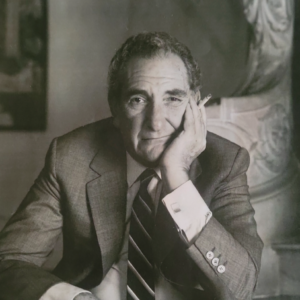
Anselmo did triumph, securing a directive from the Reagan administration in 1984 that separate international communications satellite systems be approved, and PanAmSat launched PanAmSat-1 in 1988. “Against a concerted effort among the world’s telecom entities to block his startup, he succeeded not only in ending the international monopoly, but also individual national monopolies when, as the result of PanAmSat’s commercial success, he got landing rights in formerly closed markets,” Henry Goldberg, who was Anselmo’s regulatory lawyer, tells Via Satellite.
Anselmo was honored as Via Satellite’s inaugural Satellite Executive of the Year in 1988. He later died at age 69 in 1995. PanAmSat went on to become one of the world’s largest satellite operators, before it was acquired by Intelsat in 2006 for $3.2 billion. “Rene gave people permission to be bold — not reckless, but bold together. He made the mission fun, he made the fight worth joining, and he made everyone around him believe that a very small upstart private satellite company could change the rules of global communications. And they did,” longtime satellite executive and PanAmSat alum Mike Antonovich tells Via Satellite.
Peter Beck
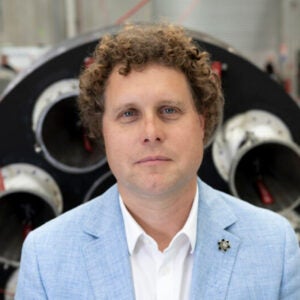
Peter Beck is one of the most fascinating success stories in the “new space” era, building one of the world’s most active launch companies with no formal training, in a country with little space heritage. Beck got his start experimenting with engines, building rocket bikes and rocket packs before founding Rocket Lab in 2006 in New Zealand. Incredibly, the company’s Electron rocket reached orbit on just its second test flight in 2018. Electron has since reached the 50-launch milestone faster than any other commercially developed rocket in history. Beck has been on the front end of multiple tech innovations, embracing smallsats as a market before they were taken seriously by the industry. Rocket Lab was also the first company to launch a 3D printed rocket engine and to fully embrace carbon composite material for rockets.
Beck’s vision is larger than launch, and he has been clear-eyed about his vision to build Rocket Lab into an end-to-end space company. Not only has Rocket Lab supported many smallsats in the journey to orbit, but the company’s components and buses support commercial and defense missions across the industry, as well as the Artemis program and interplanetary exploration. Beck and Rocket Lab’s underdog success is truly the story of how democratized space has become. At the same time, he keeps a humble outlook. “It was important for me to build a multi-generational, large space company here in New Zealand,” Beck told Via Satellite in 2023. “I want the company to outlive me … Space is a long-term project.”
Arthur C. Clarke
It’s possible that no one single person has inspired minds across the space and satellite industry more than futurist and novelist Arthur C. Clarke. Called the “Father of the Communications Satellite,” Clarke wrote about the feasibility of Geostationary Orbit satellites for communications in 1945. Former Via Satellite editor Scott Chase, who personally worked and corresponded with Clarke, says that Clarke’s treatise “laid out all the physics and all the justification that others needed to drive the art and science of rocketry, wireless technology, and the transistor, straight to 22,300 miles in space. He was surprised and delighted that it took less than 20 years to go from a concept on paper to telephone calls and video broadcasts across oceans via satellite, and his legacy is that he made it happen with an idea.”
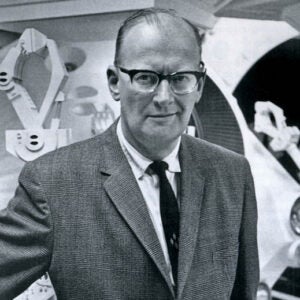
Clarke had incredible foresight for technology, laying out a prescient vision in the 1960s of how much the modern world would be connected, and imagining the development of artificial intelligence as well. He’s perhaps most widely known for co-writing the epic 1986 space sci-fi film “2001: A Space Odyssey” with Stanley Kubrick, inspiring the general public to cast their minds toward the space age. Space titans like Elon Musk and Jeff Bezos, to iconic astronauts like Buzz Aldrin and storied directors like Steven Spielberg have cited Clarke as an influence. Clarke’s writing inspired others to think beyond the here and now. As Clarke himself wrote, “The only way of discovering the limits of the possible is to venture a little way past them into the impossible.”
Mary Cotton
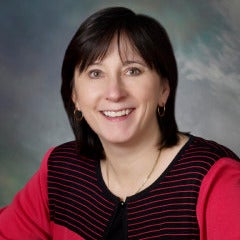
Mary Cotton was CEO of iDirect for 10 years, a time characterized by strong growth for the company. During her tenure, iDirect Government became a major player in the defense and intelligence space. Cotton was a trailblazer for women in the industry. Certainly, back in 2007, the satellite industry was male dominated and there were very few women who had been CEOs of major satellite companies. Julie Bettinger, chief marketing officer of ST Engineering iDirect, told Via Satellite what stood out to her is that Cotton walked into a male-dominated, engineering-heavy industry in 2007 and never once flinched. “She wasn’t loud or flashy; she was steady, direct, and incredibly clear about what she believed satellite could become. She came in as an outsider and immediately saw a bigger future for the industry than most insiders did. She had this way of making people feel like they were part of something meaningful — not just building hardware, but building connection. That’s why teams followed her. That’s why partners trusted her. She led with a mix of boldness and humility that’s rare, especially in tech,” Bettinger says.
She credits Cotton with championing technologies that seem obvious now but were bold bets at the time, such as merging time division multiple access (TDMA) and single channel per carrier (SCPC) on a single platform, backing the DVB S2X extension of the satellite broadcast standard before the market understood how transformative it would be, and driving the creation ground platforms to unlock the economics of high throughput satellites (HTS).
Pradman Kaul
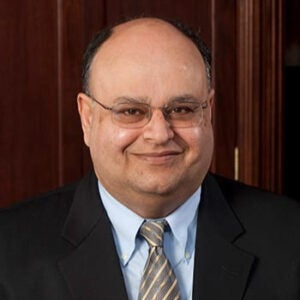
Pradman Kaul had one of the defining careers in the space industry. Kaul was employee No. 10 at Digital Communications Corporation (DCC), a company founded in 1971 by a group of former COMSAT employees, which later became Hughes Network Systems. A stellar 50-year career followed. Under Kaul’s leadership, Hughes achieved a number of industry firsts including the first broadband satellite network; the first commercial satellite implementation for a national retailer; the first satellite internet service; and the first multipath satellite-plus-wireless service for consumers. Kaul passed away in 2025, but he left behind a rich legacy of innovation and commitment to customers.
Sunil Bharti Mittal, founder and chairman of Bharti Enterprises, exclusively commented to Via Satellite about Kaul’s legacy. “Pradman left an indelible mark on the satellite industry, be that through his contributions, his passion for innovation, or his unwavering belief in the power of connectivity to transform lives. I always enjoyed our interactions, which were firmly anchored in our shared conviction that the benefits of digitalization must be accessible to the very last mile of humanity,” he said. “Pradman possessed an instinctive understanding of technology, refined over a lifetime in the sector. Few parallels exist to the combination of his gentle wisdom and vast technical depth.”
Nobu Okada
Over the last few years, Nobu Okada, Astroscale’s enigmatic CEO has been a regular on shortlists for individual awards in the space sector. His rise is one of the most interesting back stories in satellite. Okada previously recounted to Via Satellite that when he founded the company he had just turned 40 and attended a couple of space conferences, which led him to the lightbulb moment that there was very little talk about space sustainability. So, in 2013, as part of one of the most famous mid-life crises in the satellite industry, Okada set out to create Astroscale, a space company built on sustainability.

On-orbit servicing has kind of always been seen as one of the holy grails of the satellite industry, but few have attacked the problem with such impact as Astroscale. The company won Via Satellite’s Technology of the Year Winner in 2024 for its ELSA-D mission, a defining moment for in-orbit servicing. The company is not resting on its laurels, and has upcoming missions targeting the first-ever refueling of a U.S. Space Force asset in GEO, and the ELSA-M (End of Life Services by Astroscale – Multiple), a commercial satellite service designed to remove inactive satellites from orbit. Thanks to Okada’s vision, Astroscale has influenced the conversation around space debris and sustainable space. Okada already has a rich legacy for someone the satellite world didn’t even know about until just over a decade ago. As Astroscale continues to rise, his influence on our sector will only increase. Not bad for a mid-life crisis!
Gwynne Shotwell

As SpaceX has grown its business from launch, to reusability, to human spaceflight, to satcom and beyond, Gwynne Shotwell has been a steady hand as chief operating officer, navigating the company’s exponential growth. Shotwell crossed paths with SpaceX founder Elon Musk and joined the company in 2002, the same year it was founded, after 10 years with The Aerospace Corporation and a stint at a small company called Microcosm. Initially leading business development, Shotwell gained the trust of the satellite industry and built the Falcon vehicle family manifest to more than 100 launches. This established a critical book of business when SpaceX was the upstart launch market entrant.
She is adept at navigating the company’s relationships — whether that’s motivating the company’s workforce, encouraging satellite operators to adopt reusable rockets, or working with NASA to embrace a commercial provider for human spaceflight. Widely respected and admired, Shotwell has the rare distinction of twice being recognized twice as Satellite Executive of the Year. She was recognized in 2017 for leading SpaceX through industry-changing milestones in rocket reusability, and again in 2020 for returning human spaceflight capability to the U.S. and building Starlink into the world’s largest satellite fleet. When she speaks publicly, Shotwell often champions the work of the company’s engineers that make SpaceX’s achievements possible.
“One of the reasons why SpaceX is successful is we still have these giant goals in front of us,” Shotwell told Via Satellite in 2021. “Every day, you have to think about doing your job better, even if you’re not working on one of the new technology programs. Recreating your job, making sure you do better every day, changing processes that are ineffective … I think that drive for change is why we were able to accomplish what we have to date.”
Mike Trela
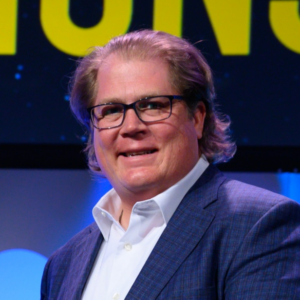
Over the last decade and a half, Mike Trela has had a huge impact on the satellite industry. Firstly, he was one of the key executives behind Skybox Imaging, one of New Space era’s poster children, widely admired for breaking through in the Earth Observation (EO) arena. Now with tech giant Apple for nearly 10 years, Trela led the cross-functional team that developed the Emergency SOS via satellite feature for the iPhone. This achievement was a catalyst for direct-to-device (D2D) service in the industry, proving that satellites could connect directly to standard phones, putting life-saving technology in the pockets of consumers.
Dan Berkenstock, ex-CEO of Skybox Imaging and former Satellite Executive of the Year told Via Satellite that working with Trela was like stepping into a time machine, going back to the aerospace glory days and working alongside Bud Wheelon or Gene Kranz — giants of our industry who proved that competence was not dictated by age. “As a vice president in his early thirties, overseeing the development of the largest commercial sub-meter imaging constellation, Mike reset the bar. At Skybox, and now Apple, he played the role of a world class organizational and technical leader, dramatically advancing the frontier of cost-to-capability in both imaging and communications systems. To the greater industry, he has been a key role model for the new generation of young aerospace leaders revolutionizing industries from hypersonics to the lunar surface. That’s a contribution that will far outlast any of the tremendous systems he’s brought into the world,” Berkenstock says.
Bob Twiggs
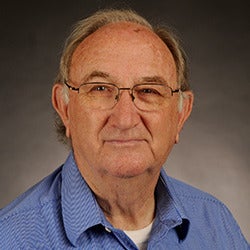
Known as the “Father of the Cubesat,” Bob Twiggs was the driving force behind the creation of the cubesat. The small form factor satellite began at Stanford University as an academic effort — Twiggs was looking to compress the amount of time to design and launch a spacecraft to fit into a master’s program. This led to Twiggs co-inventing the cubesat reference design, working with collaborator Jordi Puig-Suari. The cubesat has been a key force in democratizing access to space globally. It has offered a faster, cheaper path to orbit, which opened the door for key New Space startups, universities, and nations around the world who had never accessed space before, resulting in thousands of cubesats that have been launched today.
Michael Swartwout, professor of aerospace and mechanical engineering at Saint Louis University, was in Twiggs lab at Stanford at the time. He tells Via Satellite that Twiggs has a unique generosity of spirit and enthusiasm for other people to succeed, which became a crucial part of how the cubesat format gained popularity around the world. “He had no interest in patenting this, he thought this idea would be great to share. I think his mindset was the other essential piece of this,” Swartwout says. “I don’t think [the cubesat’s success] happens without Bob’s particular personality, getting other people excited, going around the world to support people who are trying to do this — because it was so close to not being a thing.”
Clay T. Whitehead
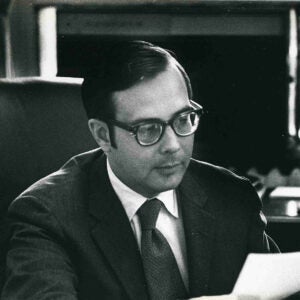
Clay T. Whitehead played a huge role in helping set up the modern satellite industry that most of us know today. Whitehead helped lead the implementation of the Open Skies Policy adopted by the Nixon Administration in the U.S. that aimed to make it easier for qualified companies to launch domestic communications satellites. The initiative, which was originally developed by Whitehead while serving as special assistant to the President, aimed to create a more competitive environment which helped transform the domestic telecommunications industry and paved the way for cable television networks like C-SPAN, CNN, and HBO to emerge and prosper.
Telesat CEO Dan Goldberg called Whitehead “the architect” of the satellite video hotbird concept – the aggregation of popular TV channels at a single orbital slot, which creates a large community of dishes on the ground pointing to that slot for direct-to-home (DTH) and cable headends. This in turn makes an orbital slot highly valuable real estate attracting other channels that want to serve the large audience receiving channels from that slot. “The hotbird concept drove the development of the satcoms business for decades and was the commercial underpinning for the creation and/or growth of a wide range of leading satellite and DTH companies, including Sky, DirecTV, Dish, PanAmSat, SES, Hughes, Americom, Eutelsat and AsiaSat,” Goldberg says.
Part One, published on June 10