
In 1977, the Ariane development program was progressing smoothly, with the goal set at the beginning of 1973 to execute the first qualification flight during 1979.
The initial qualification program included the construction of four launchers, with the objective of two successful qualification flights among these first four launches.

Explore the September 2026 Issue
Check out more from this issue and find your next story to read.
But to avoid any interruption in production and launches after this phase, it was necessary to order the long-lead items no later than the beginning of 1978 (i.e. before the first launch).
However, within the Ariane Program’s Steering Council, 1977 had been spent in endless discussions about the start of production for operational launchers. By the end of the year, we were at a complete deadlock.
Close to despair, I wrote in December 1977 a memo to Yves Sillard, then-director general of CNES, proposing a solution. I explained that to have an efficient, reliable, and competitive tool as well as motivated and competent teams, it was vital to ensure an operational phase with at least two launches per year with a capacity up to four. This was the mission model to be considered. Hence, it was mandatory to ‘commercialize’ the launcher (a weird word back then) by addressing the worldwide market, since the European governmental missions alone were too few to maintain this pace. This new company was meant to handle the financing, production, marketing, and operating of the launchers.
The first order by Intelsat (then the world’s leading commercial satellite operator), won with great efforts in 1977, made more credible my proposal to create this company, later called Arianespace, which would receive from the European Space Agency (ESA) the use of technologies developed for Ariane, in exchange of maintaining the operational readiness of the production and launch tools for the Ariane launchers.
This bold proposal was debated at length during 1978 for it was considered then that only states, through government agencies, could assume financial, legal, and safety risks of launching satellites.
However, it was clear that ESA, with its funding model through R&D credits given by its Member States to finance technological developments, was not meant to endorse the financial and commercial risks of an operational production of launchers.
The idea gradually taking hold within the different ESA delegations was that the time had come for industry, following the launcher qualification, to take responsibility and assume the risks of the operational phase.
Aérospatiale, paralyzed by the fear of qualification launch failures (the memory of the string of Europa 2 launcher failures was still fresh), refused to take the lead on this operation, which its President, Jacques Mitterrand, considered excessively risky and not very credible.
To limit the financial risk and make it acceptable to the industrial partners, we did three things:
Choosing the legal status of a limited risks corporation bounding each industrial shareholder’s financial commitment to his share of the capital,
Defining the amount of capital called up to cover the financing of one backup launcher,
Determining each industrialist’s share of the capital proportional to the amount of his supplies to build a launcher. To further reduce their risk and maintain control over the company’s development, CNES would take 34 percent of the capital under this proposal. This arrangement had the advantages of convincing the industrialists that CNES would stay by their side in case of major difficulties and of reducing their financial risk to 66 percent of the amount mentioned above, while allowing CNES to remain the dominant shareholder.
The Arianespace proposal was approved by the French government in the summer of 1978. Then, during the second half of 1978 and the first half of 1979, we met all 36 Ariane industrial managements to present this plan and persuade them to participate.
Simultaneously, Yves Sillard, Roland Deschamps, and I visited the delegations of the 11 participating countries in their respective capitals to present the plan in detail. The prerequisite for their consensus was obviously the commitment of their national industrialists.
To quickly solidify this commitment, Roland Deschamps and I had the idea, and one that proved very effective, of signing a memorandum at the 1979 Paris Air and Space Show, a few months before the first launch. By signing this document (virtually the company bylaws), they legally agreed to participate in Arianespace’s capital, this commitment taking effect only after the first successful launch. With this important reservation and caught up in the excitement of the Paris Air Show, everyone signed, some thinking it would give them time to see how things went and … possibly back out.
That’s how we got the signatures of the 36 European space companies involved in the launcher production, coming from the 11 states participating in the program, also of 11 banks interested in taking part in the financial operations of Arianespace and of CNES, the project leader of the development program and founder of this new company.
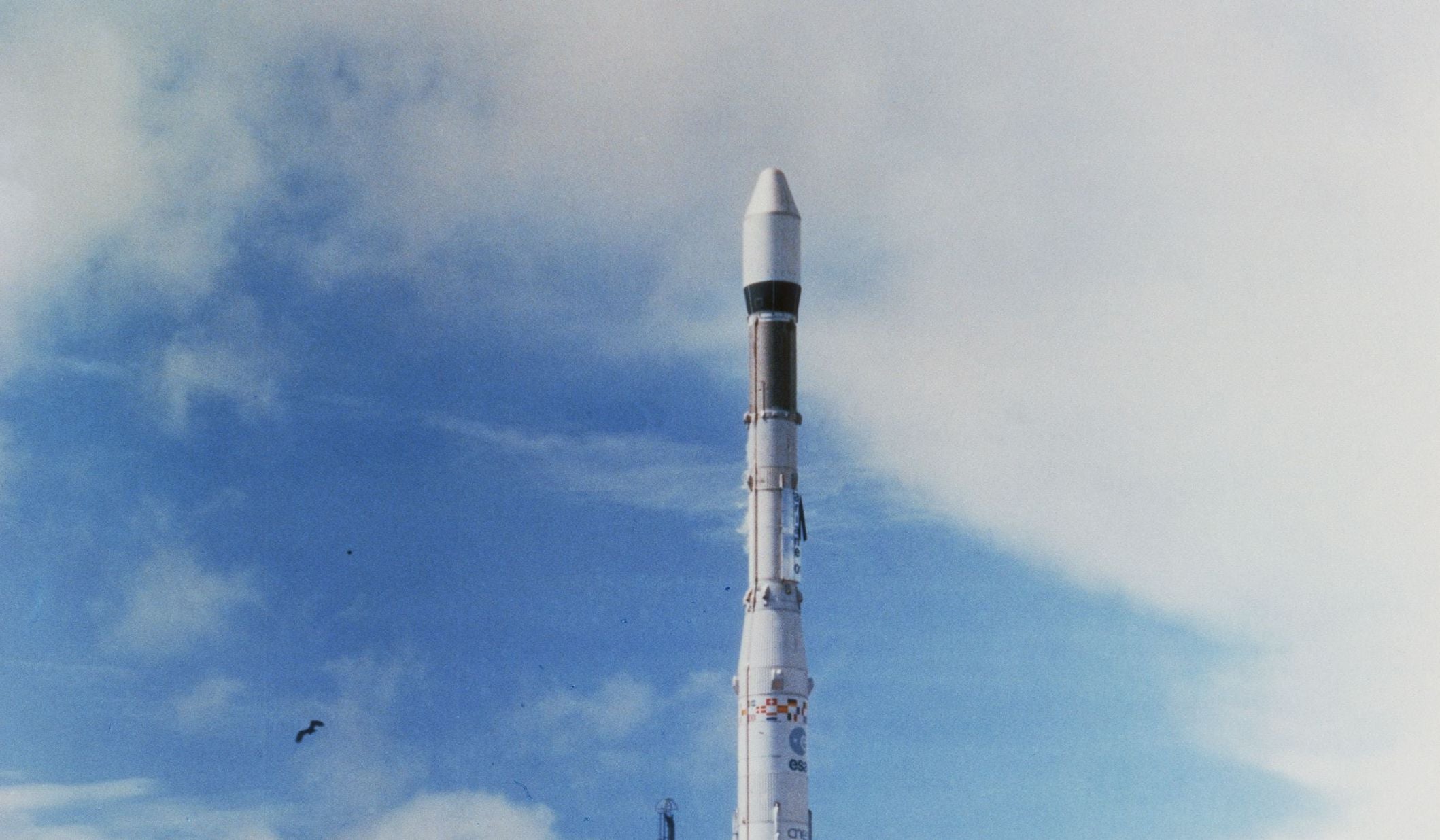
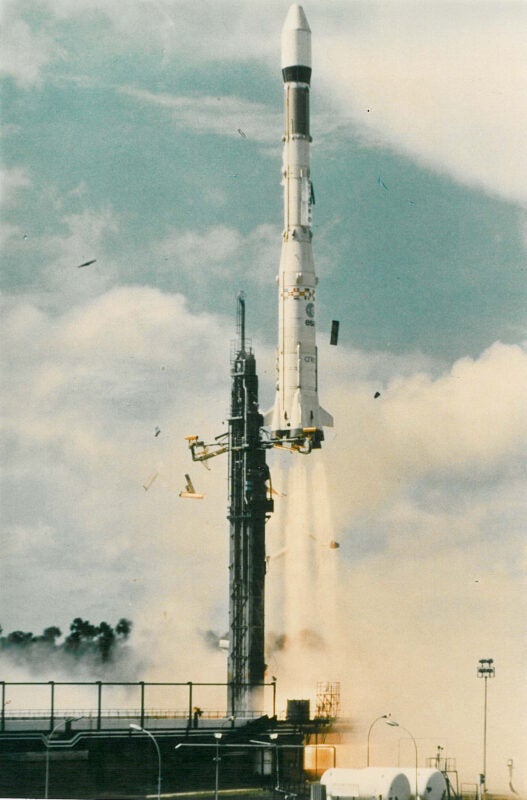
So, immediately after the first successful Ariane launch on December 24, 1979, shareholders were invited to sign the bylaws, quickly registered in March 1980 because we feared that a potential Ariane failure in its qualification could scare off some industrial partners. That early failure indeed came on May 23, 1980 at the second qualification launch, but by then Arianespace already existed and was starting its commercial operations!
For once, Europeans were ahead of Americans in moving from technological development to industrial production and commercialization. It was with no small pride that the opening of the first commercial space transport line, as we called it, took place on May 22, 1984 with the launch of the SPACENET F1 satellite on V9, immediately following the launches of the first export satellites IntelsatV F7 and IntelsatV F8 having paved the way for commercialization. The beauty of the story was that these satellites were American, even as competition with the Space Shuttle was at its peak.
The creation of Arianespace, entirely dedicated to this activity, allowed for the necessary flexibility in launch offers. For the first time in this domain, introducing the concept of services like spacecraft preparation, financing, and insurance, and treating satellite operators as customers rather than mere users was very well received by the market, especially by American satellite operators. Not long before the first Space Shuttle accident, Arianespace was already on par with it in terms of order book for commercial satellite launches.
The creation of Arianespace has been and still is a key factor in the success of the operational phase of Ariane. Today Arianespace has launched more than 1,200 satellites for 150 clients. VS
Frédéric d’Allest served as the first Chairman and CEO of Arianespace