
Happy 40th Birthday to Via Satellite!
In 2025, ~4,500 satellites were launched into space globally – a greater than twenty times increase compared to an average, annual launch cadence 40 years ago. The raw numbers serve as a clear indicator that SpaceX has shaped satellite manufacturing, launch, and operations on a global scale.

Explore the September 2026 Issue
Check out more from this issue and find your next story to read.
When SpaceX announced Starlink in January 2015, the goal was to rethink the very concept of connecting to the internet. To find a way to improve how data is routed around the world and how to provide high-speed, low-latency, reliable internet anywhere on Earth. Making this a reality would require a constellation of satellites in Low-Earth Orbit (LEO) that, at the time, was treated as “impossible.” Or more bluntly: it was seen (with excitement in some cases) as a rapid path to our bankruptcy.
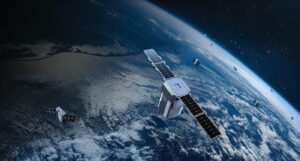
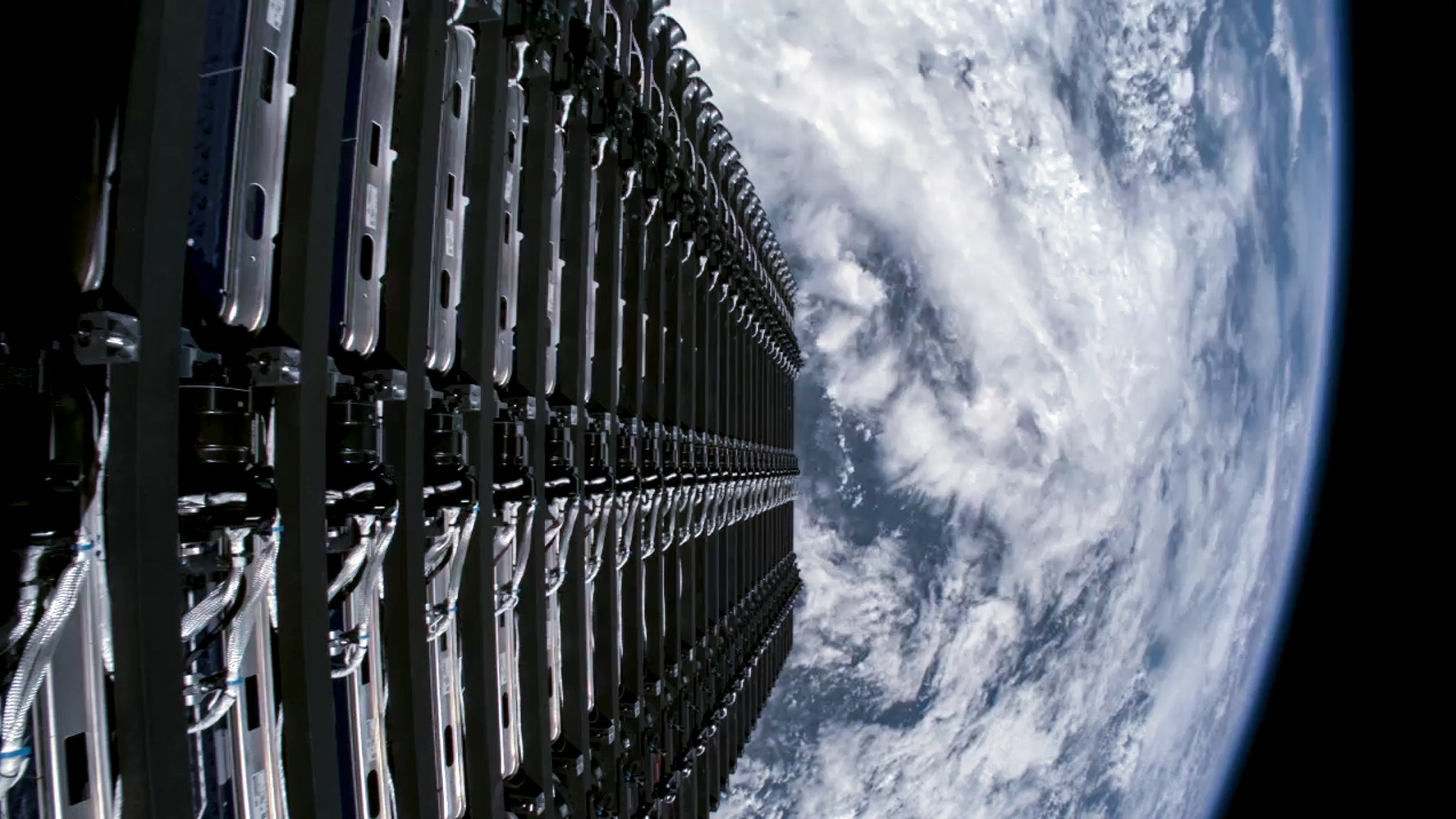
A decade later, Starlink operates more than 10,000 satellites in space and serves tens of millions of people on Earth with high throughput, low-latency connectivity.
To achieve this, SpaceX needed to radically rethink satellite design while ensuring producibility at scale. The Starlink constellation also needed to be able to rapidly add new technologies to continuously improve the network and serve an expanding base of customers.
This was a significant shift from the telecommunication satellites that were historically the only means of space-based communications. Even today, traditional Geostationary (GEO) satellite operators spend upwards of $1 billion on bespoke satellites that offer 1 terabits per second of capacity over a specific area of Earth with latencies between 500-700 milliseconds. At the same time, Starlink is capable of routing petabits of information across its laser mesh network to any point on Earth with significantly lower latency.
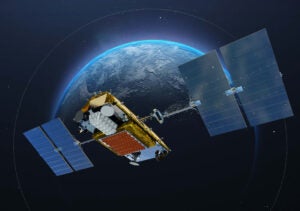
The Starlink V3 satellites – the third generation of the Starlink satellite design – will be able to add up to 60 terabits of capacity to the constellation with each launch at a fraction of the cost compared to GEO satellites.
Rethinking the internet with a constellation of thousands of satellites also opened up a new, now viable use case: continuous cellular connectivity from space for text, voice, and data. This concept allows elimination of terrestrial dead zones, enhances capacity in high density events (think fast internet at crowded stadiums, along the Tour de France route, etc.) and critically, keeps people connected when land-based systems are damaged from natural disasters. This technology fundamentally enables people to stay connected no matter their location or circumstance.
Today, Starlink Mobile is the largest and most robust in-space communications provider for unmodified cellular devices – and the only one actively serving customers. These connections enable voice, video, and messaging services across the Starlink network to any point across the globe with the constellation’s inter-satellite laser links.
In the span of just 18 months, we deployed 650 Starlink Mobile satellites to enable a global mobile network that has connected tens of millions of people and provided life-saving connectivity when people needed it most. On average, more than 18 million people actively rely on Starlink Mobile monthly to connect their phone in areas where terrestrial service is unavailable.
Operating the world’s largest constellation of 10,000 satellites (and counting) also required us to invent the means to safely fly this fleet in LEO. Earlier this year, thanks to Starlink’s ability to rapidly incorporate new technology, we introduced Stargaze, a novel space situational awareness system.
Stargaze uses data collected from 30,000+ star trackers on Starlink satellites, each of which makes continuous observations of nearby objects. The system autonomously detects orbiting objects and generates accurate orbit estimates and predictions of position and velocity for all detected objects in near real-time. These predictions integrate into a space-traffic management platform that identifies potential close approaches between objects in space and generates Conjunction Data Messages. To maximize safety for all satellites in space, we make our Stargaze conjunction data available to all satellite operators – free of charge.
Large-scale satellite operations also required us to rethink how a satellite’s life ends in space. For most of the spaceflight era, satellites were simply left in orbit once their operations ended. For Starlink, we wanted a different approach. Starlink satellites are deorbited at the end of their service lives and are also designed to demise in Earth’s atmosphere. Starlink also uses a targeted re-entry approach to deorbit satellites over the open ocean, away from populated islands and heavily trafficked airline and maritime routes.
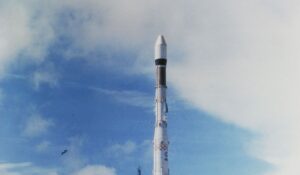
All of this is made possible by the industry-shifting change in rocket use – specifically rocket re-use – also led by SpaceX. Reuse was designed to increase rocket reliability and enhance the economics of launching to space. Falcon 9 has proven this ability and affected an order of magnitude decrease in launch costs. And with a need to launch thousands of Starlink satellites, we had a forcing function to help drive us to make Falcon as reliable and cost effective as possible.
Many new and in-development rockets now emulate this design. Starship will advance this philosophy even further as the world’s first fully and rapidly reusable rocket – which will enable another order of magnitude drop in the cost of accessing space.
Starship’s capability coupled with evolving satellite designs will allow us to serve more people on Earth, extend our communications infrastructure at-scale and economically to the Moon and beyond, enable AI compute in space, make life multiplanetary, and extend the light of consciousness to the stars.
There is no question that this was hard and many SpaceX heroes had to do difficult things successfully, but achieving “the impossible” must start with the commitment to not let the Tyranny of Tradition stifle important ideas and rule what gets done. VS
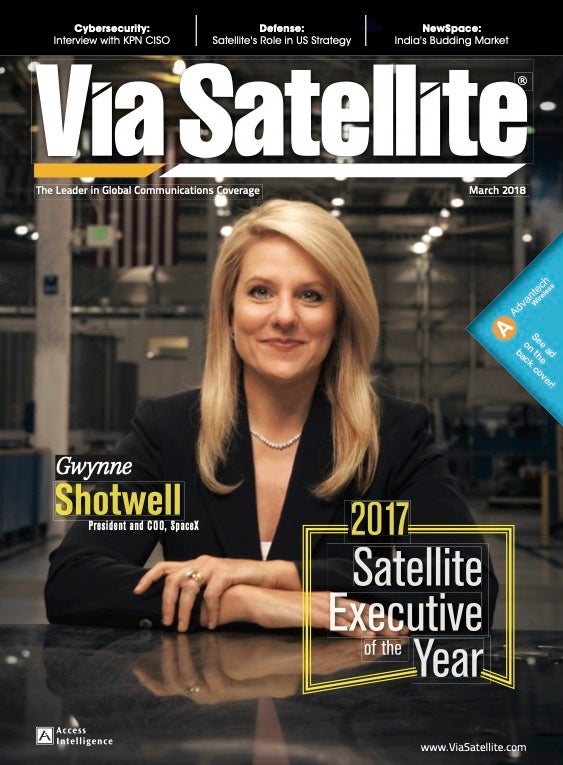
Gwynne Shotwell is the President and COO of SpaceX