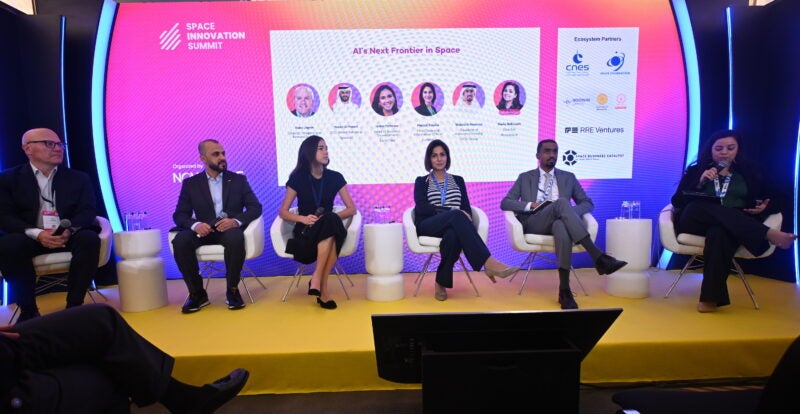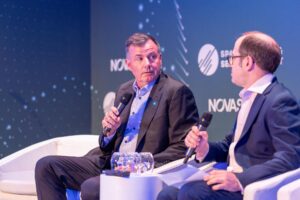
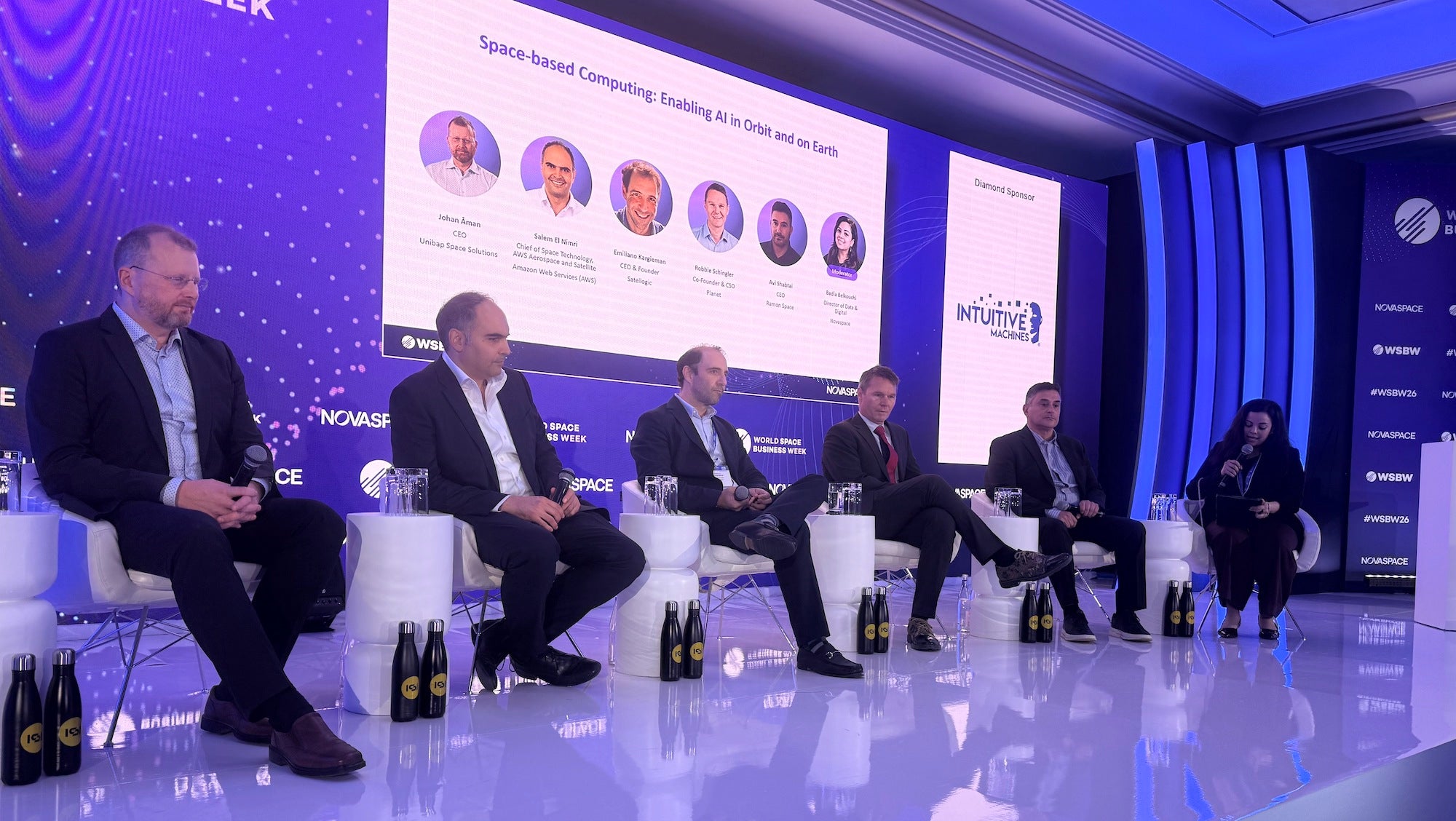
PARIS — The topic of AI is everywhere right now. At World Space Business Week (WSBW), experts looked at the future for space-based computing and how AI could make a difference to business models and space architectures.
Robbie Schingler, chief strategy officer for Planet said latency is one of the biggest areas of impact in the convergence between space and AI. The speed of data getting to the right people is important too as it has the potential to save lives as well as money, he said.
Schlinger also talked about the evolution of business models here as move into the space-based computing era. “Our customers are demanding more data in real time. How much would you pay for something in real time? I think we are going to see in EO, the time axis will be a major part of the equation.”
One of the most surprising things, according to Schlinger, is how the satellite-as-a-service (SaaS) model has evolved. The applications that come out of combining AI tools with EO are “profound,” and open up the market for more defense and intelligence applications.
Emiliano Kargieman, CEO of EO company Satellogic, company spoke about the costs involved involved in building this next generation architecture. He said when looking at building space-based data centers, “The largest cost is by the far the cost of the overall AI infrastructure. It is not the costs associated with energy.”
In terms of business models, Kargieman said customers either want to build their own infrastructure or they want services. “We see a range of different service types and business models. You are going to be a range of models from dedicated infrastructure to services.”
Kargieman also spoke about the efficiencies of space-based computing, particularly as it relates to the downlink. “The other big use is to optimize downlink. As we collect more data in orbit, the wealth of data is huge. We don’t necessarily need to download all of it. So, space-based computing can help optimize downlink budgets,” he said.
Avi Shabtai, CEO of Ramon Space, agreed that developments in space-based computing will enable the industry to have better business models in orbit, particularly when it comes to processing and handling the data. “The economics of this architecture has proven itself on Earth. It will prove itself in space. It will enable us to build better solutions and services for space. There will be services where you can buy hardware and software, for example. We will see a whole ecosystem about computing in space,” he said.
Salem El Nimri, chief of Space Technology for Amazon Web Services (AWS) says AWS sees space-based computing as an extension to what is happening on Earth, but emphasized there are a lot of unknowns in this area.
“We need a lot of compute. You will have data centers on the ground and ones in space. You are talking about intelligent systems that can provide better information,” Nimri said. “There are a good number of analysts who look at the potential of the market. There is more excitement when it comes to space. There is a lot we don’t know yet.”