SpaceX’s AI business drove the story in its third quarter results as the AI segment, now renamed “Super Intelligence” (SI), surpassed Starlink connectivity revenue. The Starlink business continued growing, but rate of growth slowed compared to last quarter.
SI revenue increased by $5 billion during the quarter to $7.6 billion, driven by the ramp of SpaceX cloud services agreements.
Overall, SpaceX revenue of $14.6 billion increased 161% year-over-year. The stock price surged 10% on Wednesday as results came in above consensus and Elon Musk floated the possibility of a future SpaceX/Tesla merger.
Results came in on Tuesday as Starlink and the Starshield military variant are in the news for service disruptions in Ukraine that impacted Ukrainian military operations. Musk said any decision to restrict Starshield would come from the U.S. government, but the Wall Street Journal reported Tuesday that Musk himself ordered the slowdown, after discussions with the White House. U.S. Senators are calling for an inquiry into the decision and it’s also sparked new calls across Europe to break the reliance on Starlink.
Analysts did not question SpaceX about the Starlink/Ukraine situation during Tuesday’s call.
AI Takes the Lead in Revenue: AI revenue overtook Connectivity revenue as it grew 830% year-over-year to $7.6 billion. This includes revenue from the Cursor acquisition, driven by new cloud services agreements.
Musk indicated much of his time is focused on the AI side, saying he is personally spending much of his time, four days a week in Memphis amid work to bring the Memphis supercomputer cluster Colossus 2 online.
“Thus far, unflagging AI demand has resulted in financials surprising to the upside,” noted William Blair analyst Louie DiPalma in an equity research note. “Mass manufacturing is SpaceX’s speciality, so the AI feeding frenzy is right in the company’s wheelhouse.”
Revenue Targets: CFO Brett Johnsen confirmed the target from last month that SpaceX plans to deliver $100 billion in annual recurring revenue (ARR) by the end of this year, noting that is defined as annualized revenue based on the month of December.
He also said SpaceX projects total company revenues in the range of $33 billion to $37 billion for the first quarter of 2027. Johnson also pointed to debt capital available that SpaceX could tap to finance additional growth.
Connectivity Grows, But Not as Quickly: The Connectivity business posted $5.2 billion in revenue, up 69% year-over-year and 22% sequentially.
While SpaceX pointed to Starlink growth, particularly in the enterprise and government sectors, the rate of growth slowed in Q3 compared to Q2. Starlink’s Q2 revenue, in comparison, grew 66% year-over-year and 32% sequentially.
SpaceX added 1.6 million subscribers during the quarter to reach a total of 13.6 million Starlink consumer subscribers.
After securing an American Airlines connectivity deal, leadership noted that Starlink is now contracted for roughly 12,000 planes, saying this represents nearly 1/4 of available aircraft.
President and COO Gwynne Shotwell pointed to future connectivity growth in connecting cars, robots, and fueling the adoption of “super intelligence.”
“We expect Starlink alone to represent a significant portion of global internet traffic,” Shotwell said.
More Info on Starlink Mobile TBA: After outlining some of the Starlink Mobile plans in the Q2 results and acquiring low-band spectrum during the quarter, Shotwell said the low-band purchase will which “pave the way for Starlink Mobile to become a major mobile carrier in the U.S.”
SpaceX reported it has more than 22 million monthly users on Starlink Mobile, up 37% quarter-over-quarter.
Musk indicated more information on Starlink Mobile is coming, saying SpaceX sees a clear path toward it being “a business that generates several hundred billion dollars in revenue a year.”
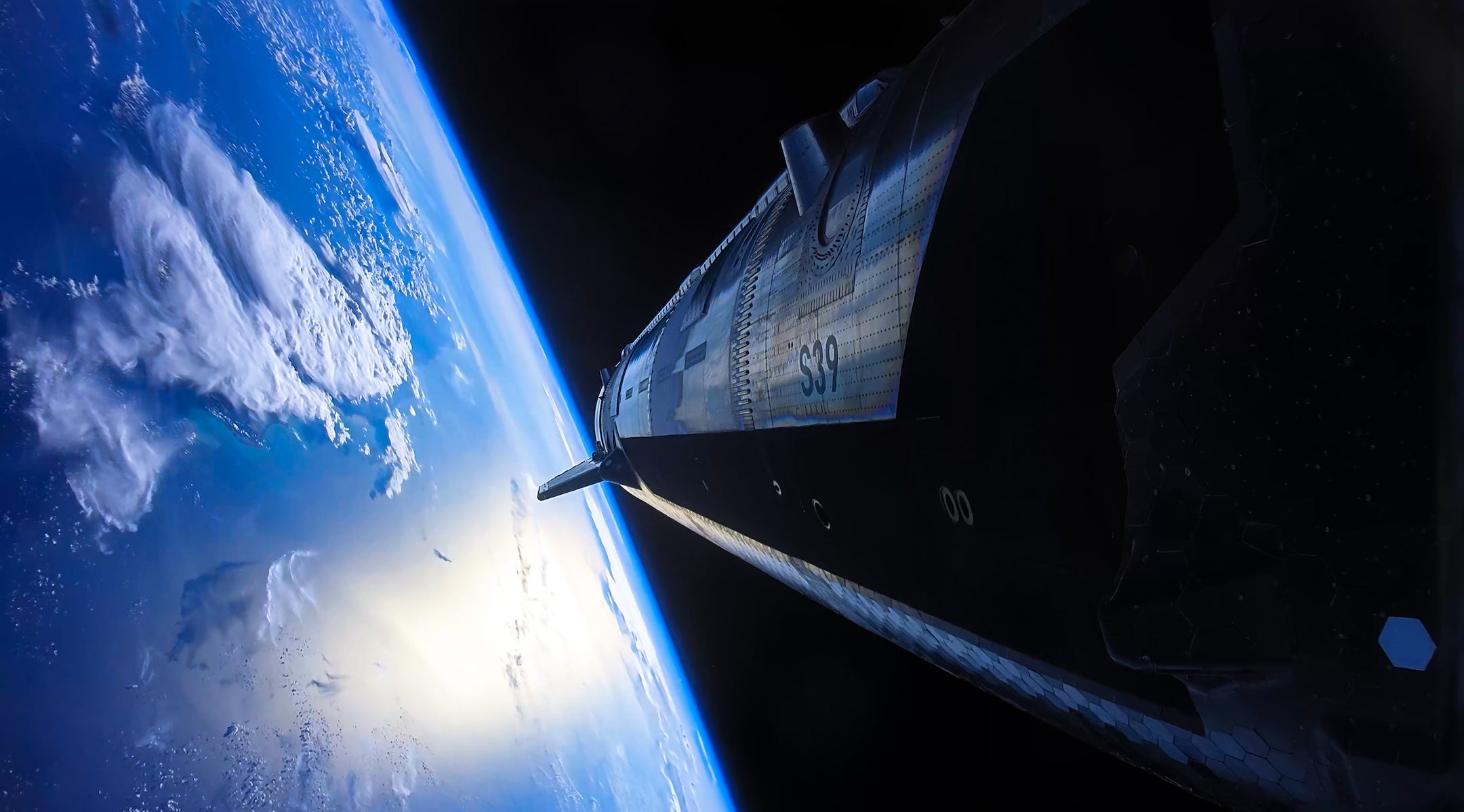
Starship Cadence: That Starlink Mobile roll-out will depend on establishing cadence for the Starship rocket. The most recent test flight successfully deployed V3 Starlink satellites but SpaceX cut the mission short due to a shutdown of one of its engines.
Musk told investors it’s “more likely than not that [Starship] succeeds on the next flight, but “success is not guaranteed” the first flights. He targeted that Starship will fly weekly in the first half of 2027, then increase twice weekly or more frequently by the end of next year.