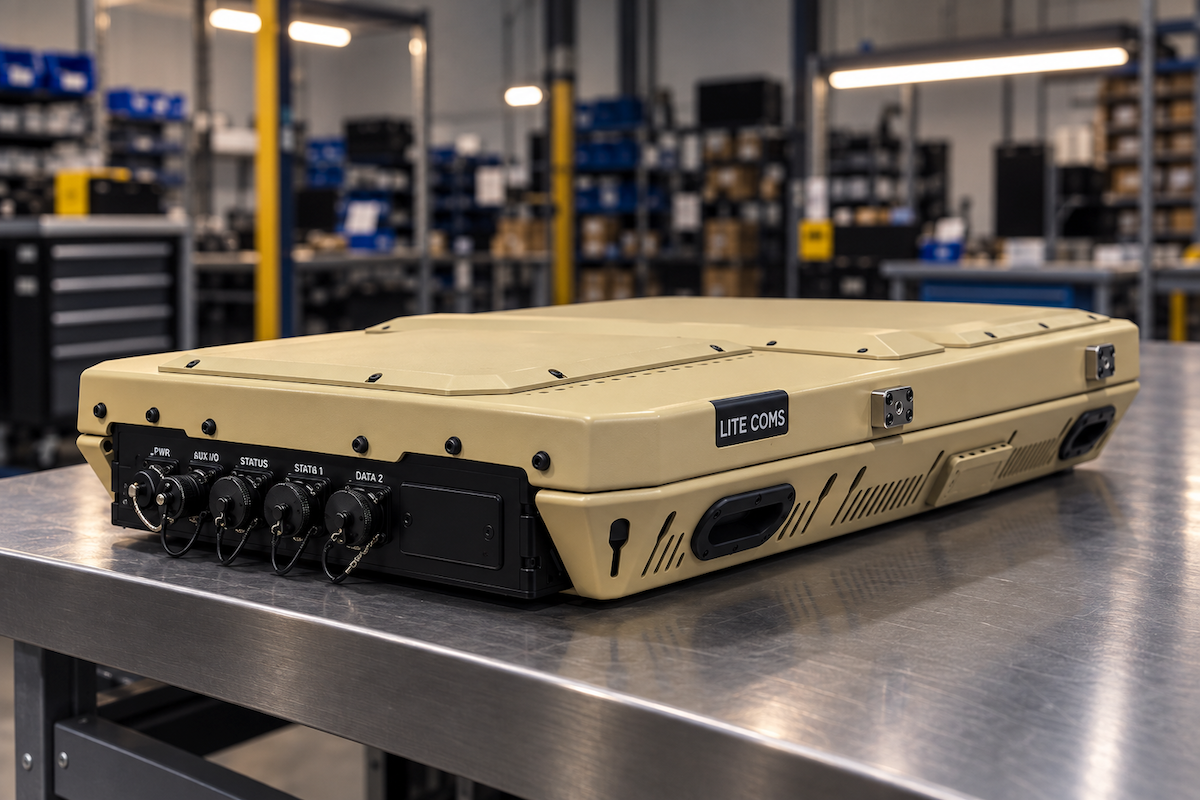
Lite Coms is rolling out the new GT3 flat panel antenna designed for simultaneous connectivity across multiple LEO satellite constellations. The Lite Sat GT3 combines commercial off-the-shelf equipment into a ruggedized terminal, optimized to be affordable for government end users, Andrew Colaruotolo, chief strategy officer, told Via Satellite.
The GT3 terminal can operate on Starlink, OneWeb, 5G, and LTE networks, offering multiple transport paths.
With more networks to choose from, Colaruotolo says customers can have “analysis paralysis” about which networks to choose. The GT3 is designed to provide multiple options at a lower price.
“The biggest thing that the GT3 brings to the market is that you have high throughput, low latency access to networks that can operate either independently or simultaneously. You’re not locked into a single network — you can you can choose which is best for your mission for the day,” Colaruotolo said.
The terminal is designed to operate on any vehicle, such as tactical utility task vehicle (UTV), SUVs, command vehicles, for defense cases that require resilient low latency operations, versus a single platform.
Unlike other multi-network terminals on the market, the GT3 is not a proprietary technology, it’s commercial off-the-shelf equipment that has been ruggedized for a multi-network platform.
“The biggest thing that sets us apart from other terminals on the market is that we’re operating simultaneously through two LEO networks, and we’re doing that in a very very affordable manner,” Colaruotolo said. “A lot of the feedback that we’ve had from our customers is to take what’s commercially available and make it rugged for the military.”
Lite Coms manufactures its VSAT and flat panel antennas in New York. The company currently manufactures a similar, single-network antenna at a rate of 30 terminals per week, Colaruotolo added.
As more LEO networks are set to come online in the near future, Lite Coms is looking at products for emerging networks.
“We have plans to grow with the emerging technology,” he said. “When we started Lite Coms, it was never to choose a technology and get behind it. We take multiple technologies and bring them into our users’ hands.”