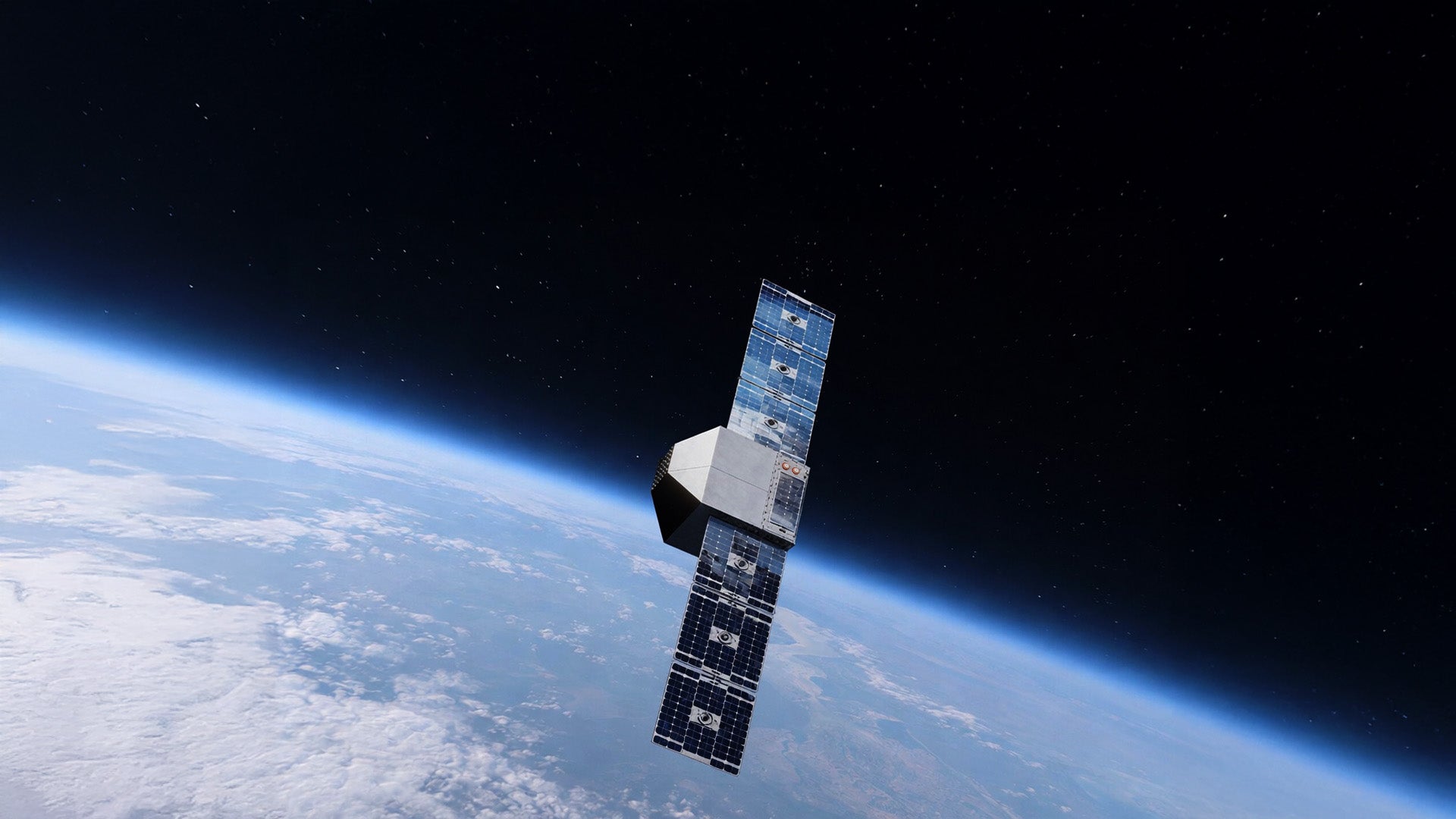
Spanish satellite startup Kreios Space is set to demonstrate an air-breathing electric propulsion (ABEP) system in Very Low Earth Orbit (VLEO), tapping Kongsberg NanoAvionics to provide the spacecraft bus.
Kreios Space selected the 200 kg NanoAvionics’ MP42 microsatellite bus for the mission. The satellite will also have an optical payload from a vendor that has not been announced yet. NanoAvionics will integrate the optical payload, perform system testing, and commission the spacecraft in orbit. The partners did not set a timeline for the mission in the Tuesday announcement.
The mission will operate in VLEO at altitudes of 300 km to 150 km. The partners said the mission will validate the Kreios’ ABEP thruster, take measurements of the environment, and capture sub-meter resolution images in the visible and near-infrared (VNIR) spectral range.
While VLEO has benefits of sharper imagery and better signal quality because it is closer to Earth, there is significant aerodynamic drag in VLEO that requires constant propulsion from spacecraft to maintain altitude.
Kreios Space explained that its ABEP technology is specifically designed for VLEO and collects residual atmospheric gases then uses them as propellant for an electric thruster.
“Kreios is building the satellites that make sustained operations in Very Low Earth Orbit possible. By enabling satellites to fly lower, longer, and more efficiently, we are enabling higher-resolution Earth observation, much better satellite communications, more responsive and accurate missions, and a more sustainable orbital infrastructure,” commented Kreios Space CEO Adrián Senar.