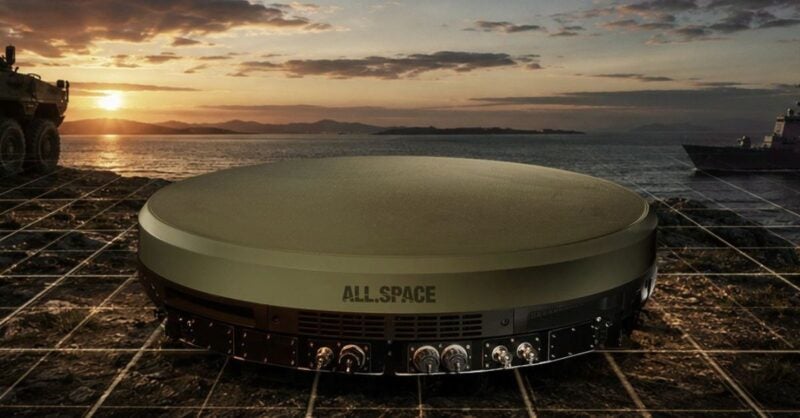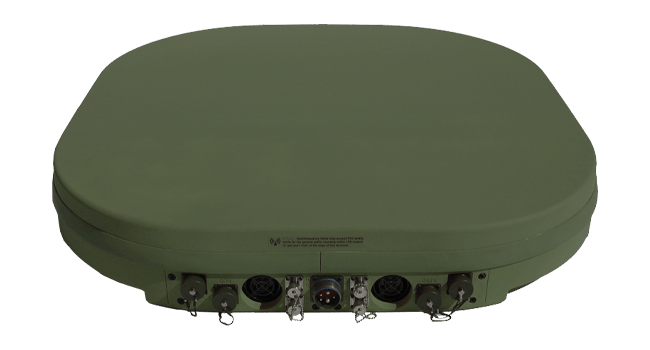

Northwood Space announced a new ground system design this week, the Prism parabolic antenna, designed for high-volume data.
Prism is a 2.4 meter parabolic antenna, designed for high-volume connectivity for use cases like enterprise back backhaul, direct-to-cellular, and compute in space. It covers S-, X- and Ka-bands, and the company plans to scale into higher frequencies. Northwood said that Prism can deliver bi-directional, high-throughput performance across multiple orbits.
Prism builds on technology that Northwood previously developed for its other ground system product, the Portal modular phased array system.
Northwood CEO Bridgit Mendler said that Prism was built from a clean sheet to a deployed unit in six months.
“As more of our economy moves to orbit, we need to design networking that meets or beats terrestrial performance. Prism is designed for the next step in expectations around throughput, latency and reliability. This is true industrialization of space networks,” Mendler wrote on X.
Northwood aimed to design a parabolic antenna that can be deployed more quickly and at a lower lifecycle cost than traditional parabolic infrastructure. The company reported that a recent Prism deployment was shipped by commercial freight and began taking live satellite passes three hours after delivery.
Northwood was founded in 2024 to disrupt satellite ground stations. Since then, Mendler said in a Monday post that the company has deployed a total of 14 antennas across 2 continents at 5 sites. Another 13 sites across 8 countries are currently underway. The company is building toward operating a network with 22+ Tbps of aggregate throughput capacity by 2028.