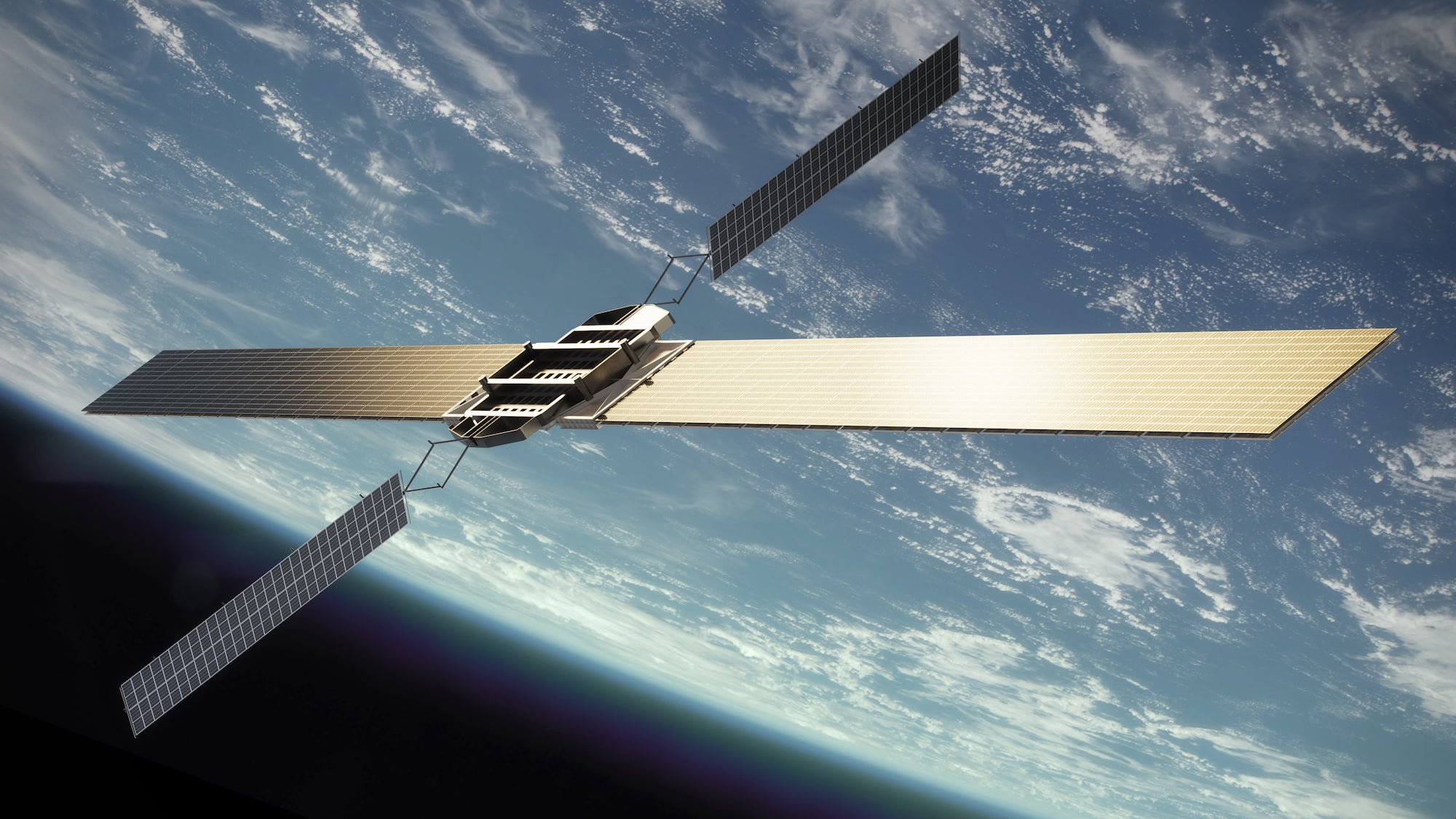
Sophia Space is moving forward toward an in-orbit computing demonstration mission in 2027, selecting an Apex Space Nova satellite bus for the mission.
Sophia Space announced the selection of Apex Space on Tuesday, along with the news it is finalizing a $7 million financing round consisting of SAFE (simple agreement for future equity) financing. Investors include the recently launched Nvidia alumni investor network called EverGreen, founded to advise and invest in AI startups. SparkLabs Group also participated.
The first demonstration mission is a step on Sophia’s plan to deploy orbital data centers by 2030, CEO Rob DeMillo tells Via Satellite. Sophia is taking a “crawl, walk, run” philosophy to deploying orbital data centers by building its business on edge computing technology before deploying it in orbital data centers.
Sophia Space has developed TILE compute modules, which stands for Thermal Integrated LEO Edge. DeMillo explains what sets the company approach apart is its thermal shedding technology.
“We have something that works with the physics of the situation rather than fighting it — a passive heat shedding technology and strategy that doesn’t require a physical heat pump,” DeMillo said. “If you don’t have a physical heat pump, your server is lighter, and most of the power generated goes towards compute, rather than half going toward cooling.”
Sophia Space will fly one of Apex’s Nova bus platforms for its demo mission in 2027 to demonstrate the TILE edge compute modules. This will be the first orbital flight of the TILE.
Its edge computing is aimed at enabling satellites to make decisions autonomously, which can be applicable for missions in national defense, disaster management, Earth observation, and commercial operations.
The company has undisclosed customers that will run tests on the system in orbit, DeMillo said, and the company has put out a call to organizations ranging from defense, space, energy, and emergency response sectors to partner on orbital computing.