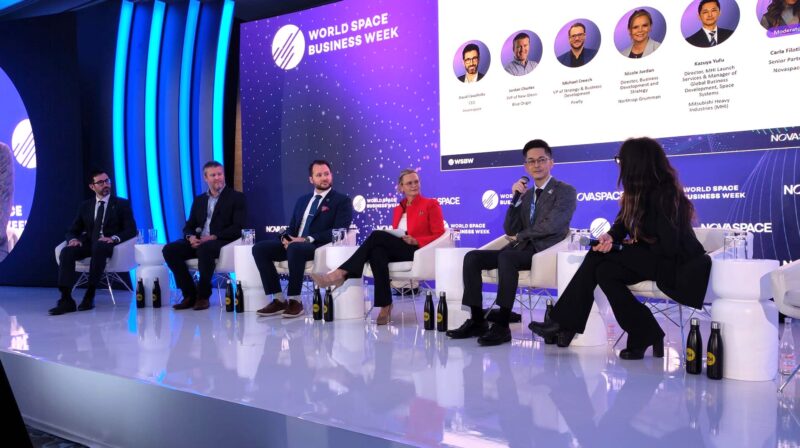
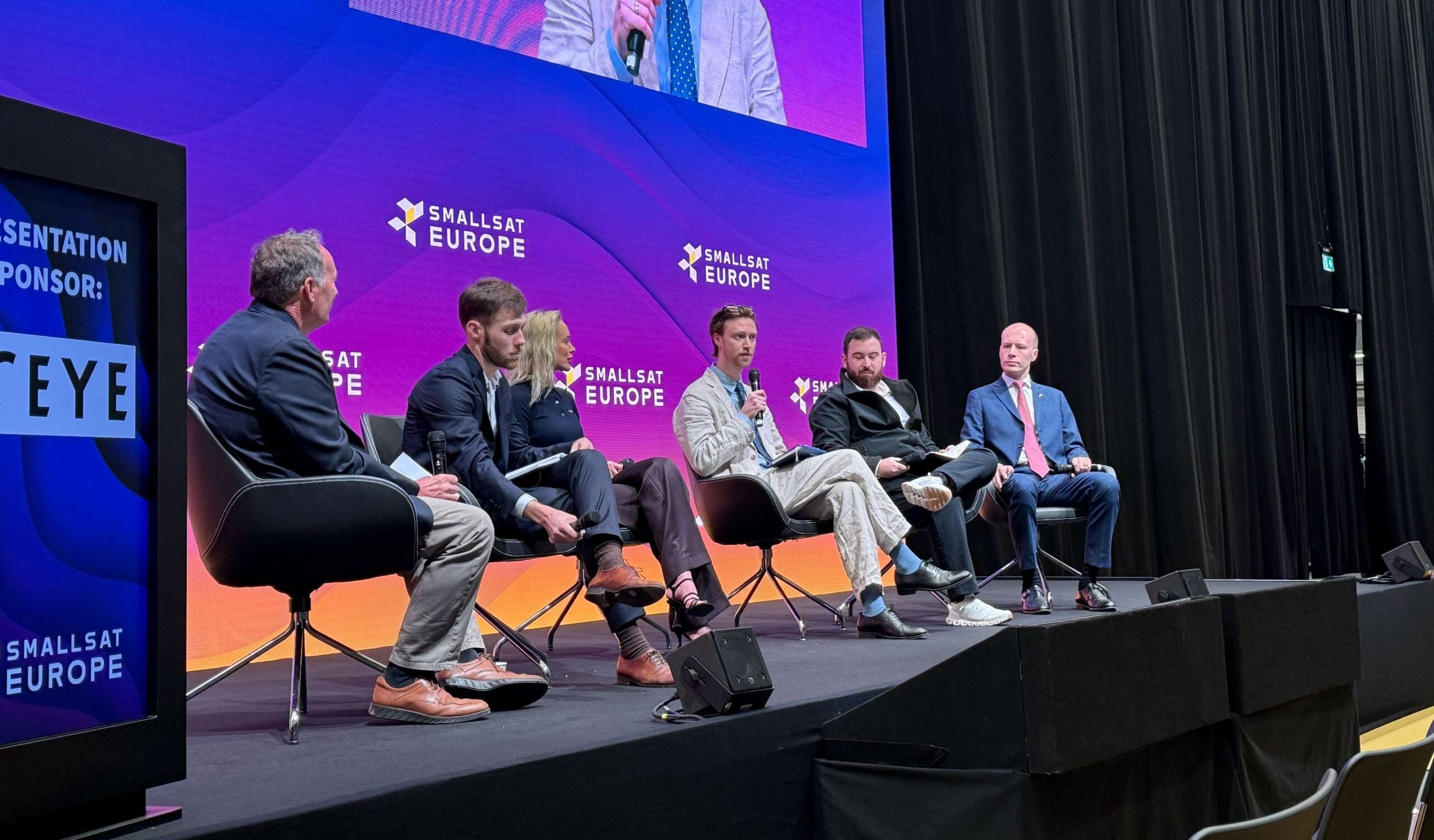
AMSTERDAM — One of the key questions facing the European space industry is when it will develop more efficient and reliable access to space. This issue dominated the launch panel at SmallSat Europe in Amsterdam on Wednesday, as a variety of players across the ecosystem discussed why Europe lags behind the likes of SpaceX and whether its launch market will gain ground over the next few years.
Sam Arne Whalley, sales manager for German launch startup Isar Aerospace, said there is an urgent need in Europe for sovereign access to space. The key question is how can European launch providers can be built to meet the need of European customers today.
Whalley said there has been an “explosion in requests” for missions up to 2035, and Isar Aerospace is working to manufacture up to 40 vehicles per year, building a new factory. “The technology is there, the market is there,” he said.
However, while that is good news, once the rockets start to fly, Europe’s other shortcomings could become apparent. He added, “I think when we start launching rockets, it is going to become clear how far behind we are in terms of overall infrastructure.”
Isar Aerospace hopes to be a global player and it is not being built to be solely competitive in Europe regardless of any regional support it might receive. It has been signing agreements with companies in the U.S. and Japan, for example. “We are competing globally regardless of these notions of sovereign access,” Whalley adds.
Valentin Benoit, CEO of French rideshare integrator RIDE!, believes the European launch market is at an inflection point this year, saying there will be an “before and after 2026.”
“We have seen a scarcity of capacity. We have to stand together to have a more balanced launch ecosystem here in Europe. We want to promote European launch companies. That is where we want to launch in the next years. We want to propose European launch alternatives. The SpaceX rideshare program has been, by far, from the most popular program for small satellites. This is what we are up against,” Beniot said. “However, we want to enable sovereign payloads for Europe being launched from Europe. We believe this is very important.”
Earlier this week, RIDE! booked dedicated capacity on a Falcon 9 mission purchased by U.S. rideshare integrator SEOPS. RIDE! secured 1,000 kilograms of capacity on the SEOPS dedicated Falcon 9 mission, planned for 2028.
A Flagship Rideshare Program for Europe
Benoit was one of a number of speakers who mentioned the importance of Europe developing its own flagship rideshare program. He said, “The key question in Europe is about the availability of launch solutions between now and 2030. We need a flagship rideshare program in Europe. The issues are more about cadence than reusability. We need more political commitment and financial support here.”
Jeanne Allarie, chief investor relations officer of German rideshare integrator Exolaunch also echoed these statements. “We need a big European rideshare program and we need it now,” she said.
Allarie also spoke about the changes in the marketplace, and that there are big structural shifts at play with commercial demand for launch set to become much bigger. Institutional demand had previously been much higher. “It makes sense for Europe to leverage global opportunities right now,” she added.
Exolaunch announced the purchase of two dedicated Falcon 9 rideshare missions this week, marking the integrator’s first dedicated launch purchases.
However, European alternatives to SpaceX will clearly be an issue. “Many European smallsat operators rely on the economics of SpaceX rideshare. We are mainly focused on creating new capacity for the industry. We want to provide frequent, reliable, smooth access to space. Today we have to fight for this capacity to get access to space. We don’t see the launch prices decreasing in the coming years. We need to have some subsidies and some dedicated launch vehicles. You also need to see the desire of European operators to pay a little bit more for a European launch option,” Allarie added.
Xavier Lansel, head of Market & Business Intelligence for Avio, which now operates the Vega C launch vehicle, also spoke about how there is not enough supply for European demand right now. He said that SpaceX’s pricing strategy has undercut other players..
“The price set by SpaceX has been false compared to the cost. This has impacted launchers all around the world. No one has been able to reach the level that SpaceX had on Falcon 9. There is a new level to reach. The affordability dynamics will change. We all need to jump on the opportunities to create new price points.”
Looking to 2035
Panelists believe that the European launch market will take off in the next 10 years. Looking to 2035, Allarie believes regular launches from Europe will take place.
Benoit predicted over the next decade that there will be many European launch providers and a much stronger cadence.
He even predicted a “Booking.com approach” to organizing launches in the next 10 years. “Smallsat launch will be close to being seen as a commodity,” he said.
“We need to be launching regularly and reliably,” Whalley added. “I don’t think any single policy will ensure that. We need strong and viable business models, strong anchor customers, as well as strong financial backing.”