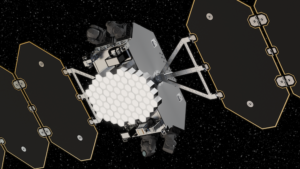
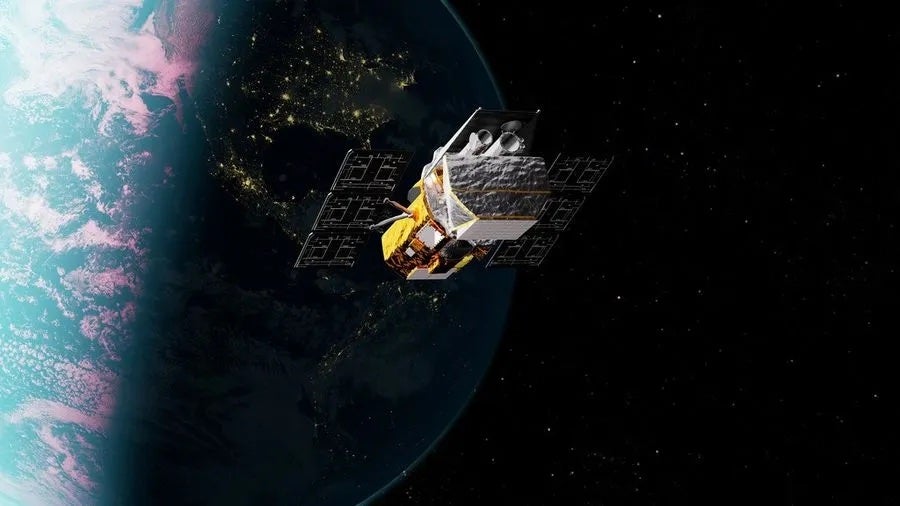
The recently launched Katalyst Space servicing mission to boost NASA’s Swift Observatory won’t be able to complete the rescue, NASA and Katalyst confirmed Wednesday.
After the Katalyst Link spacecraft was launched on a Northrop Grumman Pegasus rocket in July, the spacecraft encountered technical issues with attitude control. After monitoring and assessing the spacecraft, Katalyst Space and NASA determined the mission will not be able to capture and boost NASA’s Neil Gehrels Swift Observatory.
NASA officials referred to the mission as both a “race against the clock” and “high risk, high reward.” Katalyst designed, built, tested, and integrated the servicing spacecraft in less than a year from contract award to launch, in hopes that Link would reboost the Swift Observatory before it re-enters Earth’s atmosphere.
NASA said in a Wednesday statement the observatory is likely to re-enter Earth’s atmosphere later this year without other intervention. The Link spacecraft will still attempt to conduct rendezvous and proximity operations (RPO) with the observatory.
NASA Administrator Jared Isaacman said this mission was an example of NASA moving quickly to take a smart risk for a potential return, applauding the approach.
“This is not the outcome we were working toward, but it does not change why this mission was worth attempting,” Isaacman said in a statement. “The team moved with extraordinary speed to give Swift a chance to carry out more science while advancing capabilities America will need for satellite servicing in the future. We are going to learn everything we can from Link’s rendezvous attempt and put those lessons to work on the missions that follow.”
If successful, this mission would have marked the first time a commercial robotic spacecraft captured a government satellite that is uncrewed, or not originally designed to be serviced in space.
Katalyst said the focus for the mission is not on conducting RPO where possible and gathering as much data as possible.
“Katalyst designed, developed, and launched an experimental spacecraft to go after an ambitious mission on an aggressive timeline,” Katalyst CEO Ghonhee Lee said. “We took on this high-risk, high-reward challenge and are proud of the milestones we reached along the way. We have already learned a tremendous amount, and now our job is to turn those lessons into something durable — building a repeatable playbook to inform future rendezvous and proximity operations and satellite servicing.”
Last week, Katalyst won a Defense Innovation Unit (DIU) contract to participate in its Deorbit-as-a-Service program and mature its Nexus robotic spacecraft to deorbit Space Development Agency satellites that were not originally designed for servicing.