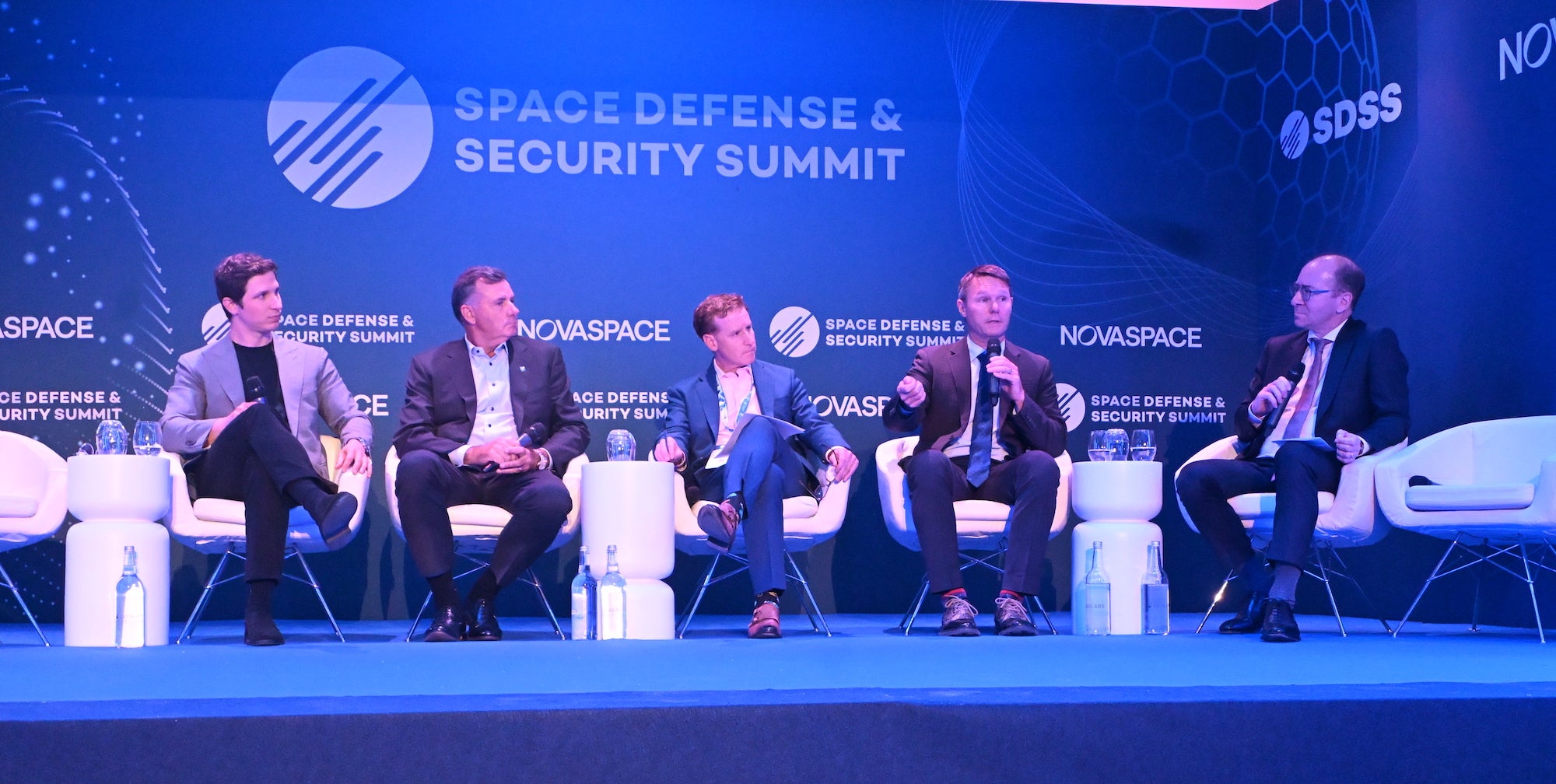
PARIS — Executives from BlackSky, Planet, Iceye and HawkEye 360 assessed the changing dynamics of the sovereign Earth Observation (EO) satellite market at the Space Defense and Security (SDSS) summit in Paris on Tuesday, saying the pace of deployment is accelerating.
Rafal Modrzewski, CEO and co-founder of Iceye, said all the players in this area have adjusted to the market environment to delivering both services and sovereign systems. Yet when looking at delivering sovereign capability, Modrzewski believes companies like Iceye have now taken things to the next stage.
“In mid-December last year, we signed a 40-satellite constellation deal with the German Armed Forces. We have taken the sovereign system to the next stage. We are going to build the satellites in-country. This is the next stage. That entire supply chain is in the country of the end user. It takes sovereignty to a whole new level.”
Iceye is moving at a rapid pace. It will be delivering these 40 satellites to the German Armed Forces in two years. “It is a completely new timescale than what we have done before. But we needed a proven system that is reliable before we could deliver the market such a solution,” Modrzewski said.
John Serafini, CEO and founder of HawkEye 360, said when he started the company, he received advice not to be dependent on the U.S. government to keep the business alive. Now, 40% of its sales come from the international market.
In terms of how the business models have evolved, Serafini said when HawkEye 360 looks look at international sales, it sees a three-legged stool model. Firstly, it will sell data and data analytics on a subscription model, where customers need support immediately. “They could be dealing with hostile situations. The first component is delivering on a software basis,” Serafini said.
Secondly, the company will put HawkEye individuals alongside the customers. “What we do is not intuitive. It is not an image. It has to be processed to make sense of the data. We are able to put people alongside the customers,” he adds.
Finally, for the companies that appreciate data analytics, they can then move to more dedicated assets, whether they have pre-purchased capacity or other assets.
BlackSky is another big player in this space and Brian O’Toole, CEO of BlackSky said he believes the definition of sovereignty is dependent on how customers are defining it. Some are in early stages in development. Some are in a more mature phase, he said. Yet all customers are looking for an evolution of their capability, whether buying satellites or doing multi-layered type deals. He described a large market opportunity.
“The exciting thing is about this point of time, the market is in its early days. I think there is a massive opportunity for players like us,” he said.
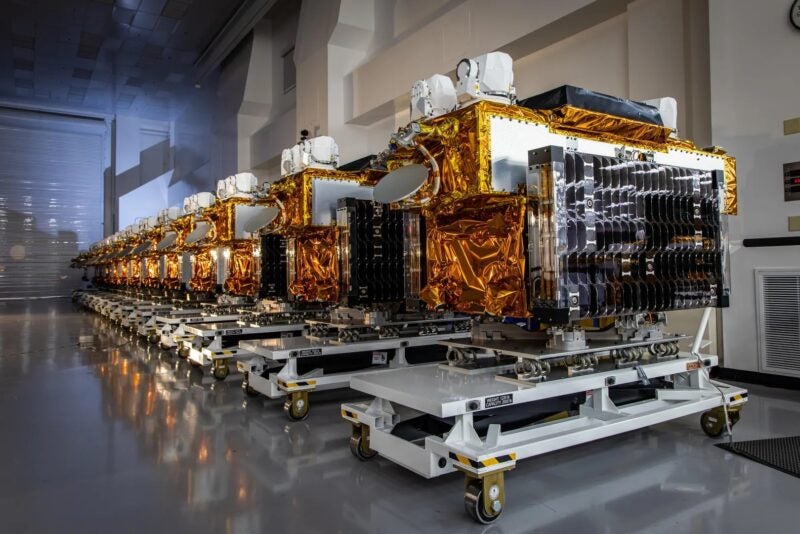
It may be a massive market opportunity, but customers are increasingly wanting more from companies like BlackSky. “These customers need technology that works. This is national security. The ability to have demonstrable capability that can scale is critical. We have a production line of satellites that we can pull off the line and put them where our customers want them. We are long-term mission partners with our customers. It is now a global market with a global ecosystem,” O’Toole said.
Robbie Schingler, chief strategy officer of Planet, echoed these sentiments saying that every country now has a different definition of sovereignty. “The business models have shifted. Over the last 18 months, we have announced a number of deals. For example, within four months of contract signing with the Swedish Armed Forces, Planet was able to deliver a satellite and it was theirs,” Schlinger said.
Schlinger said companies like Planet need to flex and adapt the changing needs of customers. Planet’s deal with Sweden is a great example of this.
Interestingly, Schlinger said that latency has “become the new resolution” and the building blocks are in place to make that better. Similar to Iceye, the ability to build and manufacture is now a key component of Planet’s strategy.
“Planet will have a manufacturing facility in Germany to build Pelican satellites. We have co-production capability. A German built Pelican satellite will go up in the next few months. We are able to build Pelican satellites at speed. We can serve people immediately.”