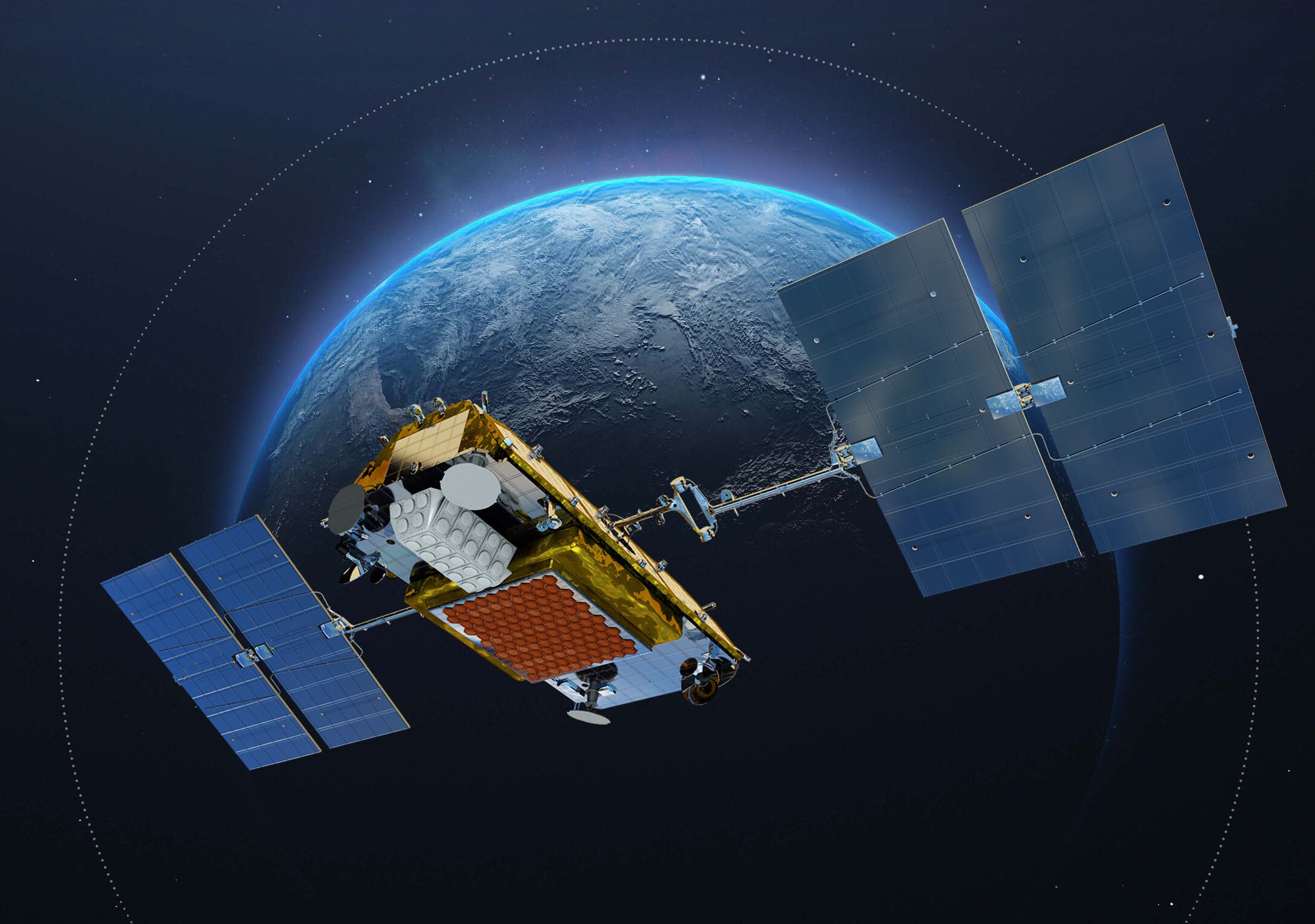
Rocket Lab’s vision to become an end-to-end space company came into full focus with a move to acquire Iridium Communications on Monday — taking the launcher and manufacturer into satellite communications and navigation services.
“This will be one of the most transformative deals in the space industry,” Rocket Lab CEO Peter Beck told investors on Monday.
“It combines Rocket Lab’s launch capability and satellite manufacturing with Iridium’s global satellite communications network and its rare spectrum. Rocket Lab will become a fully integrated, self-launching space superpower,” Beck said.
The transaction will more than double Rocket Lab’s revenue. In 2025, Rocket Lab’s full-year revenue was $602 million, while Iridium’s full-year revenue was $872 million.
The deal values Iridium at $8 billion, or $54 per share, in a mix of cash and stock. Iridium stockholders will receive $27.00 in cash and a number of shares of Rocket Lab. The transaction is subject to regulatory approval and is expected to close in mid-2027.
Iridium operates a 66-satellite Low-Earth Orbit (LEO) constellation with 14 on-orbit spares operating in global L-band spectrum. The constellation supports more than 2.55 million active subscribers worldwide with IoT, data, messaging, and voice services and safety-of-life services. Iridium operates with a network of more than 500 partners that incorporate its network into devices, like Garmin satellite communicators. Its network also supports alternative positioning, navigation, and timing (PNT) services.
Iridium is profitable and has been generating free cash flow for years. In 2025, the company reported pro forma free cash flow of almost $300 million.
“Combining Rocket Lab is the best way for us to take our experience and success into the future of the space business,” Iridium’s longtime CEO Matt Desch told investors. “Being part of an industry leading launch and satellite provider will create a global space powerhouse vertically integrated to innovate and succeed long term in this fast-growing industry.”
D2D Opportunity and Spectrum Angle
The acquisition is another multi-billion deal for mobile satellite services (MSS) spectrum, after the SpaceX/EchoStar deal and Amazon/Globalstar. Beck called Iridium’s spectrum “incredibly important.”
“L-band is important because if you want to do safety-critical comms, you need that band to penetrate through weather and harsh conditions. It is a band that ensures that you can always be connected,” Beck said. “If you want to do big things in space, you need spectrum — others have arrived at the same conclusion as us.”
Iridium has exclusive rights to operate in its portion of MSS spectrum, which was just affirmed by a recent FCC decision.
Rocket Lab has long outlined its vision to be an end-to-end space industry. The company has grown from smallsat launch services to a satellite manufacturer and component supplier to the entire space industry. Its manufacturing business currently generates more revenue than the launch business.
The next step of that evolution is delivering space services. In the past, Rocket Lab has teased plans for launching its own satellite constellation. This deal gives Rocket Lab immediate access to an operating LEO constellation with commercial and government customers. Iridium’s constellation was completed in 2019 after a $3 billion network upgrade program.
Rocket Lab called out the opportunity in direct-to-device (D2D), government communications, as well as resilient PNT, and emerging defense and commercial space services.
Iridium is launching a standardized D2D service later this year called Iridium NTN Direct. It’s narrow-band satellite IoT service that operates on 3GPP standards.
“Our future in space applications has just been unlocked and accelerated. This is our entrance into recurring application revenue from space, but it is not the finish line,” Beck said. “Rather than simply continuing Iridium’s network, we will build upon it and scale it into untapped markets and pioneer new space-based services.”