
Amazon has planted its flag in the direct-to-device (D2D) landscape with a deal to acquire Globalstar and deploy its own D2D satellite system.
Amazon will acquire Globalstar under a roughly $10.8 billion deal announced Tuesday that includes Globalstar’s existing satellite operations, infrastructure, and assets, including its mobile satellite services (MSS) spectrum licenses. In addition, Amazon reached an agreement with Apple — Globalstar’s key customer — to provide the satellite services for current and future iPhone and Apple Watch models.
The announcement came Tuesday morning after recent reports that Amazon was in talks with Globalstar, as well as talk that SpaceX was in the running to purchase Globalstar as well.
Amazon said these moves are part of a “long-term vision for space-based connectivity” that includes working with mobile network operators to “extend reliable, high-speed connectivity to customers, no matter where they are in the world.”
The transaction is valued at approximately $10.8 billion and will fluctuate until just before the deal closes. It is expected to close in 2027. It is subject to a cap of $90 worth of Amazon stock per Globalstar share.
Under the terms of the merger agreement, Globalstar stockholders will receive either $90 per or the same value in shares of Amazon common stock. Globalstar must achieve certain operational milestones with its HIBLEO-4 replacement satellite constellation or the deal could be subject to a $110 million downward adjustment.
This is a premium on Globalstar’s price per share, which was around $73 before the news was announced. Globalstar’s share price jumped to $80 per share on Tuesday.
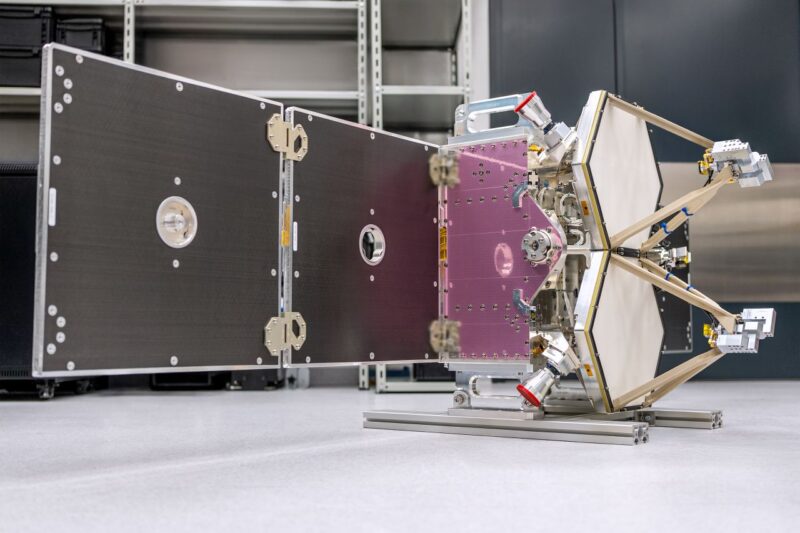
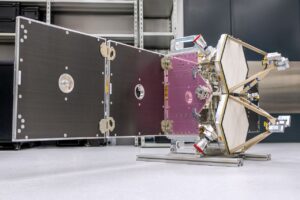
Canadian manufacturer MDA Space is building 17 satellites for Globalstar HIBLEO-4 replacement satellite constellation, with the first batch expected to launch in the first half of this year. These satellites will serve as a refresh of Globalstar’s current satellites and support Apple’s satellite messaging service, which Globalstar has enabled since 2022. Apple is paying for 95% of the upgraded network expenses.
MDA Space is also building a next-generation constellation for Globalstar called C-3 with expanded capabilities to support Apple satellite connectivity and additional use cases. As part of the C-3 constellation deal, Apple took ownership of 20% of a Globalstar LLC to own the C-3 constellation.
Amazon’s release did not specifically mention the C-3 constellation; but Amazon said in a statement it plans to operate Globalstar’s upcoming satellites.
“Once the transaction closes, we plan to operate Globalstar’s existing satellite fleet, as well as their upcoming Low Earth Orbit satellites being manufactured by MDA Space, before also deploying a next-generation DTD system of our own,” an Amazon representative said in a statement to Via Satellite.
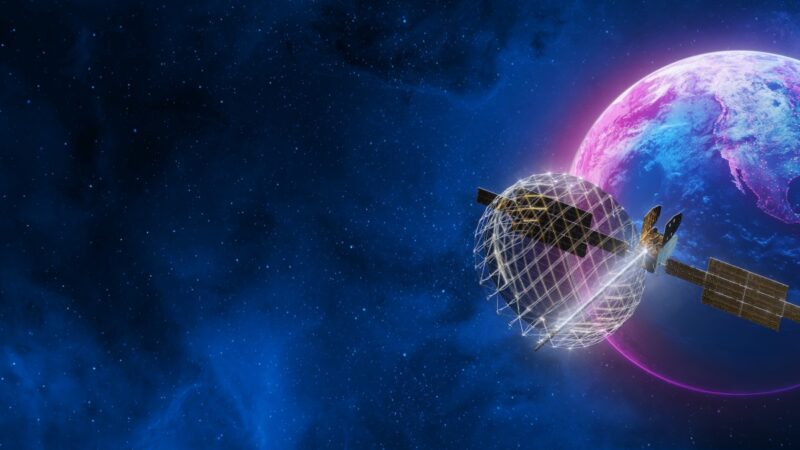
With the acquisition news, Amazon revealed plans for its own D2D satellite system, which it said will “deliver more advanced voice, data, and messaging services to mobile phones and other cellular devices,” as well as offer “substantially higher spectrum use and efficiency than legacy direct-to-cell systems, which translates into faster speeds and better performance for customers.”
Amazon said it will integrate with the company’s first and second-generation Amazon Leo systems for a combined network of “thousands of advanced satellites in LEO.” The Amazon spokesperson said the company is working on the satellite design, but is not sharing details at this point.
“There are billions of customers out there living, traveling, and operating in places beyond the reach of existing networks, and we started Amazon Leo to help bridge that divide,” Panos Panay, senior vice president of Devices & Services for Amazon said in a statement. “By combining Globalstar’s proven expertise and strong foundation with Amazon’s customer-obsession and innovation, customers can expect faster, more reliable service in more places—keeping them connected to the people and things that matter most.”
This acquisition comes amid the lead-up to service rollout for the Amazon Leo broadband service, targeted for midway through this year.
Amazon Leo is a competitor to the Starlink constellation. This move into D2D puts Amazon in further competition with SpaceX, which has deployed a separate, Starlink Mobile constellation and acquired EchoStar’s MSS spectrum to boost that offering.
MSS spectrum is valuable for D2D services because it is already licensed for satellite services and does not require D2D providers to use shared spectrum from MNOs.
Globalstar CEO Paul Jacobs recently referred to the company’s spectrum as “critical jigsaw pieces that complete the broader D2D puzzle,” because of its global coverage, priority rights, and harmonization with established hardware.
Analysts Talk Spectrum Position, Market Implications
Analysts noted the acquisition moves Amazon forward in the D2D competition, but noted the deal has many remaining questions.
Tim Farrar, president of TMF Associates, told Via Satellite the acquisition is in line with an increased focus in the terrestrial market to bundle fixed and mobile broadband from both telcos and cable companies.
“It’s not surprising that Amazon believes the same will be needed in the satellite market to compete with Starlink, which already offers both broadband and D2D services,” Farrar said. “But this is a very expensive deal, and is going to require billions of dollars of additional investment for Amazon to build out a new constellation to use the spectrum, on top of their near $20 billion commitment to the broadband constellation.”
The acquisition bolsters Amazon’s spectrum position for the D2D market, Armand Musey, founder and president of Summit Ridge Group, told Via Satellite. “Amazon LEO has been falling behind Starlink on satellite broadband. Acquiring Globalstar allows them to catch-up on their D2D spectrum position, and leap ahead on D2D deployment,” he said.
William Blair analyst Louie DiPalma, said in a research note the proposed $11 billion purchase price for Globalstar will also increase the value of Iridium and Viasat’s MSS spectrum assets. He expects AST SpaceMobile and SpaceX to seek to acquire more spectrum to add capacity to their networks.
DiPalma also commented on the Apple tie-in. “Apple likely was opposed to funding a mega satellite constellation to compete with the offerings from SpaceX and AST SpaceMobile. This is similar to its AI strategy to leave all the heavy CapEx to others. On the other hand, Amazon is already building out its Amazon Leo constellation, so it is likely comfortable being a third horse in the race,” the research note said.
Farrar said that with this acquisition, Apple likely won’t be able to get the 85% of network capacity that was originally specified in its agreements with Globalstar.
“It is also uncertain what will happen to Apple’s free D2D services on the iPhone going forward. Those are likely to be more capacity constrained and therefore limited to basic, lower bandwidth services,” Farrar said. “It remains to be seen how much Apple will pay for those services in the future.”
Correction: A prior version of this story included an incorrect approximation for the value of the deal