Verizon has made a significant expansion in its satellite fleet for disaster response as it moves toward a “satellite-everywhere” failover strategy, a representative for the telco told Via Satellite.
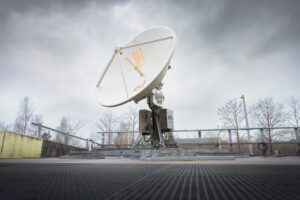
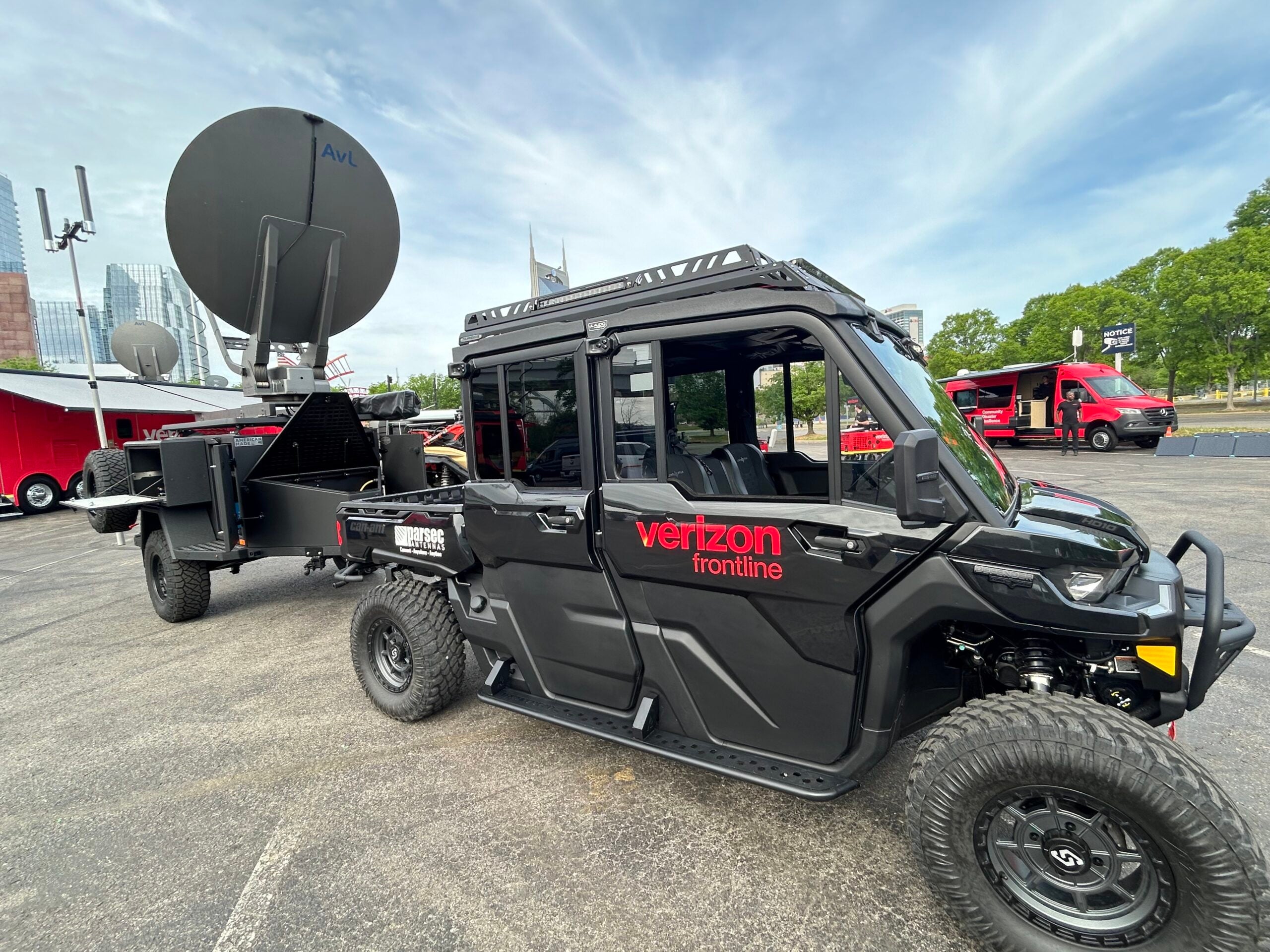
Verizon has expanded its satellite fleet to 2,600 assets this year, including the addition of a multi-orbit off-road trailer, the company said in a Wednesday statement. It’s an off-road vehicle equipped with a trailer that can switch between Geostationary Orbit (GEO) and Low-Earth Orbit (LEO). The overall fleet of satellite vehicles for disaster response includes satellite-linked mobile deployable cell sites, mobile satellite link kits, and permanent satellite links for facilities.
This marks a “significant expansion” over the last year, Karen Schulz, communications for Verizon Global Network & Technology, told Via Satellite.
“By moving toward a ‘satellite-everywhere’ failover strategy, we’ve integrated these links into more permanent facilities and mobile units than ever before. While terrestrial fiber is the gold standard, we think it’s important to create yet another redundant backhaul layer in case of impact from a storm,” Schulz said.
Verizon works with a number of satellite partners for resiliency and did not specify which operators.
Schulz explained the multi-orbit offroad trailer is designed to serve as a mobile 5G hotspot that can travel into deep woods, muddy disaster zones, or washed out coastal areas. Specific use cases for the vehicle include acting as a mobile cell site for search and rescue teams, a communications hub for emergency command centers, or a temporary “bridge” for a community that has lost its primary tower.
A photo of the off-road vehicle (above) shows it is equipped with an AvL Technologies flyaway terminal.
Verizon is also testing permanent satellite backhaul as a failover solution at high-power cell towers located in hurricane-prone areas in the Southeast including Georgia, Florida, and the Carolinas. This includes backup battery power and backup generator power, along with permanent satellite connectivity in order to maintain cellular traffic in the event that power and fiber are down.