
After announcing a joint venture to work together on direct-to-device, the CEOs of AT&T, T-Mobile, and Verizon all addressed their satellite strategies this week at an investor event — pointing to standardizing devices and spectrum-sharing as key benefits of the JV.
“We think that working together, we can create standards as opposed to being three sets of standards for all the different satellite players to work with us,” Verizon CEO Dan Schulman said Monday. “But we’ll have a common set of standards that we can use across handsets, across the different satellite players.”
Schulman and the other CEOs spoke this week at JP Morgan’s Global Technology, Media and Communications Conference in Boston.
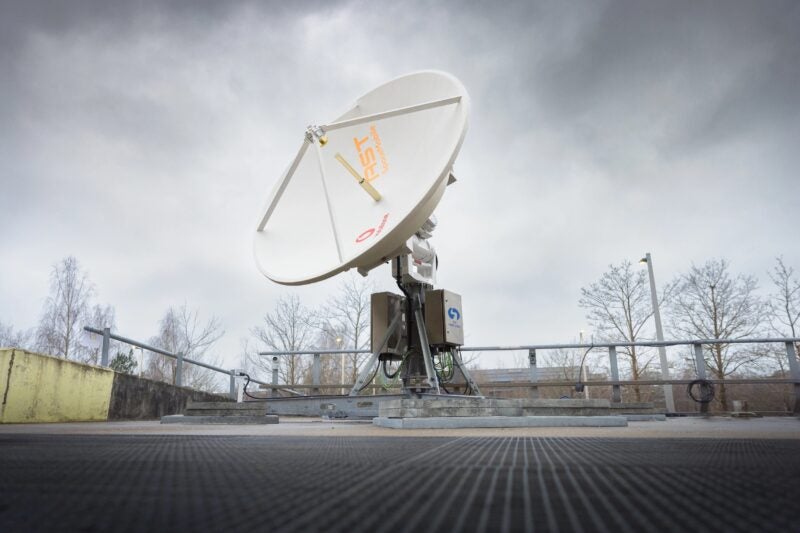
For AT&T, which has been a longtime partner of AST SpaceMobile, the MNO plans to continue working with AST SpaceMobile, in addition to the joint venture CEO John Stankey said Tuesday.
“We’ve had a great relationship with AST SpaceMobile,” Stankey said. “The technology and the approach that they’re using is unique for direct-to-device. I think it’s going to be a great path for the first product that comes out that is effectively a seamless and straightforward product for a consumer to use that extends the network. And we’re going to continue on that path.”
He expects the joint venture will take some time to come together, but said that working together on standards and spectrum-sharing will result in a better service for customers.
“It doesn’t make sense for all of us to be lobbying for different priorities on the handset deck for spectrum capabilities. If we get bifurcation on that, that’s not going to be good for any of us,” Stankey said.
The joint venture announcement specifically noted fostering competition in the satellite provider landscape. Stankey said making sure there is a “robust” wholesale market in satellite is a “fundamental” goal of the JV.
“That means multiple constellations to buy from. And at the end of the day, that’s a good thing because that means capacity will be out there that ultimately can be delivered to customers. It means a robust wholesale structure,” he said. “We’ll keep pricing in check, so there isn’t a bottleneck of any particular single provider that can dictate what that pricing is.”
No Longer a Differentiator
The talk about competition comes just after the FCC approved SpaceX’s purchase of EchoStar spectrum last week, which will unlock new capabilities for SpaceX’s Direct-to-Cell constellation. SpaceX execs seemed to take the carriers banding together as a challenge, with President and COO Gwynne Shotwell comparing it to David and Goliath times three.
SpaceX is T-Mobile’s partner for its much-advertised T-Satellite service, but adoption and use of the service is low, according to T-Mobile CEO Srinivasan Gopalan.
Speaking Monday at the conference, Gopalan cited that data in May showed satellite usage was 0.0002% of T-Mobile’s total network usage. “That’s 3 zeroes,” he said. “So it’s clearly a complementary use case.”
He said usage is largely focused in national parks and there has been little take-up of the service as an a la cart add-on. “Pretty much, no one buys satellite stand-alone. They buy it as part of the premium package,” he said. “This is going to become a standard part of most premium offerings from all players, and there’ll be enough supply of it. And this is no longer going to be a source of differentiation.”
Gopalan also pointed out the value of the JV in creating an “efficient wholesale infrastructure.”
“That [spectrum] standardization plus aggregation of demand, which for the smaller satellite players is critical or for the recent entrants is critical, creates a satellite ecosystem that allows the American customer to get wireless plus satellite as part of a standardized package,” Gopalan said.