Iceye is targeting the international banking sector with a key new launch. It is bringing to market natural catastrophe monitoring solutions designed for the global banking sector. The offering will help financial institutions better understand, manage, and mitigate the growing impact of climate-driven credit risk. Iceye revealed details of the new solutions, May. 19.
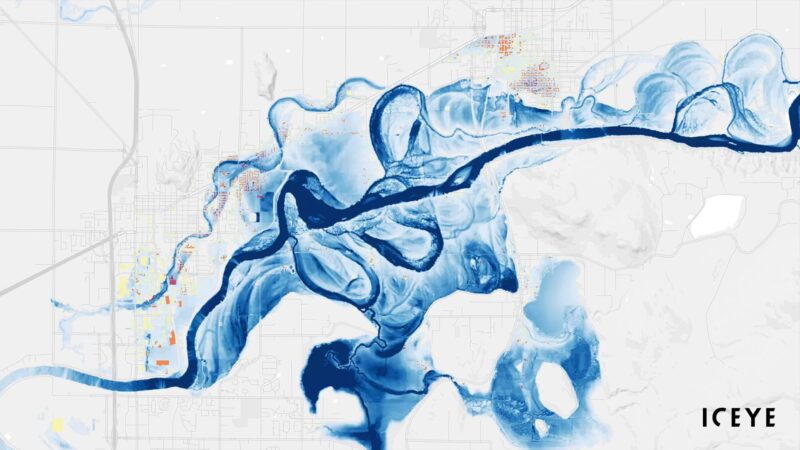
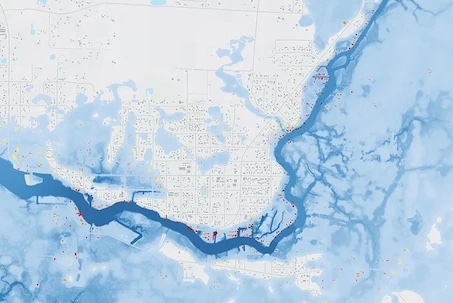
Iceye monitoring solutions deliver property-level impact data for incidents like floods, wind, earthquakes, and wildfires. This hazard and impact data can be integrated directly into credit risk, valuation, and stress-testing frameworks, supporting banks in managing non-performing loans, capital allocation, and customer response strategies.
Iceye will also provide access to its catalog of historical natural catastrophe events. It believes this is key for banks, as it offers an extensive, global record of frequency and impact. This dataset is designed to help financial institutions to validate and enhance risk and valuation models using real-world events, improving loss estimates, collateral assessments, and stress testing.
“As climate-driven events become more frequent and severe, banks are facing a growing need to understand how these risks translate into credit exposure at a granular level. By enabling access to consistent, event- based data that delivers an asset-level view of impact, institutions can better quantify potential losses, stress-test their portfolios against real scenarios, and demonstrate a more robust and transparent approach to risk governance,” Stephen Lathrope, senior vice president of Solutions, Iceye said in a statement.
Separately, Iceye recently delivered control over a radar satellite constellation named POLSARIS to the Polish Armed Forces for sovereign intelligence.