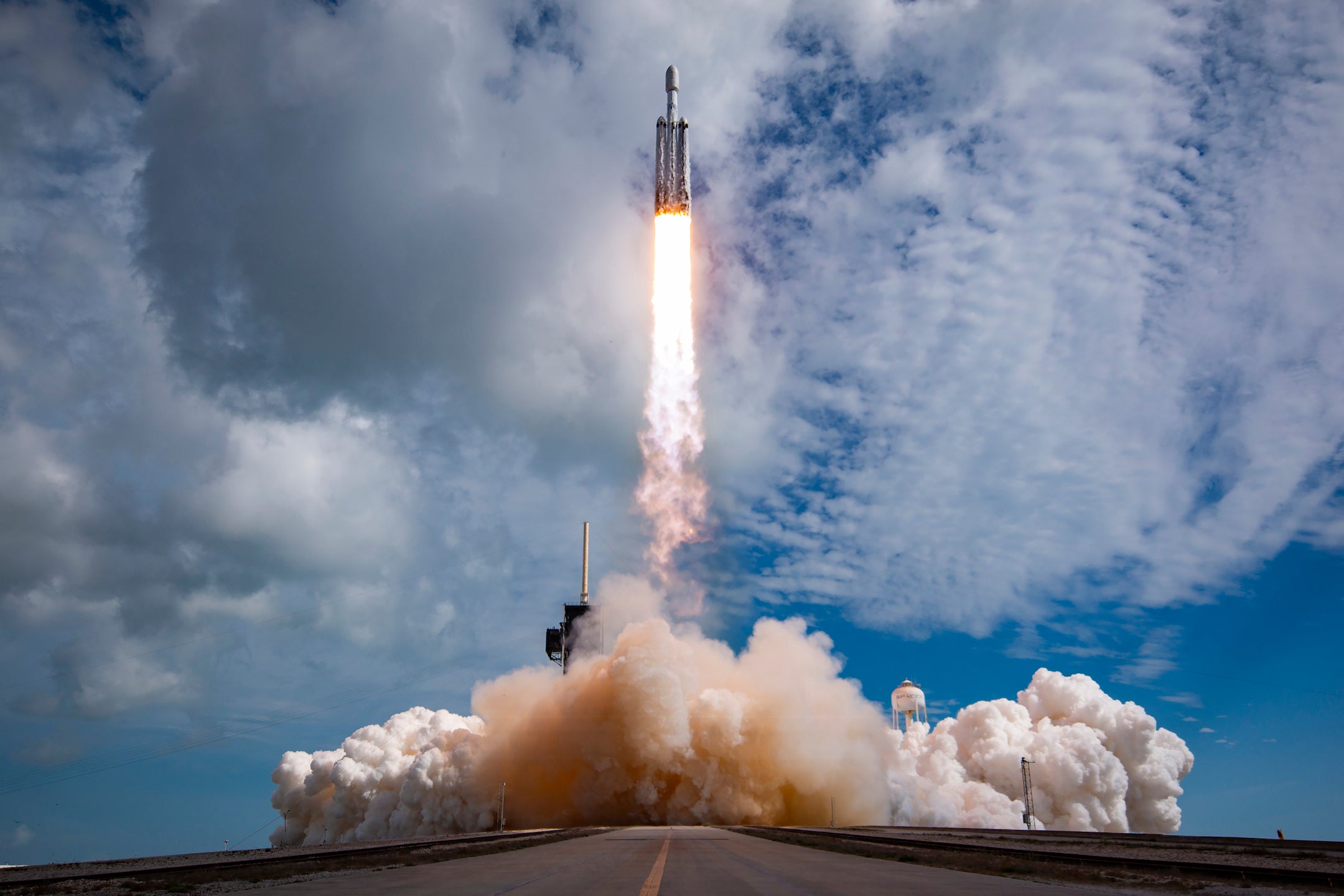
The White House set a target for the U.S to support more than 1,000 launches and reentries annually by 2030 in a new National Security Presidential Memorandum released Thursday.
That would be a massive jump increase in orbital launches over the next few years. In 2025, there were 193 orbital launches in the U.S. — 85% of which were SpaceX launches, according to BryceTech’s 2025 analysis.
The White House called the new policy a “comprehensive, America First approach,” to launch a “golden age of space transportation.”
“Access to, from, and within space is a vital national and economic security interest. American space transportation capabilities underpin the global economy, and commercial space innovation flourishes with affordable, reliable, and safe space transportation. The United States must establish and maintain space transportation capabilities that ensure access to the full range of orbital regimes relevant to United States interests,” the policy states.
The policy issues directives to departments in government to improve space launch and reentry infrastructure, including identifying new launch and reentry sites and improvements to existing launch infrastructure; expediting facility permitting and environmental reviews; and incentivizing commercial investment and public-private partnerships for launch infrastructure.
In terms of launch interaction with the Federal Aviation Administration (FAA), the policy designates priority airspace for critical space launch corridors and directs government agencies to implement a plan to integrate space launch and reentry management into air traffic control modernization.
It also includes directives to strengthen the space transportation industrial base and to update export policies and programs.
This memorandum repeals the National Space Transportation Policy put in place in 2013 by President Obama.
Demand for launch is growing from both commercial and government and there are signs the launch market is constrained. In the U.S., SpaceX’s Starship rocket is still not in commercial service; new rockets United Launch Alliance’s Vulcan Centaur and Blue Origin’s New Glenn have faced issues; and Rocket Lab’s Neutron rocket is yet to debut as well.
In addition, SpaceX is reportedly not accepting reservations for new rideshare missions past late 2028, Space News has reported. Rideshare providers are now booking their own Falcon 9 rockets and selling capacity on their own.
In addition, the Space Force has signaled growing demand for launch with Space Systems Command (SSC) last month increasing the ceiling of Phase 3, Lane 1 National Security Space Launch (NSSL) contracts by $11.4 billion to $17 billion. Acting space acquisition chief Thomas Ainsworth recently stated the Space Force plans to launch approximately 500 satellite vehicles by the end of calendar year 2027.
A recent report from the Commercial Space Federation analyzed demand and availability scenarios for launch, finding that capacity constraints at U.S. launch sites could drive up costs and delay satellite deployments.
The Satellite Industry Association applauded that the policy recognizes that space “is a national economic security priority.”
“SIA strongly supports the Administration’s commitment to expanding launch capacity, improving infrastructure, streamlining regulation, and ensuring access to spectrum. These are essential steps toward maintaining U.S. leadership in the increasingly competitive global space economy,” Tom Stroup, president of the Satellite Industry Association, said in a statement.