
A new report from The Aerospace Corporation examining defense and space growth in the White House’s fiscal year 2027 budget request found that more than 75% of the increase is concentrated in classified activities and missile warning, moving-target-indication, and command and control investments.
The report released Monday looks at the $59.2 billion the White House requested for the U.S. Space Force in its fiscal year 2027 budget request, which is more than double the Space Force’s 2026 appropriations of $26.1 billion. The White House has also proposed $12.1 billion for the Space Force in the fiscal year 2027 reconciliation bill.
Sam Wilson, director of Strategy and National Security for Aerospace’s Center for Space Policy and Strategy, authored the report.
The Aerospace analysis found that classified spending would make up about 30% of the growth, while moving-target-indication, command and control (C2), and space-based missile warning programs would account for more than 45% of the growth.
Interestingly, Wilson noted that both the Space-Based Air-Moving Target Indication and Space Data Network programs were moved out of the Golden Dome funding bucket and labeled as “Space Superiority” initiatives. “The transition of the programs from Golden Dome to ‘Space Superiority’ reveals some of the decoupling between the Space Force and Golden Dome spending,” Wilson said.
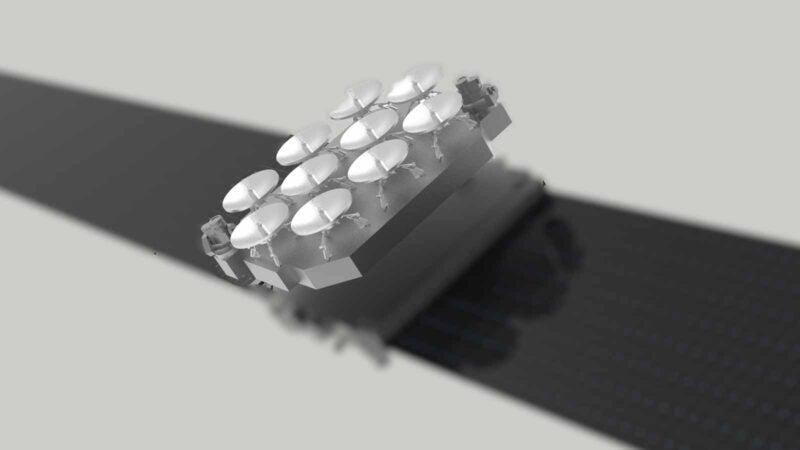
Space-Based Air Moving Target Indicator (SB-AMTI) is the largest unclassified program in the Space Force FY 2027 budget at $7.9 billion, followed by Space Data Network at $4.5 billion, the report notes.
The Space Force recently awarded SpaceX a $4.2 billion contract for SB-AMTI and a $2.3 billion contract for the SDN Backbone. It has also awarded $615 million in SB-AMTI contracts to Rocket Lab, STR LLC and an unnamed vendor, as well as $60 million in SDN awards to five companies last week.
Looking at Golden Dome funding, the report notes that the proposed reconciliation funding also includes $17.1 billion for the Golden Dome funding account, including $4.5 billion for “Space Programs,” which is separate from the overall Space Force request. According to the budget, that money could support “developing and deploying a proliferated layer of space-based interceptors.”
Last week, head of the Golden Dome program Gen. Mike Guetlein warned that if Congress does not pass another reconciliation bill with funding for the homeland missile defense shield, the Golden Dome program will be frozen and largely cannot move forward. Guetlein spoke during the annual Space and Missile Defense Symposium, which Defense Daily covered.
Other areas of increased funding are national security launch and large increases in funding for resilient missile warning and tracking in both Low-Earth Orbit (LEO) and Medium-Earth Orbit (MEO), as well as missile warning ground architecture upgrades.
The report notes that neither reconciliation bill or an appropriations act have passed, which leaves the Space Force’s actual 2027 budget “highly uncertain.” This could mean the Space Force continues with 2026 base appropriations or appropriations plus reconciliation funding, which would amount to $32 billion.
“These concerns notwithstanding, with a base request of $59.2 billion and proposed reconciliation funding of $12.1 billion, the Space Force has the highest proposed budget increase for any military service in 75 years,” Wilson wrote, noting there seems to be congressional interest for the increase.