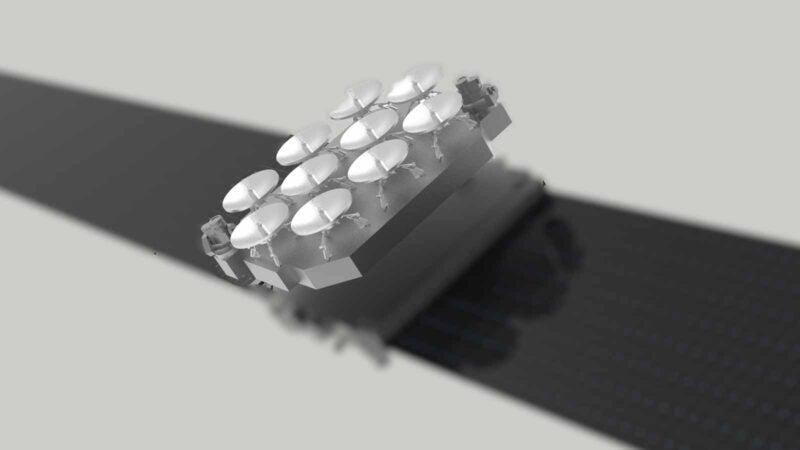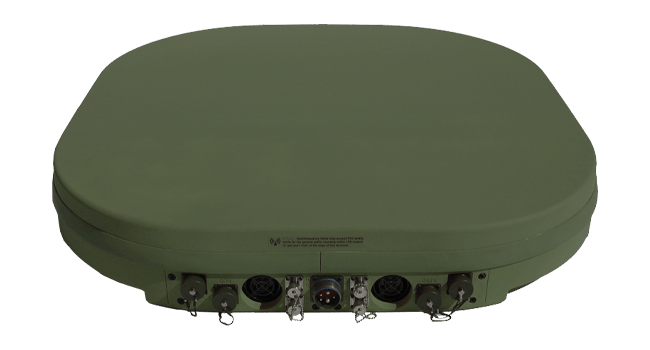

The U.S. Space Force’s Space Systems Command has awarded SpaceX a $2.29 billion Other Transaction Authority (OTA) contract for the Space Data Network (SDN) Backbone, a proliferated Low-Earth Orbit (LEO) constellation for high throughput, low latency data backhaul.
SSC said in a late Tuesday release that the SDN Backbone “is a pLEO satellite constellation which functions as an integrated network, providing robust, resilient, high-capacity, and low-latency data transport for the Joint Force.” The SDN Backbone will be an “expanded optically interconnected mesh of satellites delivering world-wide tactical communications and broadband communication services.”
Under the OTA agreement, SpaceX must deliver a fully operational prototype capability by the end of 2027.
The award falls under the responsibility of the Space Force portfolio acquisition executive for Space-Based Sensing and Targeting (SBST), which Space Force Col. Ryan Frazier is fulfilling in an acting capacity.
“The SDN Backbone supports the broader SDN, which acts as a core communications layer for the USSF warfighting systems, ensuring our sensors and shooters are connected continuously, globally and securely,” Frazier said in a statement.
The Space Force has described the overall Space Data Network as a network that integrates Department of Defense and commercial networks across various orbits to deliver private transport, tactical data links, and public internet services to users.
SSC said that the SDN Backbone will work alongside the Space Development Agency’s (SDA) Transport Layer. SSC also said that the acquisition efforts between the SDN Backbone and SDA’s Transport Layer have come together to build the LEO portions of the overall SDN hybrid mesh network.
“Together, these systems will form a unified and open architecture to provide critical data transport for current and future Department of War missions,” SSC said.
SDA has responsibility for Tranche 1 and 2 Transport Layer efforts, while the Tranche 3 Transport Layer has been paused.
SSC also said the Space Force recently established a consortium for the SDN to team with industrial partners to solve integration and architectural challenges with the network. The Space Force plans to add more participants over the summer.
“Our acquisition strategy is designed to foster competition and broaden our industrial base,” said USSF Lt. Col. Fry, SDN Backbone system program manager. “We aren’t trading speed for scale; we are demanding both. By using rapid prototyping and Other Transaction Authorities, we are ensuring our advanced solutions are integrated and delivered to the warfighter as fast as possible.”
The Space Force’s fiscal 2027 budget request included $9.8 billion for satellite communications systems such as the Space Data Network and the Evolved Strategic Satcom program.
Hybrid Satcom — the use of multi-orbit systems to create an internet in space — is one of the tenets of the Objective Force 2040 that Chief of Space Operations Gen. B. Chance Saltzman laid out in April. Key to hybrid satcom will be the SDN, a derivative of the National Reconnaissance Office’s MILNET, which is based on SpaceX’s Starshield.
The NRO has embarked upon MILNET Block II, and Block I has around 200 satellites, including Starshields, for communications and space-based ground moving target indication.