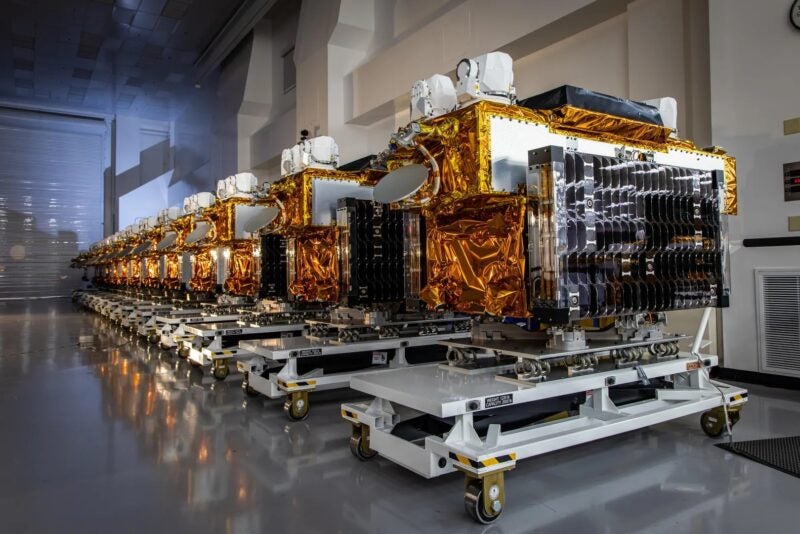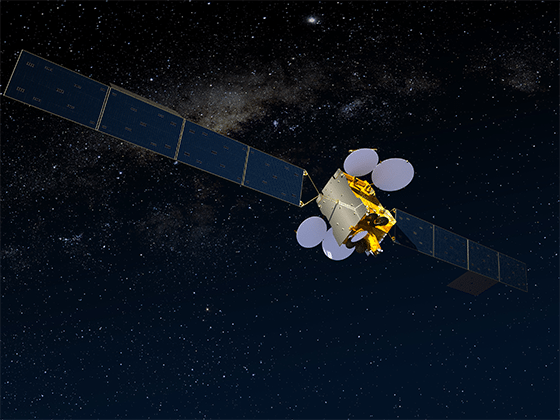

Two days after the U.S. Space Force Space Systems Command (SSC) awarded SpaceX a nearly $2.3 billion contract for the Space Data Network Backbone, a proliferated Low Earth Orbit communications network, SSC on Friday awarded the company a nearly $4.2 billion Other Transaction Authority (OTA) contract for initial fielding of the Space-Based Airborne Moving Target Indicator (SB-AMTI) system.
SpaceX plans to go public on June 12 on the Nasdaq under the ticker SPCX.
Last month, Space Force said that it had awarded nine firms small contracts for SB-AMTI development and Air Force Secretary Troy Meink said that the service would soon make an award for the first SB-AMTI operational increment. Those nine firms include SpaceX, but SSC has not disclosed the others.
Since the Trump administration entered office last year, the Air Force has tried to cancel the planned buy of the Boeing E-7 Wedgetail airborne warning and control aircraft in favor of SB-AMTI, but Congress nixed that cancellation, and the Air Force now says it is funding seven Wedgetails at a cost of $4.9 billion — about $700 million per aircraft. Wedgetail would replace the 1970s-era Boeing E-3 aircraft.
“The long-standing method of military airborne platforms to track moving targets faces continued challenges as adversaries develop increasingly sophisticated anti-access/area-denial systems,” SSC said on May 29. “To compliment traditional airborne sensing, the requirement for a layered, highly resilient tracking architecture is evident.”
Space Force Col. Ryan Frazier, the service’s acting portfolio acquisition executive for space based sensing and tracking, said in a statement that SSC is “beginning development and integration efforts immediately to meet the program’s rapid deployment milestones and address emerging national security requirements.”
In addition to the OTA to SpaceX for the initial SB-AMTI fielding, SSC said that multiple awards are expected “to drive a vendor-diverse expansion, enhancing capacity and capability for combatant commanders.”
“This initial award is projected to field a constellation of satellites by 2028, providing the Joint Force with an early capability to eliminate operational blind spots,” according to the command.