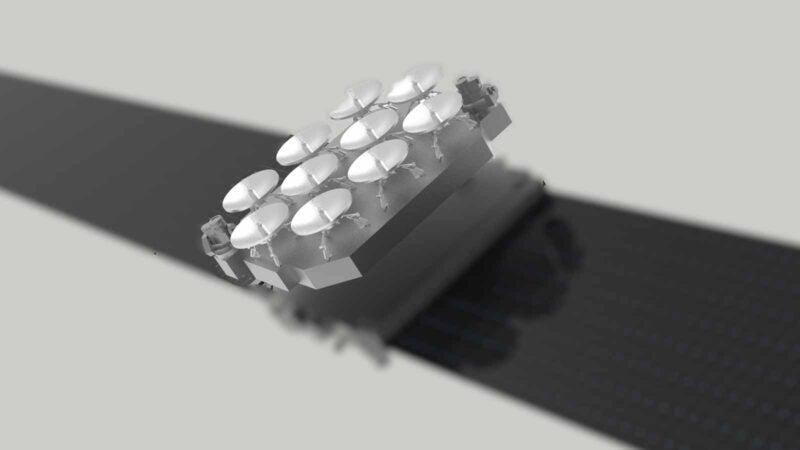

A group of eight NATO allies plan to bring national military satellites together into a hybrid constellation called HALO to improve NATO’s resilience and military advantage in space.
HALO, which stands for Hybrid Alliance Layered Operations in Space, “will focus on improving connectivity and integration of sovereign, nationally owned and controlled military satellites into a networked mega constellation,” NATO said in a statement. The hybrid constellation will provide high-speed communications, intelligence, and missile tracking.
The group of eight nations — Canada, Denmark, Finland, Germany, the Netherlands, Norway, Sweden and Türkiye — announced HALO during the NATO Summit Defence Industry Forum in Ankara, Turkey, on July 7.
There were a number of space-focused announcements at the summit. Canada joined NATO’s STARLIFT multinational initiative to develop a more responsive and cost-effective network of launch capabilities. Spain also joined NATO’s Alliance Persistent Surveillance from Space (APSS), which is aimed at intelligence and surveillance capabilities.
In addition, the Netherlands Defence Minister Dilan Yeşilgöz-Zegerius, mentioned discussions on Arctic satellite communications in a statement.
“Space is indispensable for every military operation. Together with NATO allies, we are making agreements on an international network of military satellites and on secure satellite communication in the Arctic region. This way, we can exchange information more quickly and securely,” Yeşilgöz-Zegerius said in a statement.