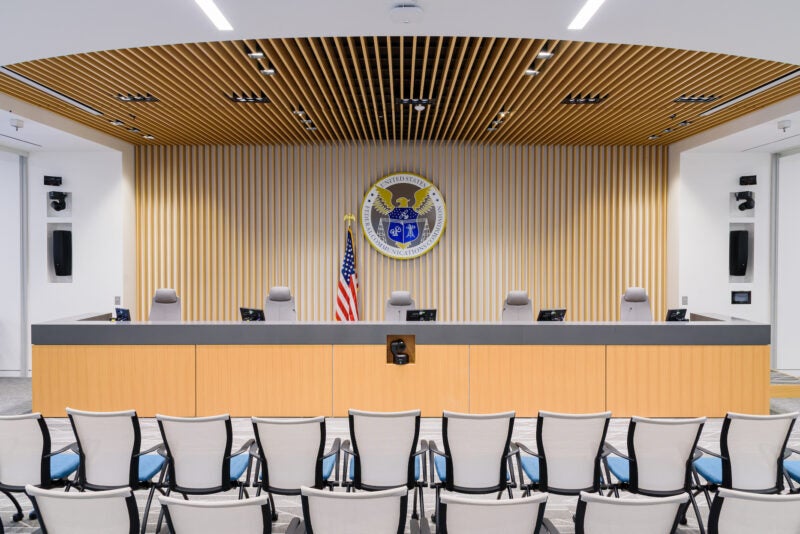
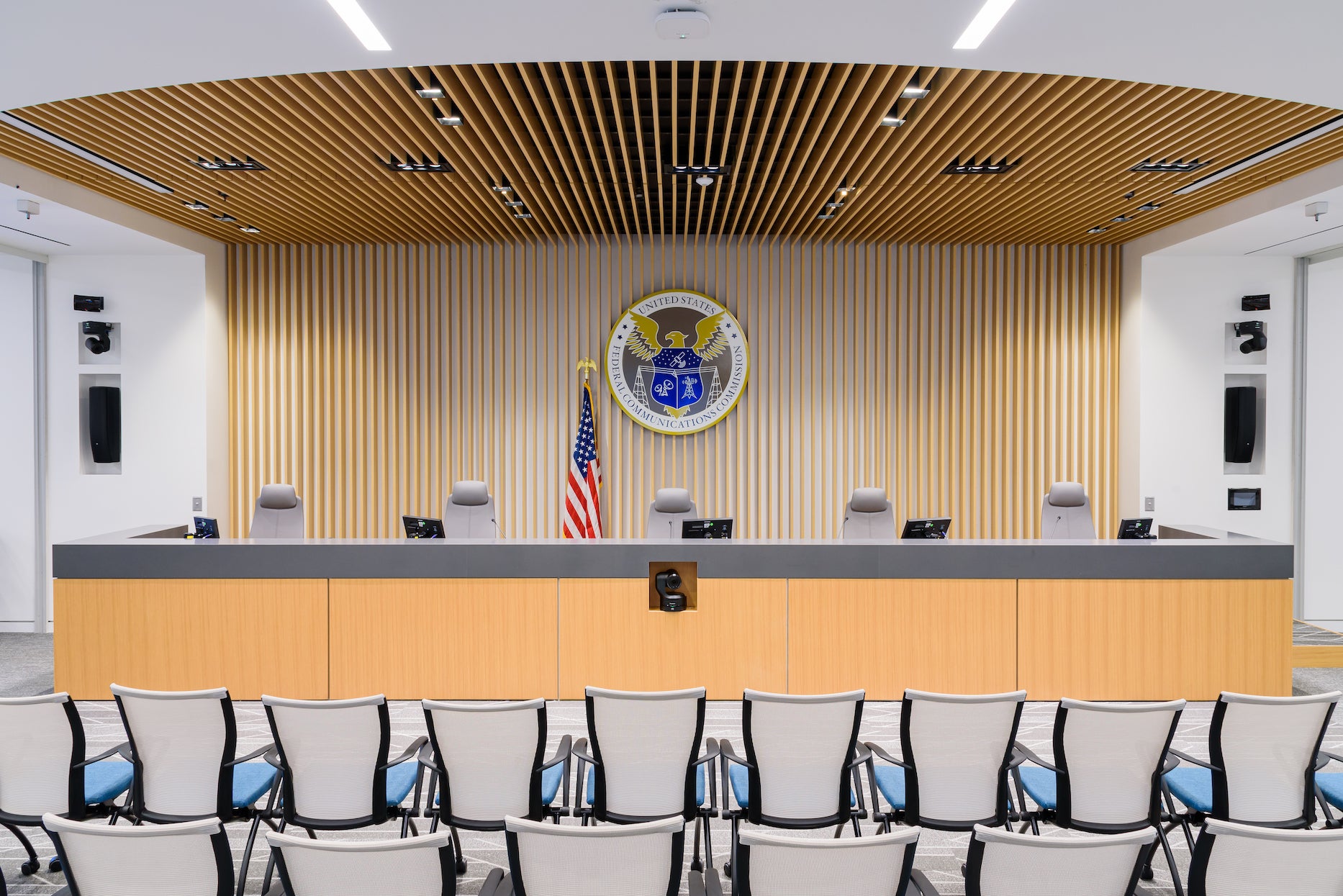
After operating for almost two years as a trio, the Federal Communications Commission (FCC) may finally sit a fourth member. On Friday, U.S. President Donald Trump nominated FCC Chairman Brendan Carr’s senior counsel, Danielle Thumann, to serve a five-year term as an agency commissioner. Thumann, who works directly with Carr on matters from the agency’s Consumer and Governmental Affairs Bureau and Public Safety and Homeland Security Bureau, would give Republicans a 3 to 1 majority on the Commission if she is confirmed by the U.S. Senate.
There are currently two open seats on the Commission. Historically, when two open seats have been available on the FCC, the President would typically nominate a pair of commissioners – a Republican and a Democrat – as long as the Commission ended up with a 3-2 majority in favor of the President’s party. The current Commission includes Carr and fellow Republican Commissioner Olivia Trusty, and Commissioner Anna Gomez, the lone Democrat. President Trump has yet to nominate a person for the empty fifth seat and has not yet committed to renominating Gomez to an additional term.
FCC rules prohibit the Commission from sitting more than three members from a single political party. The Commission must also have at least three members seated to meet quorum. The current Trump and previous Biden administrations have seen abnormally long periods of time with empty seats at the FCC. Thumann’s confirmation hearing has yet to be scheduled, but it is likely that it will take place before midterm elections.
Thumann’s nomination received support from cable and telecom industry associations under the FCC’s purview. ACA Connects CEO Grant Spellmeyer praised Thumann for her work on broadband deployment initiatives across the United States. Curtis LeGeyt, CEO of the National Association of Broadcasters, called Thumann, “a dedicated public servant who is well regarded across all sectors of the communications bar. Her extensive experience at the Commission and deep understanding of communications policy will serve her well in this important role.”
Internet & Television Association (NCTA), representing cable operators, also congratulated Thumann. “Danielle is a dedicated public servant and has worked with skill and distinction on some of the most important matters before the agency. Danielle has delivered policy wins across the FCC’s economic agenda—from bridging the digital divide and protecting consumers to advancing public safety. With the advice and consent of the Senate, Danielle would make a terrific Commissioner,” the association said in a published statement.
The Satellite Industry Association (SIA) has not yet commented on the nomination.
Thumann’s clearance in the Senate may encounter resistance, as some in Washington D.C. are wary of a 3 to 1 pollical balance on the Commission. On Friday, Politico reported that Senator Maria Cantwell (D-Wash.), ranking Democrat on the Senate Commerce Committee, and Senator Ben Ray Luján (D-N.M.), ranking Democrat on the telecom subcommittee both suggested they would fight the nomination unless Thumann was paired with a Democrat. Even some Republicans, such as Senators Ted Cruz (R-Texas) and John Kennedy (R-La.), have previously expressed concerns about the FCC’s more aggressive moves.
The current FCC has allowed the massive clearing of C-band through spectrum auctions that began in 2020 to continue at speed. The Commission approved its most C-band auction in July that clears 160 megahertz of spectrum in the upper C-Band, from 3.98 to 4.14 GHz. Executives at commercial satellite companies in the United States, who asked not to be named for this story, told Via Satellite that they have a generally favorable view of Carr’s FCC, due to his work in easing licensing processes and accelerating approvals for space systems. Some worry that Car
In addition to moves on the Commission, the satellite industry is also losing Jay Schwarz, who is stepping down from his position as Chief of the FCC’s Space Bureau. Schwarz appeared at the SATShow event in 2025 shortly after accepting his role at the Space Bureau. In his remarks, he expressed openness to work with the satellite industry to speed up commercial development. Schwarz recently delivered the keynote address at the Satellite Industry Association’s (SIA) 27th Annual Leadership Dinner.
“When I first discussed this role with Jay, I told him I wanted us to process licenses and applications much faster and to update the FCC’s space rules for the 21st Century. Right away, Jay dove into the weeds with the Space Bureau staff, and they made immediate progress,” Chairman Carr said in a statement. “In the first year, they cut the agency’s licensing backlog down by 43%. And it’s already down another 15% in 2026. Just last month, the Space Bureau completed a monumental rulemaking process to modernize FCC space licensing through a once-in-a-generation overhaul. The speed and ambition at which the Commission executed these reforms is historically unprecedented within the federal government.”
FCC Deputy Bureau Chief Jennifer Gilsenan will serve as Acting Space Bureau Chief during his transition. A permanent Space Bureau Chief has yet to be named.