
The U.S. Space Force (USSF) plans to request nearly $1.5 billion for the Space Data Network (SDN) Backbone in a future fiscal 2027 reconciliation bill.
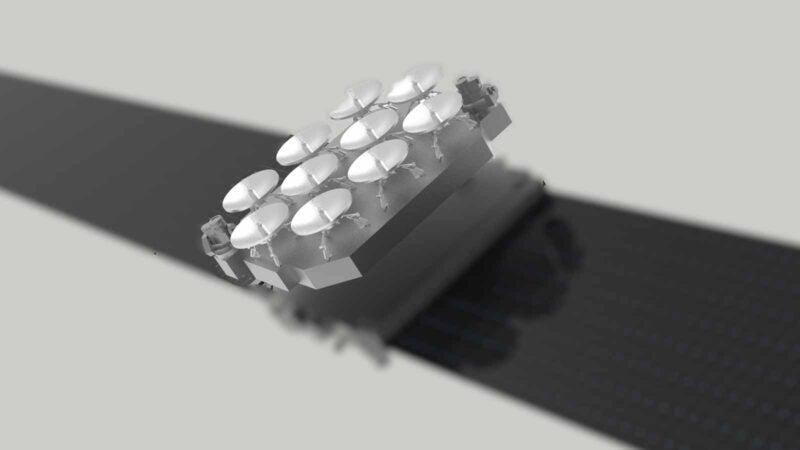
Last week, Space Force’s Space Systems Command (SSC) awarded SpaceX a nearly $2.3 billion Other Transaction Authority (OTA) contract for the SDN Backbone, a future proliferated low-Earth orbit (pLEO) constellation of satellites for high capacity, rapid communications.
The award falls under the responsibility of the Space Force portfolio acquisition executive for Space-Based Sensing and Targeting, which Space Force Col. Ryan Frazier is fulfilling in an acting capacity.
Under the OTA agreement, SpaceX must deliver a fully operational prototype capability by the end of 2027.
The nearly $1.5 billion for SDN Backbone in a future fiscal 2027 reconciliation bill would include $685 million to accelerate expansion of the pLEO constellation and $800 million “for on-ramping additional vendors as the industry base and commercial technologies mature to meet U.S. government requirements,” according to the Space Force’s fiscal 2027 research and development budget request. “These efforts were initiated in FY 2026 within the Golden Dome for America account. Additional details available at a higher classification level.”
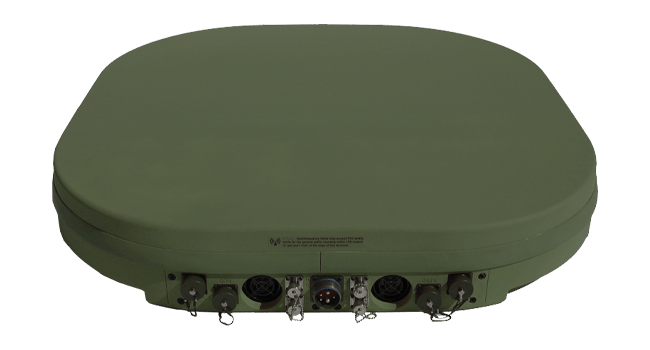
The Space Force has described the SDN as a network that integrates Department of Defense and commercial networks across various orbits to deliver communications, tactical data links, and public internet services to users.
SSC has said that the SDN Backbone will work alongside Tranches 1 and 2 of the Space Development Agency’s (SDA) Transport Layer. SSC also said that the acquisition efforts between the SDN Backbone and SDA’s Transport Layer have come together to build the LEO portions of the overall SDN hybrid mesh network.
Hybrid satellite communications–the use of multi-orbit systems to create an internet in space–is one of the tenets of the Objective Force 2040 that Chief of Space Operations Gen. B. Chance Saltzman laid out in April. Key to the effort will be the SDN, a derivative of the National Reconnaissance Office’s MILNET, which is based on SpaceX’s Starshield.
The NRO has embarked upon MILNET Block II, and Block I has around 200 satellites, including Starshields, for communications and space-based ground moving target indication.
Combining Program Offices?
SDA has responsibility for Tranche 1 and 2 Transport Layer efforts, while the Department of the Air Force has paused the agency’s Tranche 3 Transport Layer.
While the fiscal year 2026 National Defense Authorization Act allowed $500 million for Transport Layer satellites in Tranche 3 – funds that the Department of the Air Force had zeroed in its budget request, due to the consideration of MILNET as a communications option, the fiscal 2026 appropriations law only restored $50 million of that (Defense Daily, June 26, 2025).
“Open competition and competitive design, development, and production of systems are essential to ensure that the department is getting the right system at the right price,” the appropriators said in January.”Several recent acquisitions by the National Reconnaissance Office within the geo-spatial intelligence portfolio utilize non-competitive sole-source procurements on contracts that are non-severable and hamper the oversight of appropriated funds by the congressional defense committees. In contrast, the SDA utilizes an approach where iterative tranches are awarded to multiple vendors to spur competition and maintain a robust industrial base.”
“Further, the Proliferated Warfighter Space Architecture (PWSA) was designed and purpose-built to deliver mission critical data directly to operational users,” according to the appropriators’ language, referring to SDA’s pLEO effort. “This [direct to users] capability, inherent in SDA’s Transport Layer, is critical and must be maintained as the PWSA architecture evolves and space-based data transport capabilities increase. Therefore, the agreement provides $50 million to maintain warfighter centric capabilities within the PWSA architecture.”
In response to questions from Defense Daily last week on whether the SDN Backbone would replace parts of the SDA Transport Layer or the SDA Tracking Layer, SSC said that the SDN includes both the SDN Backbone and the SDA’s Transport Layer.
“The SDA Transport Layer is currently focused on support to specific SDA mission sets, while the SDN Backbone is designed to support the broader set of USSF missions supported by the SDN and eventually take on the data backhaul functions for the SDN,” according to SSC. “Both utilize commercially derived technologies to meet different mission requirements and provide opportunities for a diverse vendor base. While they are distinct programs today, the program offices will integrate the backhaul and tactical communications missions into a vendor-agnostic combined architecture.”
The Space Force requested nearly $1.1 billion for SDA Transport Layer prototypes in fiscal 2026. The more than $300 million jump from the 2026 enacted amount is “to support sustainment of Tranche 1 capabilities, Tranche 2 launch and sustainment, and continued ground support activities,” the service said.