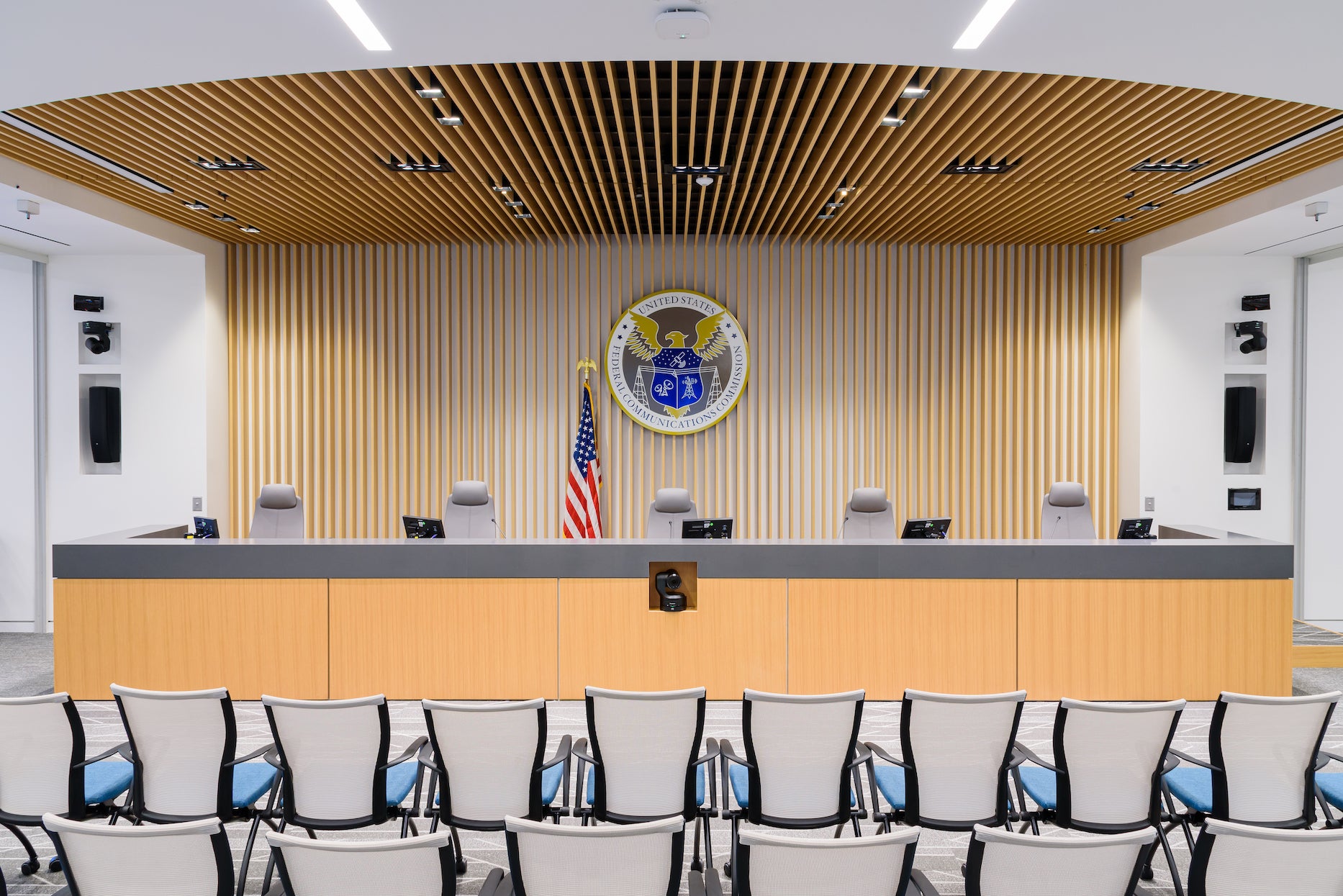
The FCC voted to approve another C-band auction on Wednesday, which will see satellite operators clear 160 megahertz of the upper C-band.
This C-band auction looks to build on the C-band clearing that kicked off in 2020 by creating a harmonized “super band” of 440 megahertz of mid-band spectrum for next-generation wireless services.
The C-band auction approved Wednesday will clear 160 megahertz of spectrum in the upper C-Band, from 3.98 to 4.14 GHz, with the auction taking place by July 2027.
Clearing this spectrum will require satellite operators to launch new satellites and retrofit thousands of broadcast or cable headends. The draft report and order released earlier this month sets a deadline of Dec. 30, 2030 to relocate incumbent satellite operations.
SES recently estimated that clearing the upper C-band will cost more than $3.6 billion and require five new hybrid Ku-band satellites and two in-orbit backups. Eutelsat told the FCC clearing the spectrum would cost approximately $750 million.
The clearing will impact SES, Eutelsat, and Telesat. According to the FCC’s draft order, Telesat did not participate in the proceedings and did not raise concerns with the FCC’s proposed reconfiguration options.
Like the previous C-band auction, satellite operators’ transition expenses will be paid for and they will receive incentive payments. But the FCC hasn’t released the details of those payments yet. The specific amounts of the incentives will be released in the final order, expected to be released in the coming days.
Last month, an FCC official said payments will be of a similar scope and scale to the first C-band clearing, although less in total because the total amount of spectrum being cleared is less. In the 2020 clearing, satellite operators received $9.7 billion in accelerated relocation payments to satellite operators, primarily to SES and Intelsat, which are now the same company.
SES is refraining from commenting on the decision until the company can review the final order, a spokesperson told Via Satellite. Eutelsat has not yet issued a statement either.
FCC Chairman Brendan Carr and Commissioner Olivia Trusty approved the order, with Democratic Commissioner Anna Gomez voting to approve in part and dissent in part.
In her remarks on the vote, Gomez noted requests from organizations representing hundreds of tribal governments that the FCC hold a tribal licensing window in the C-band auction proceedings. The FCC will not hold a tribal licensing window in the auction.
In his remarks, Carr noted how complex this undertaking was, which included coordination with the Federal Aviation Administration on the impact to the aviation sector. Stakeholders in the proceeding filed over 100 comments and replies after the FCC kicked off the proceeding last year.
“The upper C-band is a Rubik’s cube of wireless, aviation, satellite, and media stakeholders. Throw in a little bit of money on top of it, and it gets to be pretty complicated pretty quick,” Carr said. “Solving the puzzle is hard enough, but doing it in record time brings the accomplishment to another level.”
Commissioner Olivia Trusty applauded the FCC for establishing an aggressive timeline for 5G and 6G progress, and a predictable process for satellite operators.
“Expanding access to valuable mid-band spectrum will enable providers to deploy faster, more reliable, and affordable wireless services, and expand capacity to deliver the benefits of emerging technologies like artificial intelligence to communities across this country,” Trusty said. “Although there’s still important work ahead to ensure a successful auction and an orderly transition for incumbent operators, today’s actions put us firmly on the right path.”