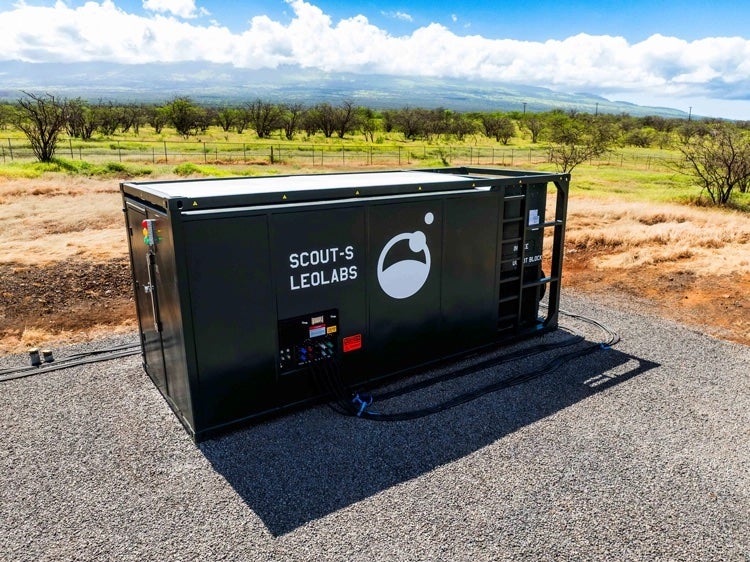
LeoLabs has debuted a new mobile space domain awareness (SDA) tracking radar housed in a shipping container, deploying the first radar in the Asia-Pacific region.
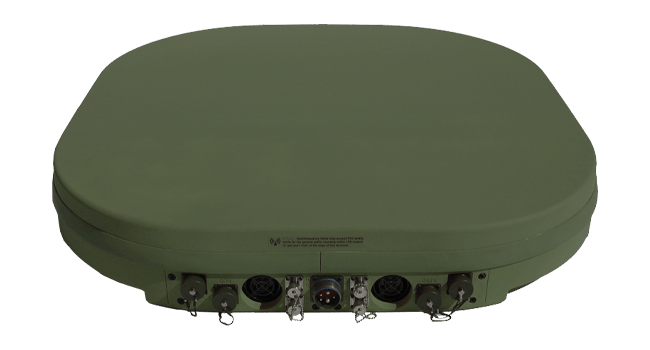
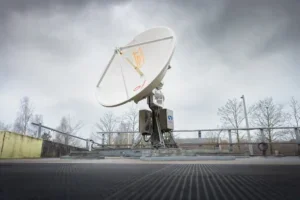
The new system, called Scout-S combines 3D scanning, direct radiating array (DRA) technology, and a modular S-band electronic design for tracking objects in Low-Earth Orbit (LEO) and Very Low Earth Orbit (VLEO). It’s housed in a standard ISO container, designed to be transportable and rapidly deployed.
LeoLabs reported June 10 that the first Scout-S was deployed in the Indo-Pacific region and began observing satellites within hours of activation. The radar has tracked Chinese intelligence, surveillance, and reconnaissance (ISR) satellites, including Yaogan military reconnaissance satellites between 800 and 1,000 km. It has also tracked custody of China’s Spaceplane and has detected an object as low as 230 km.
The Scout-S radar will also be used in an experiment in the upcoming U.S. Indo-Pacific Command’s Valiant Shield 2026 exercise, which is scheduled for later this month.
LeoLabs CEO Tony Frazier explained this new capability is a response to acceleration in adversarial activity.
“The threat has changed and so should the architecture,” Frazier said. “Tracking objects periodically to predict orbits is no longer enough. What matters now is the ability to maintain persistent custody of maneuverable payloads so our customers can respond to emerging threats. Scout-S was built to support that mission — bringing a new level of scalability, resiliency, and proliferation to space sensing.”