The Polish Space Agency was established in 2014 and since then, has contributed to growth in Poland’s commercial space agency. Poland is now one of the seven largest nations contributing to the European Space Agency (ESA).
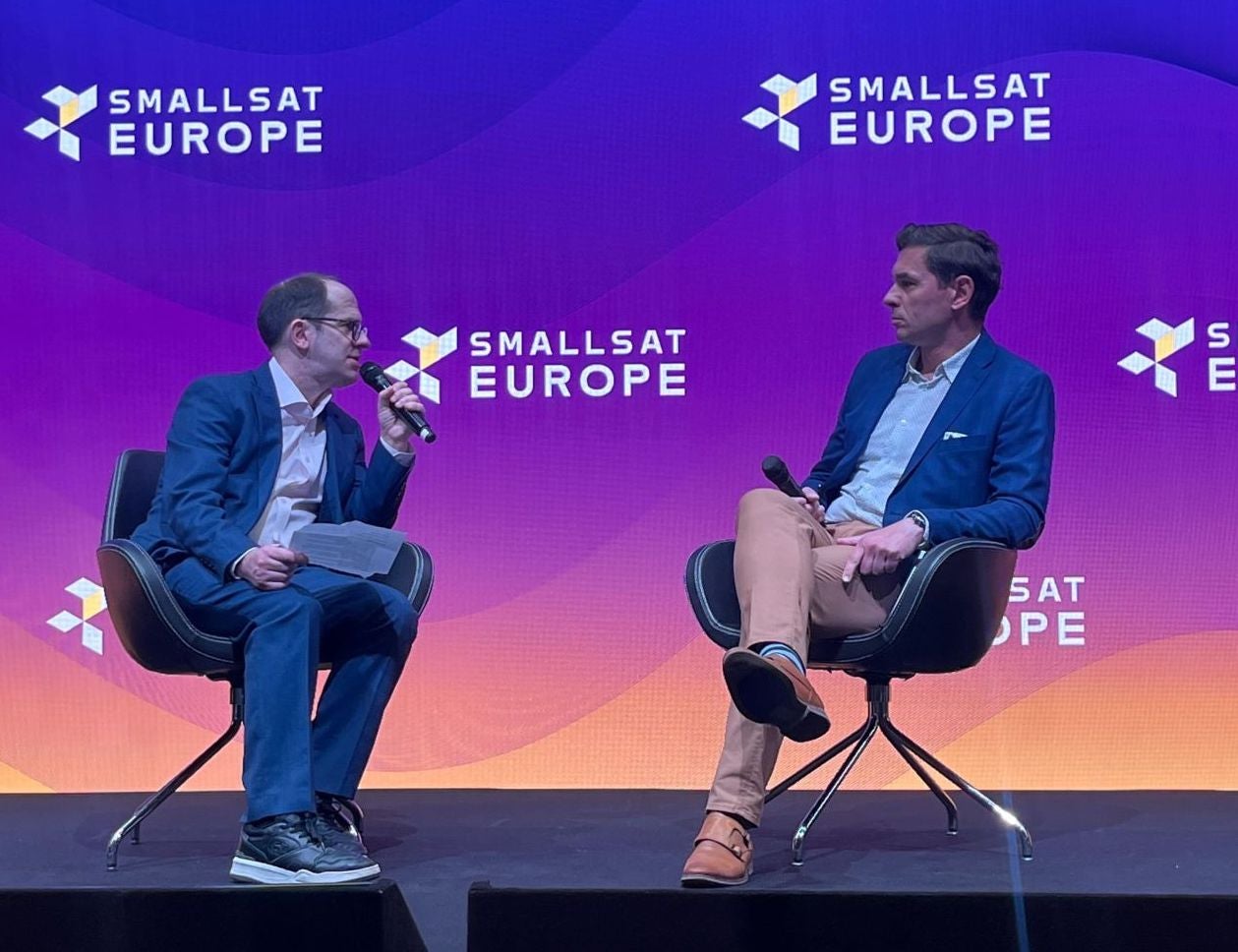
Last week at SmallSat Europe in Amsterdam, Polish Space Agency Vice President Col. Marcin Mazur shared insight into Poland’s revamped space ambitions. He spoke about the Polish Space Agency’s top areas of focus, and how the agency can help Polish space companies play a larger role in the European and global space ecosystem.
VIA SATELLITE: Poland’s defense budget has increased to almost 5% of GDP, which leads NATO nations right now. That includes funding space capabilities. From your perspective at the Polish Space Agency, what do you see as the priority areas of investment for your country’s space development program?
Mazur: You have products like data services which are necessary for all of us in society when we use different applications when we check different information on the internet, many of them comes from satellite solutions. But also from the military point of view, C2 systems, ISR, targeting weapons, they need to be to be connected to space solutions. This is why we invest in EO from military point of view to imagery intelligence, we [invest] in satellite communication, and in SSA. Those are three type of main priorities which we will focus on.
VIA SATELLITE: How does the role of the Polish Space Agency evolved over the last few years with more of an emphasis of space within Poland’s economy? What shifts and the changes have taken place in terms of the space agency’s role?
Mazur: As a national agency, our role is to support the ecosystem — firstly to grow, then to be part of the economic growth. The agency is under the Minister of Economic Development. The Minister often highlights space/AI/new tech as examples of high tech. They are factors which will impact our national economy. Since investments in space and new technology brings multiple effects in future. When we look into the past, the agency is still pretty young. It was created in 2014, only 12 years ago. And as we look into our national space sector, it is growing because of public resources invested in different projects, which helps here.
VIA SATELLITE: How important is it to ramp up spending when it comes to space-based defense? You spoke about the Polish Space Agency looking to help in that area. How are the geopolitics impacting your work and the defense area.
Mazur: Well, I would say that as a country we are where we are. We understood that the situation mainly in 2022 has changed. Governments are addicted to space capabilities and investments in these capabilities. On the one hand, these procurement in capabilities help us to feel safe and secure. You feel more independent, which helps to keep the sovereignty on the level which we expect. But, also the investments for development, which help the ecosystem, the public and private entities can grow their competences in order for us to partner with them in the future.
VIA SATELLITE: One of the other big topics of this event has been sovereign space and having sovereign capabilities. How would you assess Poland’s view when it comes to sovereign space and developing sovereign space-based capabilities?
Mazur: We understand sovereignty as a diversity of resources. It means that it is important to have access to several different data sources, which allow us to be aware what is the situation in space, in orbit, as well as with the tools or applications which we use with space capabilities. This means in practice we understand national capabilities, in terms of how we procure or invest in for the future. It is extremely important to be able to operate them, to task them, to be sure of the consequences of them, but also access to different bilateral, federated, or commercial sources, which supplement the information for Poland’s needs.
VIA SATELLITE: Could you highlight one or two Polish companies to look out for that you think could have a big future over the next few years?
Mazur: As an agency, we represent the sector. We help to promote them, to raise these competencies. When I look at the sector, I would say we have more or less 60 different entities which are actively involved in different projects, mainly for the European Space Agency (ESA). Since November last year, we have raised the contribution to ESA and became one of the biggest seven nations contributing to ESA. We want to do help those companies, those entities to play bigger role in future and to be able to provide the solutions or to play a prime role and not just be a systems or a sub-systems provider.
VIA SATELLITE: You mentioned 60 entities, is that is that a significant increase from a few years ago?
Mazur: We joined ESA in 2012, two years before the Polish Space Agency was created. Before 2012 we had only one public entity, which was focused on science exploration. After 2012 the government decided to join ESA, then the sector year by year grew. Nowadays we have more or less 60 companies, most of them are small and medium-sized. I believe with public resources these companies will only get bigger.
VIA SATELLITE: How important is space when it comes to Poland’s overall economy?
Mazur: Our Minister of Economic Development underlines the role, the value of space investments in space. It helps economic growth, and provides jobs for society. We see a number of positive effects as a result of this. You have new technologies, such as space biotechnology, and these could provide multiple benefits in the future.
VIA SATELLITE: What lessons have you learned from Ukraine when looking to develop space-based capabilities?
Mazur: We understood with these space solutions that governments cannot rely on one source of data that it’s important to have access to different solutions. To own these capabilities is an important driver. You need to operate and understand the consequences of those capabilities. We can’t just buy solutions. We understand that investments here are now a priority. Investments in development, as well as the space sector, will guarantee our sovereignty in future.
VIA SATELLITE: Has there been a significant shift in Poland’s attitude toward space over the last two or three years? Would you say it’s been prioritized more?
Mazur: From both a military and civilian perspective, we will be operating civilian EO micro constellations. The Polish Space Agency will be responsible for a micro satellite constellation, which will be called CAMILA (five satellites). The Polish MoD already operates an Iceye constellation of radar satellites, but also will be equipped with this new electro optical constellation, which proves that our industry is able to provide solutions for our needs. We are also interested in active participation in the European IRIS² program for satellite communication, which we want to have our industry involved in.