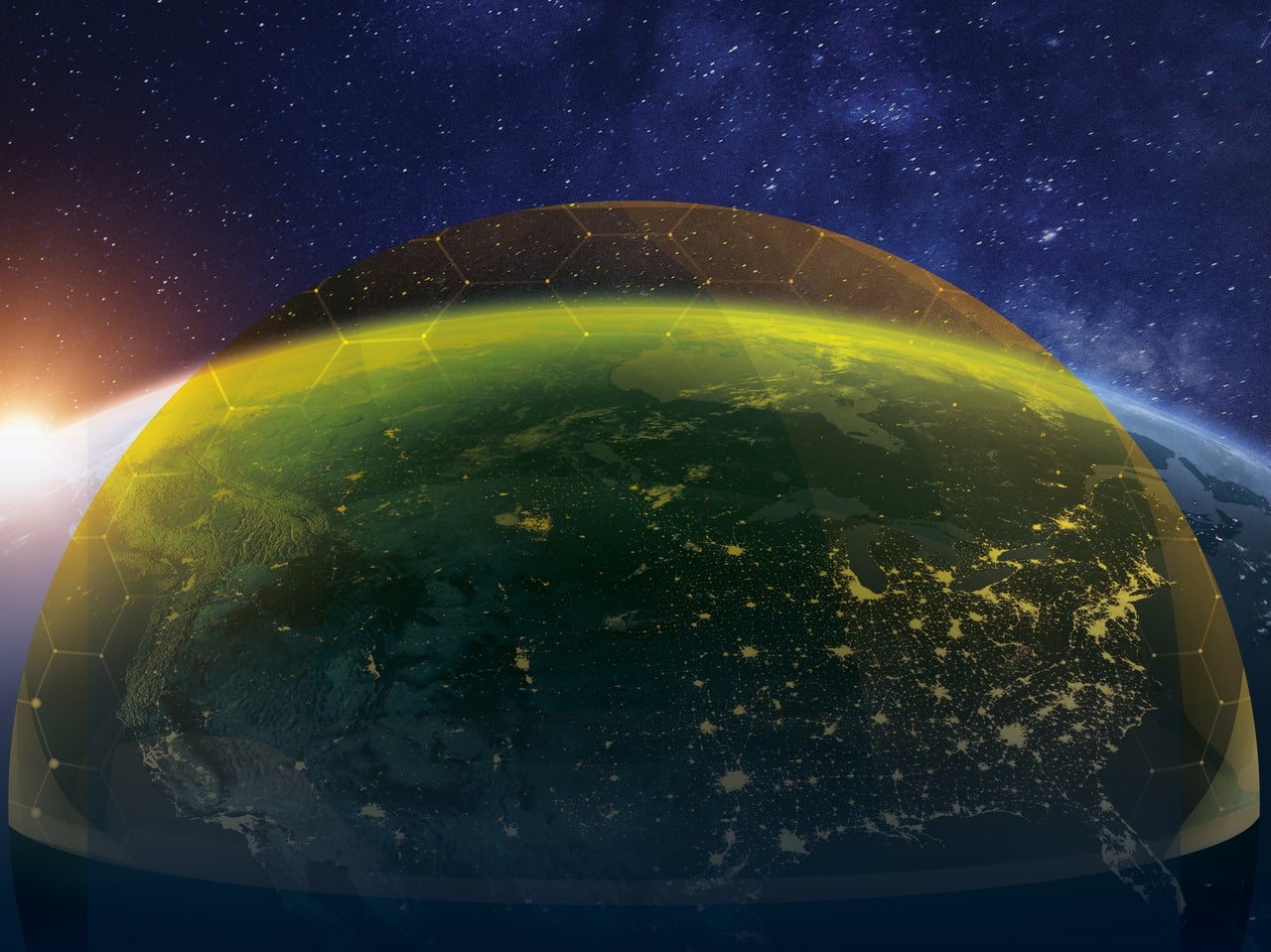
The head of the Golden Dome program on May 14 strongly disagreed with a new Congressional Budget Office (CBO) estimate that a system along the lines of President Donald Trump’s proposed missile defense initiative could cost upwards of $1.2 trillion over 20 years.
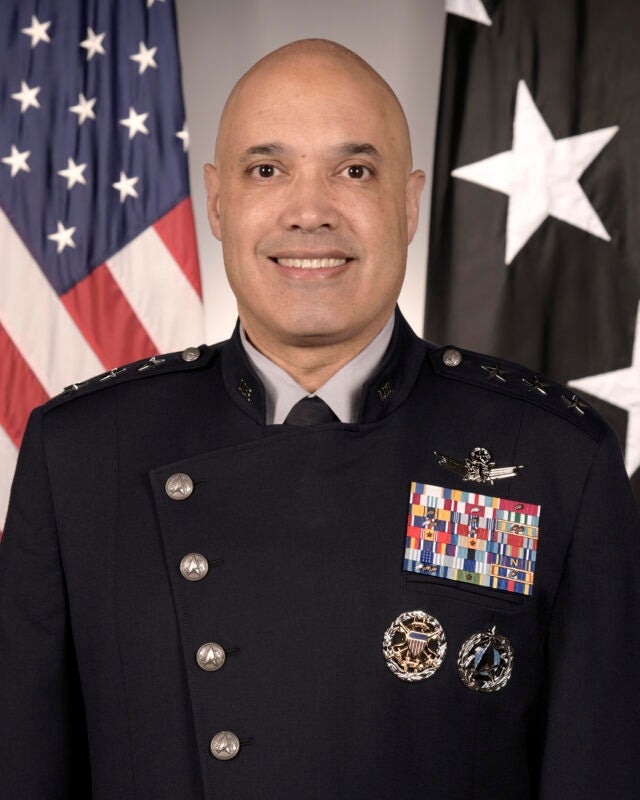
“They’re not estimating what we’re building,” Gen. Michael Guetlein, direct reporting program manager (DRPM) for Golden Dome, said in a common line he uses in response to independent estimates of the program’s potential costs.
Guetlein was speaking at the “Inside the Dome” conference hosted by Tectonic and Payload in Washington, D.C.
Guietlein confirmed it will cost $185 billion, including an extra $10 billion for several space sensor systems not originally envisioned as part of Golden Dome, previously announced in March.
The CBO report released this week focused on estimating a potential Golden Dome system that aligns with Trump’s original January 2025 executive order that envisioned costly space-based interceptors combined with more ground-based systems that can defend U.S. territory against various kinds of missile and aerial threats, including intercontinental ballistic missiles from Russia and China.
CBO’s analysis includes a 7,800 satellite constellation of space-based interceptors (SBIs) in Low-Earth Orbit (LEO) that could be target up to 10 ICBMs as well as adding more current ground-based systems like Ground-based Midcourse Defense (GMD), Aegis Ashore and THAAD batteries.
CBO said the largest cost in this kind of system would be the SBI constellation, costing $743 billion over 20 years, largely tied to the sheer constellation size requirements and need to replace SBI’s every five years due to atmospheric drag of LEO systems.
Guetlein repeated that a report like CBO’s takes legacy capability and “they take technology from the early 2000s, and then they just multiply that forward by geography of the homeland.”
He said those systems were designed for overseas regional conflicts with only point defense missions and operated independently.
“This is not what we need for the homeland. We need a regional defense, so it’s a different architecture and you can’t just take what we’ve done in the past and multiply it forward, or you’re going to get large numbers like CBO,” Guetlein continued.
He also argued CBO did not consult his office directly about his version of the architecture under development. Guetlein again repeated they have not put out much public information on the exact architecture “because the intelligence threat is so high.”
The Golden Dome program chief repeated his mantra that affordability is one of the more decisive issues for space-based interceptors, because he is confident SBIs are not a physics problem, but “an economics, scalability problem.”
“If I cannot do something affordably and scalably, it doesn’t make sense as a nation to go after it, because I cannot bankrupt the nation,” he added.
Guietlein admitted the CBO’s architecture is “not affordable at all, so we’re not going to go do that.”
However, Sen. Tim Sheehy (R-Mont.), who also spoke at the event, conceded the true cost of Golden Dome could be like CBO’s estimate over $1 trillion and thinks that is a necessary level.
Sheehy said last year he gave a speech that noted as a supporter of Trump’s Golden Dome vision, “we also need to be honest with the American people. I said, this will cost in the trillions. That was the area, and what is the latest cost estimate? It’s in the trillions.”
“I think as you look at the implications for our terrestrial infrastructure, our active and passive sensor rates, our space-based architecture, it was obvious to me from the beginning, coming from a guy who used to build complex defense systems and air defense systems, understanding the cost of the hardware to field, maintain and lifecycle support – right away. I went this project, if built to the President’s vision, as it should be, this will be a multi-trillion dollar project, and we’re seeing now that that’s the case. And I think we should be honest people about that,” Sheehy continued.