SpaceWERX has awarded TrustPoint a $4 million Tactical Funding Increase (TACFI) contract, which will fund the buildout of four satellites and four ground stations for a full end-to-end demonstration of a positioning, navigation and timing (PNT) service that is independent of GPS.
TrustPoint is working to build an independent PNT service using Low-Earth Orbit (LEO) satellites operating in C-band to provide an alternative to GPS for resiliency.
“We’re building a layer of infrastructure of satellites and a ground component that is GNSS independent,” CEO and Founder Patrick Shannon told Via Satellite. “What that means is you have a capability that does not in any way tie back to the existing GNSS systems — GPS, Galileo, BeiDou, or GLONASS — and that’s important to both national security and commercial users. The independence allows them to rely on it in a standalone fashion, it’s all about resilience.”
Typically, TACFIs also involve a private capital match. But in this case, SpaceWERX provided the full $4 million contract, Shannon said. This award funds TrustPoint’s existing roadmap, and is not a separate demonstration for the Space Force.
The award announced Tuesday was issued by SpaceWERX, the innovation arm of the United States Space Force, and jointly funded by the Small Business Innovation Research (SBIR) program and the Commercial Space Office (COMSO).
“It’s really a great demand signal from the U.S. government that what TrustPoint is building and focusing on, which is C-band GNSS from LEO has caught their eye and they see the tremendous value in it,” Shannon said.
Shannon notes that TrustPoint has already demonstrated its capabilities in single satellites, and has launched three separate, single-satellite tech demonstrations. Flying four satellites will demonstrate the full capability.
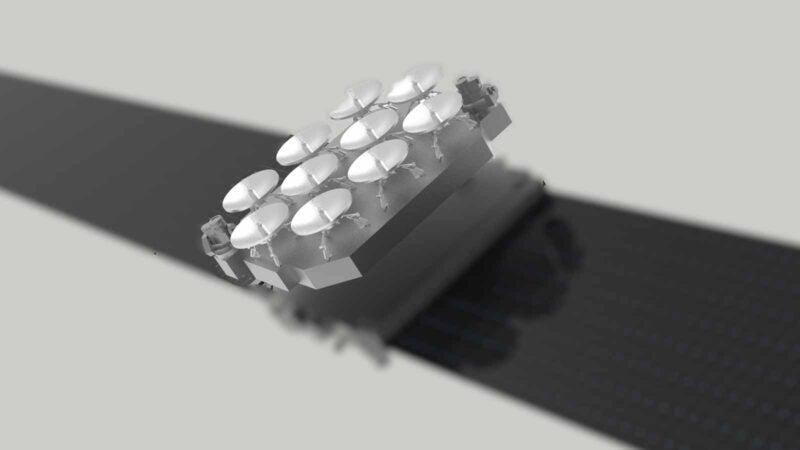
The company aims to have the satellites up in a quick turnaround, launching in the first half of next year. TrustPoint’s strategy is to work with commercial satellite bus vendors and build the payload in-house.
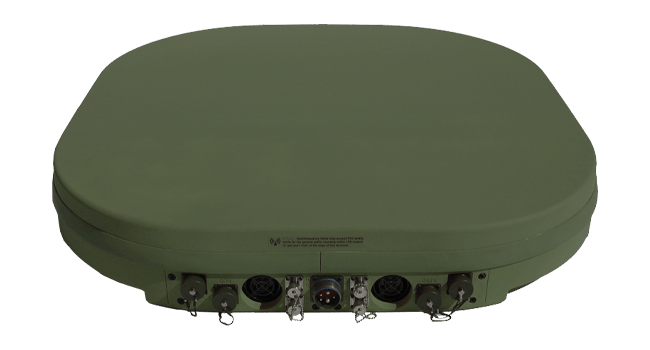
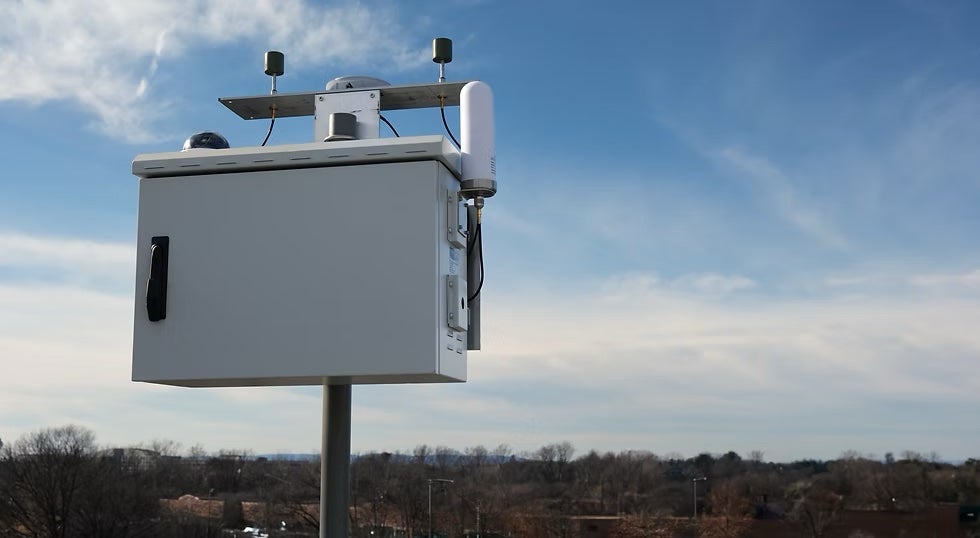
The associated ground systems will be deployed in the United States. These ground stations are roughly the size of a microwave and can be deployed at a low cost.
The $4 million TACFI will fully fund this four-satellite constellation, Shannon said, emphasizing the company is also aiming to demonstrate that this type of capability can be deployed on a fraction of the cost of traditional systems.
“You can build a microsat-class bus in the 10 kilogram range and get the mission done and that lays the groundwork to build a lot of these in an affordable way. It also makes replenishment easy, and makes launch strategy easy. There are a lot of derivative benefits from staying small,” Shannon said. “These all support the end use case, whether it’s a war fighter in Eastern Europe or the Asia Pacific or the civilian user, and here in the United States, across Europe or elsewhere, where resilience matters.”