Upgrades to the U.S. Army and U.S. Marine Corps’ Blue Force Tracking network system are seen by the U.S. Department of Defense as too crucial to share the fate of other more expensive military communications projects that recently have been postponed, according to a senior U.S. military official.
“The U.S. military is approaching these upgrades with budgetary issues in mind,” said the official, who asked not to be named . “Through partnerships with commercial bandwidth providers and manufacturers, these and future upgrades will remain a priority and will not be pushed back.”
The Blue Force Tracking system, which consists of a network of computers linking GPS satellites, sensors and communication devices with military vehicles and weapons, is the U.S. military’s solution to reduce casualties caused by friendly fire. The Army and Marine Corps deployed more than 50,000 of the first line of Blue Force units, developed by Northrop Grumman in 2003, but users in the battlefield, especially during the U.S. invasion of Iraq in 2003, were not happy with the initial system. “Blue Force has horrendously slow refresh rate of somewhere around five minutes,” said the official. “The upgrade reduces that time to 10 seconds. It will make that much of a difference.”
The U.S. military is in the process of building a system upgrade that will increase its speed dramatically. The upgrade, referred to as Blue Force Tracking 2 (BFT2), is roughly scheduled to be released in 2010 and will provide much more than accurate and timely battlefield intelligence. The system also allows ground forces to exchange e-mail and other forms of communication such as images, messages, e-mail and intelligence reports.
The BFT2 systems have been in development by Northrop Grumman and ViaSat since April 2007, and recently were demonstrated for military officers. “Installations of the new terminals will be equipped in vehicles frequently used in current combat operations like helicopters and eventually in future combat systems vehicles,” the official said. “But we will still be using and ordering the older systems as well. It is not known whether or when the upgrades terminals will become the standard.”
Partnerships with manufacturers and commercial satellite companies are intended to keep the cost of developing the new terminals as low as possible, according to officials. Northrop Grumman has put a $2,500 price tag on each BFT2 terminal, $900 more than the current systems.
Several commercial satellite companies are on board for the BFT2 project. Inmarsat uses its Inmarsat 4 satellite to provide bandwidth. Data Link Solutions received a $32 million naval information distribution contract Nov. 3 from the U.S. Navy to equip command and control platforms with time-critical targeting and Blue Force Tracking.
The U.S. military has not yet determined how many BFT2 terminals will be ordered or installed.
Beyond budgetary issues, military officials are concerned about the encryption abilities of the BFT2. While the upgrade dramatically improves encryption, it has yet to reach the level preferred by the Pentagon. “These communications are extremely secure at this point, but to calm the nerves of some of these generals, there has to be absolutely no risk of jamming or hostile takeover,” said the official.
But risk may be offset by accuracy, which is a top priority for a system designed to save lives. The upgraded system’s software showed that it can eliminate inaccurate enemy- and ally-positioning indicators during tests — a problem that plagued the early systems.
“The stationary icons which show up on BFT user screens indicate enemy troops, mines and other hazards. Delays in the system led to inaccuracies on top of the problems that were already there. So you have some units out there who don’t trust this system and sometimes don’t even use it. What is the point of even spending the money if our forces can’t trust the system?” said the military official. “BFT2 solutions are being developed now and there are several prototypes being tested.”
Blue Force Tracking System Upgrade Seen as Crucial
By  Jeffrey Hill
Jeffrey Hill

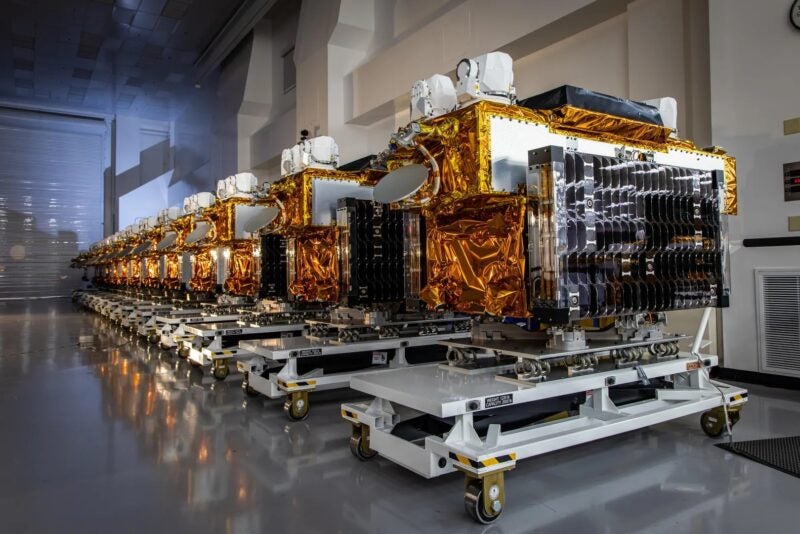


SSC Space and Saab Sign MoU to Enhance Sweden’s Space Capabilities
SSC Space and Saab are teaming up to explore potential areas of cooperation related to space and Multi-Domain Operations (MDO). These will include the use of Esrange Space Center as […]


Trending Now
-
 Imagery and Sensing
BlackSky CEO: Sovereign is the No. 1 Market Opportunity Right Now
-
 Government/Military
NSSLGlobal Acquires MetOcean Telematics
-
 Manufacturing
Arabsat Reveals Details of 50-Year Anniversary Satellite