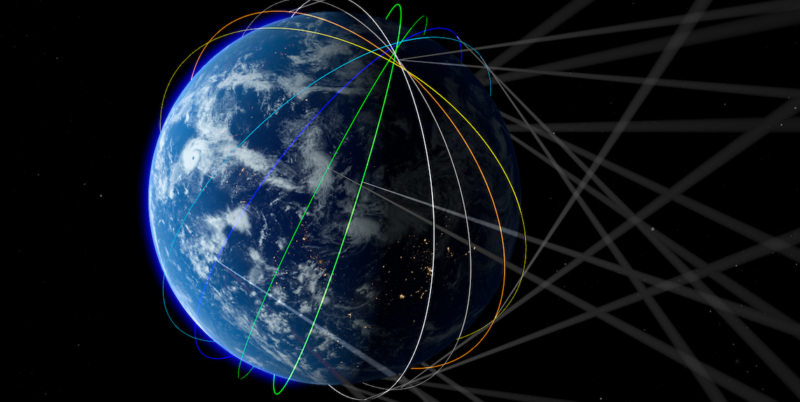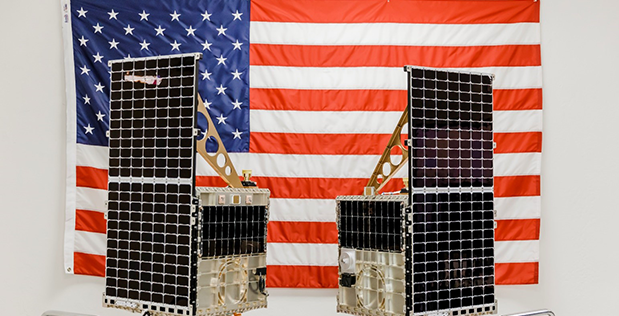
Meridian Space is separating SpinLaunch into an independent company, while Meridian will maintain its focus on its broadband constellation plans. This comes as Meridian will launch its first satellite to test its technology in-orbit on the SpaceX Transporter-18 mission, set to launch on Thursday.
A Meridian Space spokesperson confirmed the plans to Via Satellite this week. The company is building a team to shape SpinLaunch’s strategy and will share more details about its leadership and plans in the future, the spokesperson said. SpinLaunch is not for sale.
“SpinLaunch is entering its next chapter with a renewed focus on advancing and commercializing its kinetic launch technology. SpinLaunch will continue to build on its vision for a lower-cost approach to launch, with further applications in hypersonics to support the Golden Dome program and in the lunar economy,” the spokesperson said.
SpinLaunch began in 2014 to develop a kinetic launch system that uses a ground-based accelerator designed to launch rockets to orbit. Last year, SpinLaunch announced plans to develop a Low-Earth Orbit (LEO) broadband constellation, tapping former OneWeb exec Massimiliano Ladovaz to lead the company.
First Customer Link Demo
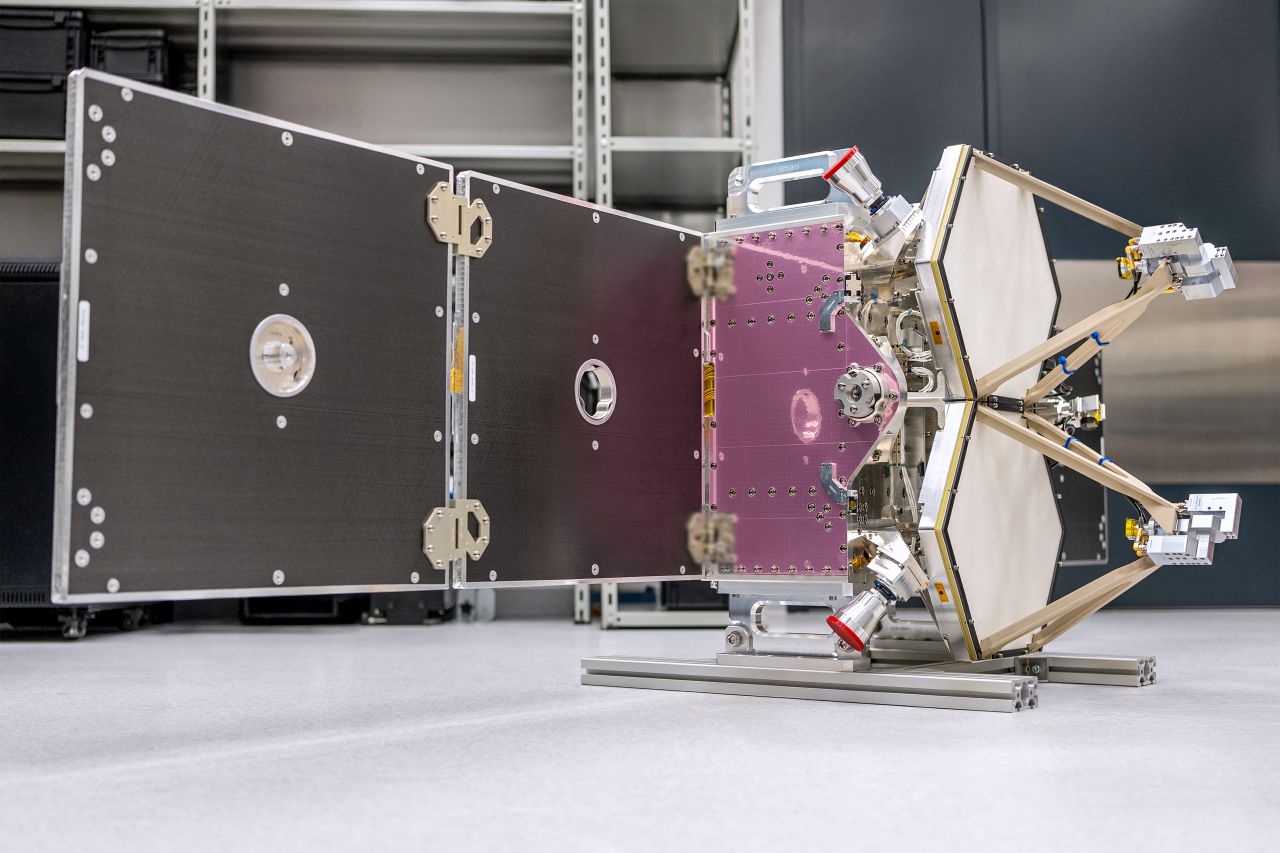
On Thursday, Meridian is set to see its first satellite, known as First Customer Link, launch on the SpaceX Transporter-18 rideshare mission. Kongsberg NanoAvionics built the bus for the satellite.
Ladovaz recently told Via Satellite that Meridian has customers for this demonstration satellite and will perform testing with its first ground site in France, and at a Miami site of its digital infrastructure partner Equinx.
“There are not many assets like ours in space available for testing,” Ladovaz said. “Our architecture is a transparent architecture that allows you to test every waveform you want. That adds a lot of interest for some customers to test different types of [waveforms] from commercial waveforms to defense waveforms over a LEO system — and that’s because our architecture allows it.”
Ladovaz said the company is in “advanced discussions” with both commercial and government customers for the Meridian constellation. The company’s business model is built on ownership and control, where a single customer like a sovereign government or a regional operator can afford full ownership of a constellation, or fractional ownership.
While Meridian was originally planned as a flat satellite design, the company is also offering “Meridian Express,” based on the FCL satellite, which is not a flatsat design but can be deployed more rapidly. The company has offers out to deliver a smaller constellation next year, he said.
“Customers are coming to us and asking — can we launch next year? It’s clear people can’t wait for 2032, 2035 to get their constellation up,” he said. “That’s where Meridian comes in. Meridian is lower CapEx, fewer launch vehicles, but it’s also about scaling assurance.”