CesiumAstro raised its second round of capital this year to value the company at more than $4.5 billion as it plans to build its own satellite constellation called Synchronicity for commercial, sovereign, and defense missions.
The Austin-based company announced $730 million in Series D financing on Thursday afternoon, led by Janus Henderson, with participation from Insight Partners, Sands Capital, Sumitomo Corporation of Americas, Toyota fund Woven Capital, Magnetar, and NewSpace Capital.
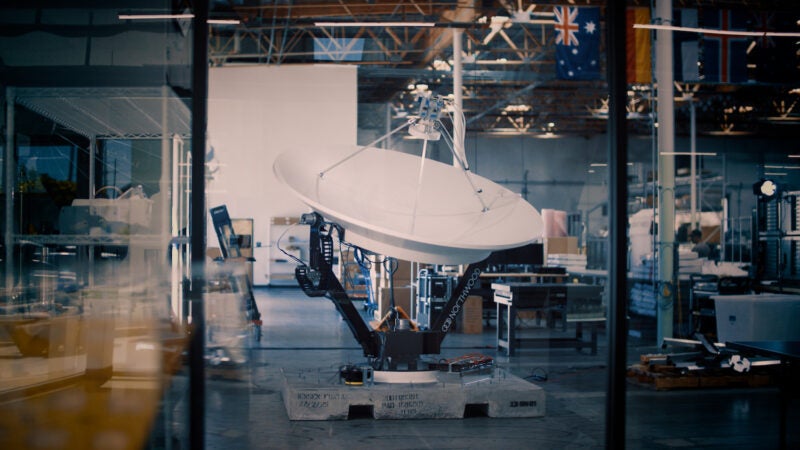
CesiumAstro began as a phased array technology provider and has expanded its technology to ground antennas, then full satellites, and now plans for a 737-satellite constellation.
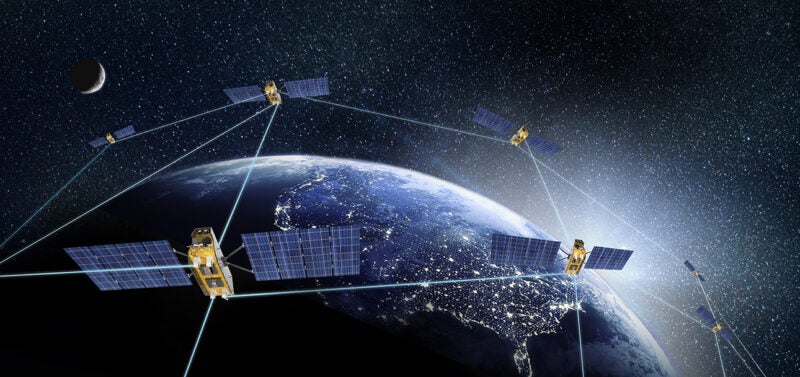
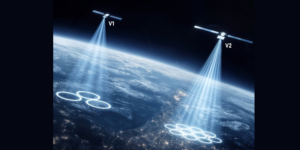
Synchronicity is described as an AI-enabled constellation with dynamically managed, multi-beam architecture that will support Ku-, Ka-, and V-band communications, as well as advanced edge compute and multi-orbit operations. Cesium stated it will deliver “more flexible, resilient, and adaptable connectivity across a broad range of commercial and national security missions.”
Via Satellite reported on the constellation when CesiumAstro filed for Synchronicity with the FCC in July. According to that filing, Synchronicity is designed to provide a “flexible and technically differentiated” fixed satellite service (FSS) system in Non-Geostationary Orbit (NGSO) to support fixed and mobile users across enterprise, government, industrial, mobility, and specialized commercial environments, the company said.
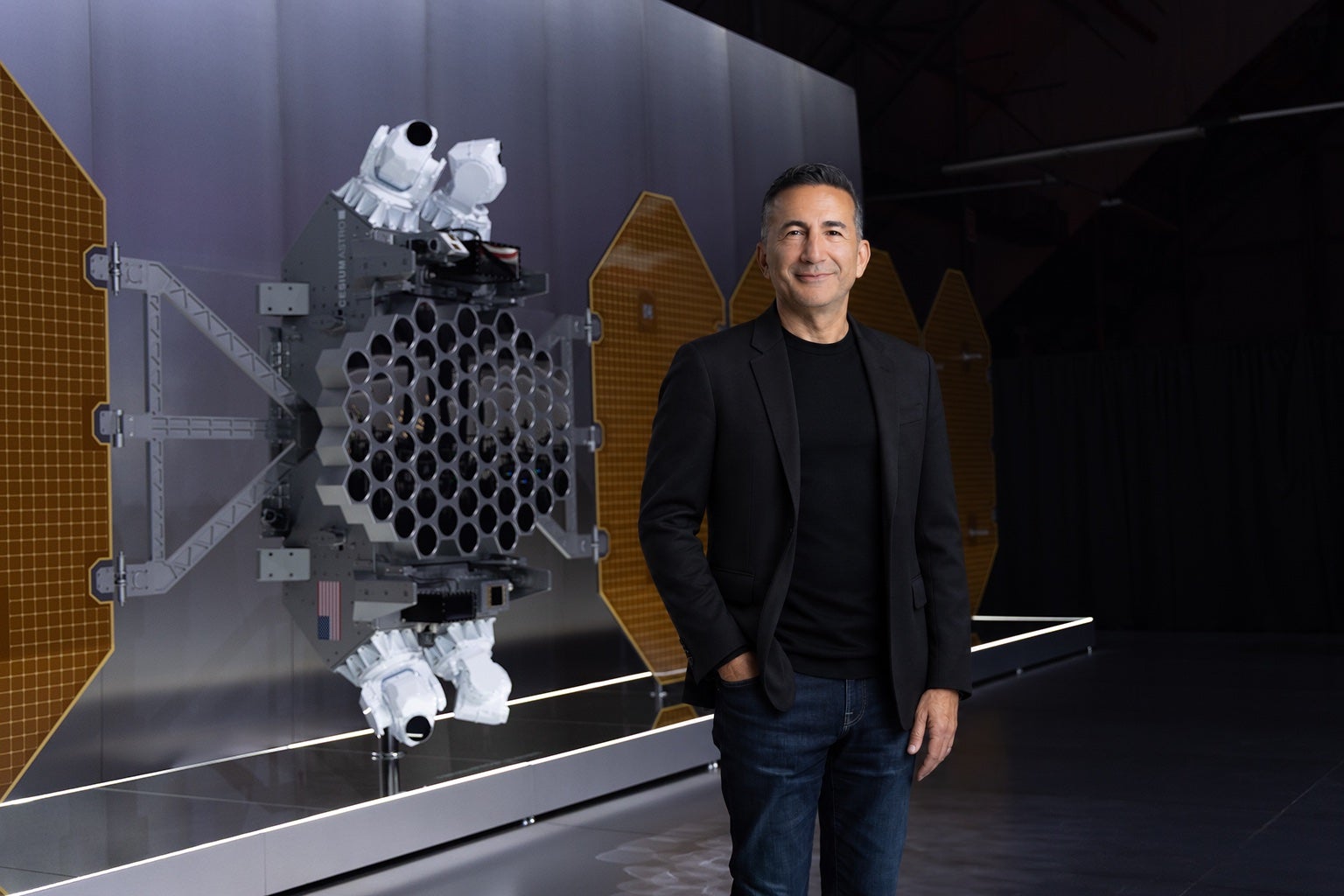
“Synchronicity is the culmination of the technology stack we have methodically built since CesiumAstro was founded,” CesiumAstro CEO and founder Shey Sabripour said in a Thursday statement. “We designed the silicon, the active phased array, the payload, processors, the spacecraft, ground terminals, and the network as one system. That vertical integration gives us the ability to build capabilities in space that evolve as mission requirements, technology, and operating conditions change.”
CesiumAstro launched its first satellite, Element-1, on the October Transporter rideshare mission.
In addition to the $730 million in Series D funding, the company also secured $100 million in debt financing through the Export-Import Bank of the United States (EXIM) and JPMorgan.
This is Cesium’s second round this year after it raised $270 million in February and $200 million in EXIM financing.
Since then, the company has acquired three companies — Jariet Technologies, 1Aardvark, and Vidrovr — to bring together semiconductor, mission software, and artificial intelligence capabilities.
Cesium plans for this new capital to support its technology development, expand U.S. manufacturing and spacecraft production, fund international growth, and develop the Synchronicity constellation.