Planet is on a growth streak in 2026, logging revenue growth and sovereign space wins, and opening a new factory in Germany. At the same time, Planet is investing in its next-generation technology and increased onboard computing for its Pelican and future Owl fleet.
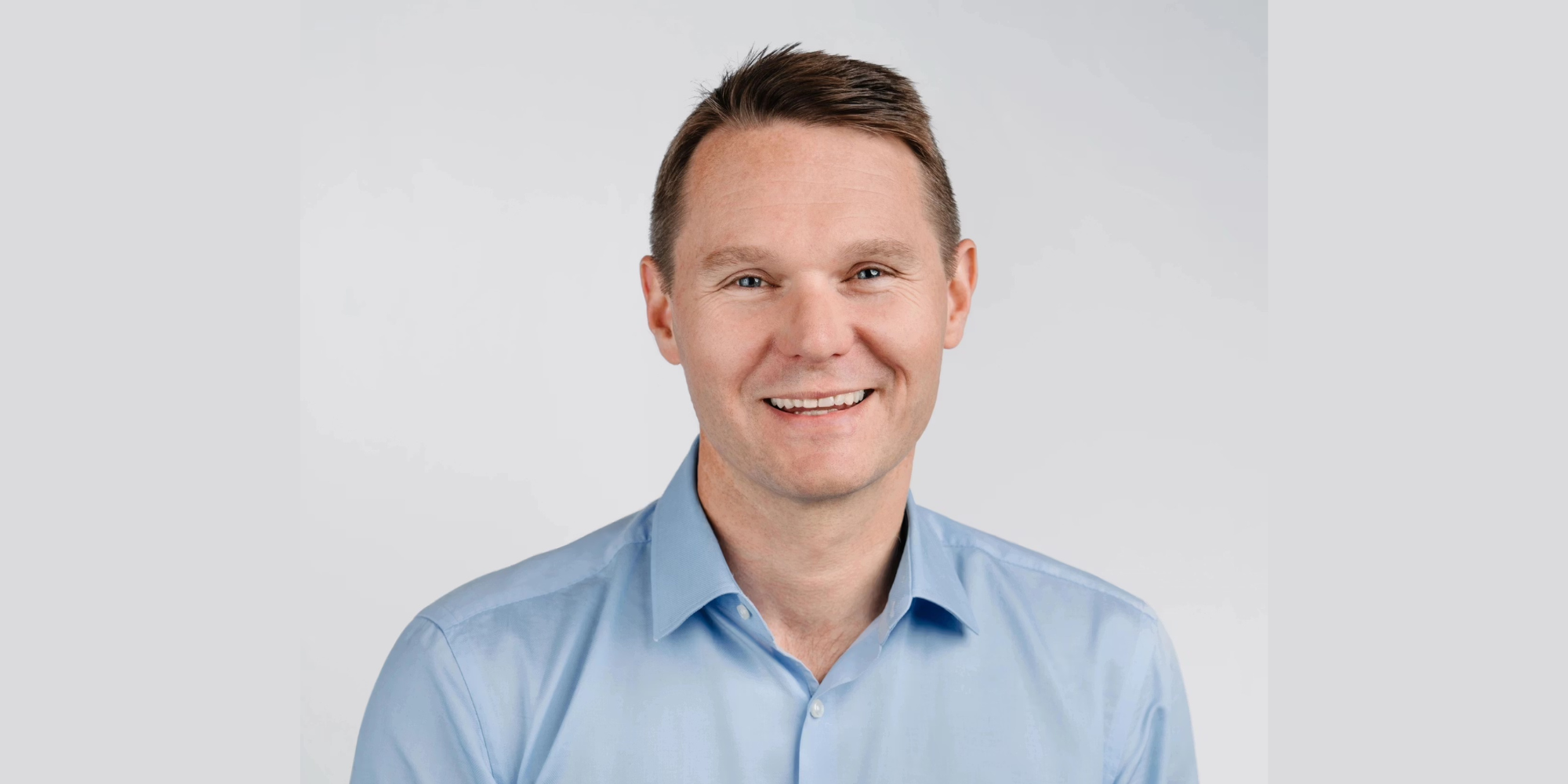
Via Satellite recently interviewed Robbie Schingler, one of Planet’s co-founders and the company’s chief strategy officer about the company’s progress in sovereign space and the Earth Observation (EO) industry’s push toward agentic workflows. Also, Schingler shares his frank assessment of the current launch market, calling for SpaceX to continue operating the Falcon 9.
VIA SATELLITE: Planet has had a lot of momentum in Germany lately with the new Berlin factory, launch deal with Isar Aerospace, and the Ministry of Interior (BMI) deal. Why is Planet investing so heavily in Germany, and how does that open up greater opportunities in Europe?
Schingler: We came to Germany in 2015. That was our very first acquisition, a German company that originally was called RapidEye. I personally came in 2016 and 2017 to lead that integration, so I know the European space ecosystem extremely extremely well. We have about 150 people in the Berlin office today. It’s extremely international, a great hub.
But why Germany? In ISR [intelligence, surveillance, and reconnaissance], Germany was always doing SAR [synthetic aperture radar] and France was always doing electro-optical. Germany doesn’t have its own electro-optical satellite systems.
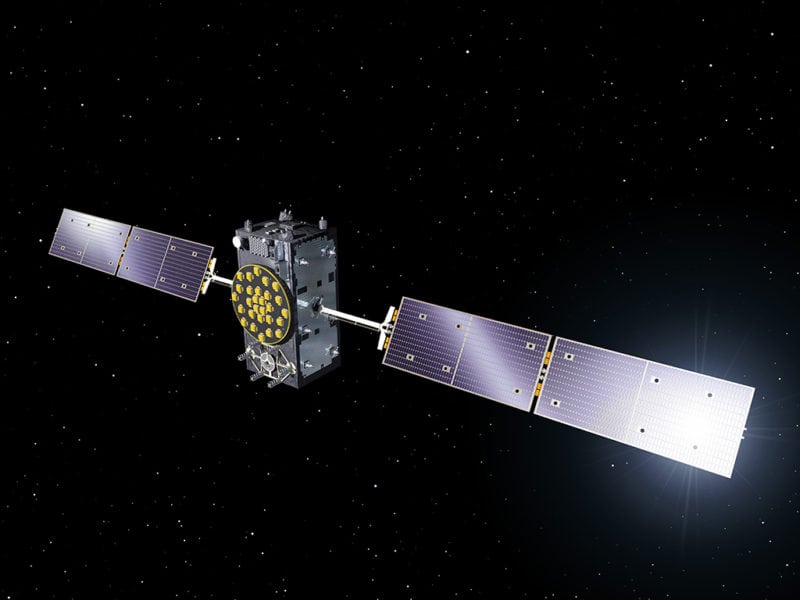
When you couple Planet being there for a decade, with Germany [having] the largest economy in Europe needing to reindustrialize the space ecosystem, [with] phenomenal tech talent in optics, signals processing, and Earth Observation — it was the natural step for us to expand that office and add a factory. The first Pelican satellite will be built by the end of the year, and by the end of next year, we’ll have the capacity to surge production to about 60 per year. That first satellite that comes off the line is going to be ready for Isar. A German-built satellite on a German-built rocket, launched from Norway, sometime early next year.
VIA SATELLITE: This comes at the same time that Isar just had its first success. It’s great timing.
Schingler: We know all the launch providers extremely well. We visit them, we know their business strategy. We try to be a first customer for people, and we were for many. We were for Rocket Lab and also for Isar. We’re really excited for that.
And Germany is serious. They have a government program, SPOCK 1, which is all radar satellites. The next tranche of that is called SPOCK 2, which is going to be EO sats. We hope to be central to the coalition to support Germany to have their own eyes, and to be able to serve other European customers that want much more of a European space ecosystem, so that they can choose to purchase satellites from our German factory.
VIA SATELLITE: Planet recently shared that defense and intelligence-related revenue was up 90% in year-over-year growth. How are you adapting the business model for different ways that your customers define sovereignty and meeting customers where they are?
Schingler: The first thing we do when we talk to customers is understand what that means for them. The first thing that governments need in particular is secure communications — it’s not ISR. The next thing is ISR. In some cases, SIGINT [signals intelligence] is better for their needs, or radar, or electro optical. I probably kick more business to other companies than I collect for myself because it’s what the customer needs.
It’s a stepwise approach, as long as they have an architecture that is modular and upgradeable. That’s the future where things are going — to multiple phenomenologies. No one company can do it. What is important is that they don’t get locked into something that is not evolvable with industrial capability. Part of what we do is teach. We teach people what works, what’s battle-tested.
VIA SATELLITE: How does this then tie in to the sovereign deals that Planet has signed recently?
Schingler: The business model has changed as the world has changed around us. In the last year and a half, we started something that we call Constellation Services. Those are for customers that want competition-free access to electro-optical data. The first way to get started is dedicated capacity [in which] we will reserve a satellite when it goes over that area. It’s like leasing capacity over the area that they care about. We own it, we operate it, but they know that it’s there.
If they want greater security and control, we can put a ground station close to their mission operations or close to their operations, so that they can task directly, download directly, then go into their workflow. We’ve done that in such a way where they get their own security keys. We deliver the satellite to their area of interest, they do when it’s over their area of interest. Then everything gets deleted when [the satellite leaves the area]. That is dedicated capacity with direct access service.
To go even further in security and control is to own the asset. Legally they own the asset, and it could even be registered in their country and operated in their country. In some cases, we can still operate it for them, or we can train them to operate it themselves. That’s what we’re doing with Sweden, for instance. We’re deploying an enterprise ground segment, mission control, and data processing. We train them for complete operations, complete sovereignty. Those are the three “flavors.” As you go through them, you get more autonomy, more security, and more control.
VIA SATELLITE: Would you say it’s been a perfect confluence of factors in the past year and half that have driven governments around the world to order satellites or dedicated imagery from commercial companies?
Schingler: I think it is a moment. New Space players that have been building a product — not a bespoke satellite for one customer for one need — but actually building a satellite for themselves for their commercial service and upgrading that over time. What you get out of that is speed and agility. Governments and middle powers in particular really want to have their own sovereignty. To me, it’s a choice to enter into an alliance and exit from it. If they have an asset to pool together into network sovereignty, then they can bring more to shared regional security. But they know that they can also exit from that and still have their own system. That gives a lot more actors in space the choice to support their shared security goals with their neighbors. Because these are product-driven companies and a lot of R&D has gone into building these things over the years, it’s really affordable for the end customers. Instead of buying one satellite that takes five years to be deployed, you could [have] a constellation within 18 months or 24 months.
I think the commercial industry in particular has learned so much supporting Ukraine over the last four years. What they have done with commercial remote sensing is extraordinary — I think [Ukraine is] the most forward-leaning and advanced operational user of geospatial intelligence on the planet. They treat it like a reprogrammable asset and they keep adapting their use cases as the threat environment around them changes over time. That has really inspired Europe and now the European governments are saying ‘I want that.’ That’s the moment we are in right now.
VIA SATELLITE: You recently said “latency is the new resolution.” What do you mean by that, and what does that mean for Planet’s tech development?
Schingler: I think I borrowed that from somebody else. But the end state of [these satellites] are reprogrammable assets. Eventually you’ll get to agentic workflows, where the agent will be the one tasking the system, combining the data together, running the correct analytic, processing [the data] and the end user gets the salient information pushed into their workflow. That’s where I think that we’re going. The traditional approach of geospatial came from the intelligence community, where you had singles of assets that are billions of dollars and a very artisanal, specialized workflow with lots of humans in the loop. I think that’s being digitized. We are baking [that future] into our hardware.
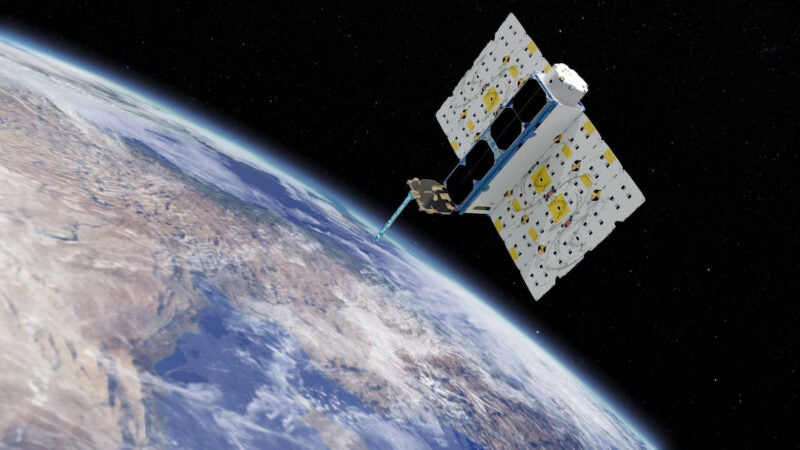
That means we put a lot of compute onboard the satellite and we put radios on the satellite as well, that can transfer commands and analysis and imagery in real-time. The future Pelican satellites — we are deploying Version 1 this year and Version 2 next year — they all have Nvidia Jetson GPUs on board, the Orin processor. It just got fast enough to take the raw data straight off the sensor and do analysis on it. You can do analysis in real time. The Owls will have the next-generation of that Jetson module, the Thor.
Owls have four cameras and therefore four sensors, so [they will] have four GPUs. When something happens that’s surprising, you’ll be able to actually detect that in real time. You need inter-satellite links, whether they’re optical or RF, and you need a lot of compute on board, and it’s reprogrammable. So as the agentic workflows get better and better and better, you begin to turn this into a machine-to-machine-to-machine architecture to see context nearly in real time.
VIA SATELLITE: Will those satellites be considerably more expensive with the GPUs on board?
Schingler: It definitely costs us more and is more valuable for the end customer. We’ll make sure that they get a high ROI for what they’re purchasing. But yes, it does come at an increased cost.
VIA SATELLITE: On that same line of thinking, how do you define ‘planetary intelligence’
Schingler: We see planetary intelligence as the fusion between Earth Observation data and AI. Planetary Intelligence will give people context, to see the dynamics of things that are actually changing over time. What we see as AI today like Gemini and Claude are all large language models. Under the hood, it’s a bunch of math that’s a bit of a prediction machine. It predicts the next token or the next word. That AI is only as good as the data that it’s trained on, and it’s all trained on text written by humans, whether it’s our books, Wikipedia, Reddit, etc. It’s very human-centric, but it’s blind to the physical reality of the planet.
You can imagine a large language model, which is about human intelligence, and Earth data, combined together. That becomes a large Earth model. So you have human intelligence, plus the biochemical physical reality of the planet in context and in real-time. A user can literally chat to it, write code against it, create their own custom dashboard that brings the salient information that they need to make a better decision. I think it’s an aid to human behavior to then guide smarter decisions and better decision-making.
VIA SATELLITE: Are you able to share an update on the Project Suncatcher initiative with Google?
Schingler: This is a moonshot program for [Google], something that they think about in a decade timeframe. When we announced it, there wasn’t really a lot of talk about orbital data centers and now there is a lot of talk. I think we’re pretty far away from orbital data centers. There are some that are going toward just throwing a rack up into space. What we’re doing is testing some fundamental technologies for them, and it’s very much aligned with our technology roadmap for Owl. It’s the same satellite bus, for instance.
We love working with Google. They’re super smart, super creative. We have their TPUs [Tensor Processing Units] in the lab, and we’re testing different types of thermal designs and different types of ways to connect it into the satellite. That’s what the first satellites are for — to really see how it how the solutions that we’re coming up with work, how the performance of the TPUs shift when they work into space, and what’s probably necessary to change in their future TPU architecture to make it more effective and efficient to get the benefit of actually being in space. It’s not just having a rack in space.
I think long term, the satellite will look very different. I think the TPU or GPU architecture will look different so that you can actually use the benefits of space, which are power and cooling. The approach that SpaceX is taking is playing to their advantage, which is mass to space and speed. I think Google is interested in thinking about an architecture that might be different. The first [satellites] are testing a couple of those technologies.
Note: The prototype Project Suncatcher satellite launched on Oct. 1
VIA SATELLITE: With all of these Pelicans to be built in Germany, the upcoming Owls, sovereign orders — Planet needs a lot of launch capacity. Are you concerned about availability of capacity in the market? How are you going to ensure that Planets is able to launch its satellites in the coming years?
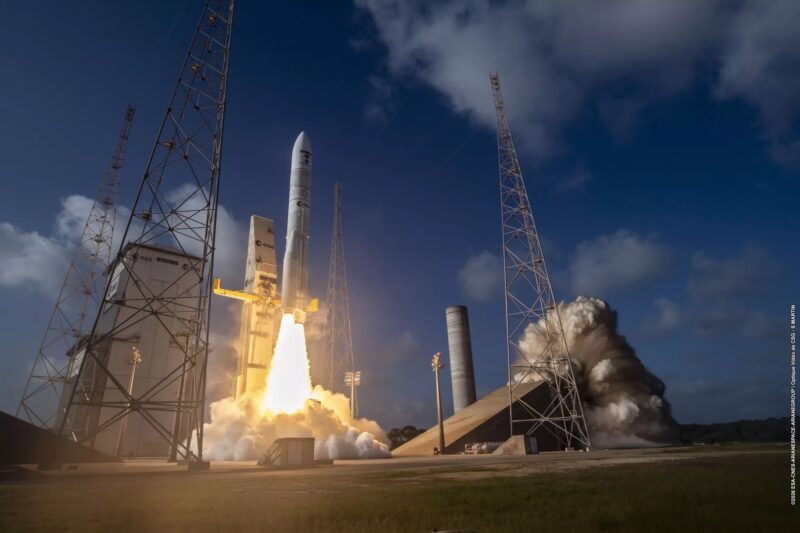
Schingler: I think we’re back to the year 2017, unfortunately. The days of cheap launch are over. The good thing is that there are a number of players that are close to being operational. The challenge that I see in the industry right now is when launch providers get more vertically integrated, they end up having an application that’s more profitable and a better business model for them, so their rocket starts turning inward for themselves. It makes a lot of sense because you can get to rate manufacturing, rate production. The unit costs come down and the efficiency gets better every single year. SpaceX proved that. Rocket Lab is following that. Blue Origin wants to get to that as well. It is concerning that these vertically integrated companies are going to turn away from offering commercial services. But I think everyone has woken up to it at the moment. We should expect that launch costs will go up.
We’ve been on 10 different launch vehicles over the history of our company. I love the Falcon 9. It’s the most reliable rocket in history; it eclipsed the Soyuz rocket. Obviously, we can’t get access to the Chinese market or the Russian market. So there’s relatively few that are out there, but we have a number [of rockets] that are coming up. We know all of them, we visit all of them. We’re their first customer. We’re a tough customer – we help them get better and to give good customer service. We end up getting good deals because we take that risk along with the early launch providers to help them mature.
It is concerning to be quite honest, but it is the market that we’re in. Personally, I think that now is not a time for SpaceX to discontinue Falcon 9. I think it needs to be fully operational at least through the decade. I think the right thing to do as a responsible actor in space, as a leader that they are in space, is to make sure that they still have access to space and that they treat their customers very well. I think that there’s some FUD [fear, uncertainty, and doubt] that’s out there right now, but I know Gwynne [Shotwell] and I know SpaceX and their team. They care about the industry, they care about the ecosystem. I think they’ll do the right thing.