
Hyperspectral satellite startup Pixxel completed a $100 million funding raise that Pixxel says will fuel its growth in the U.S. and expansion into sensing technologies beyond hyperspectral.
Temasek and Seraphim led the round, which brings Pixxel’s total funding raised to $195 million. New investors 360 ONE Asset, IMM Investment, and existing investors Radical Ventures, growX ventures, and others also participated in the funding round announced Sept. 6.
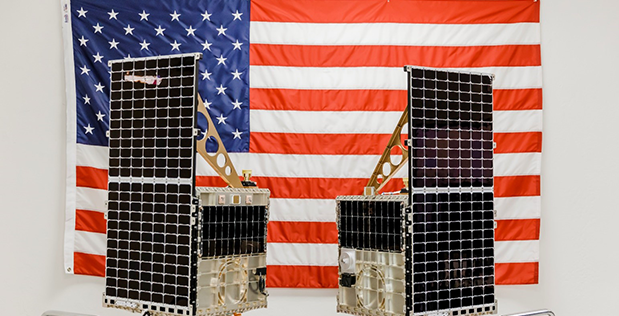
Pixxel was founded in 2019 and now operates six hyperspectral satellites in orbit. The company has offices in El Segundo, California, and Bengaluru, India.
Deeping its footprint in the U.S. is a key goal for this funding raise. Pixxel stated it intends to build a new satellite manufacturing facility in the U.S. and deepen its work with the U.S. government to support civil, defense, and intelligence missions.
Pixxel recently received an award in May from the National Reconnaissance Office (NRO) for hyperspectral data Strategic Commercial Enhancements (SCE) effort and secured a contract through NASA’s Commercial SmallSat Data Acquisition Program.
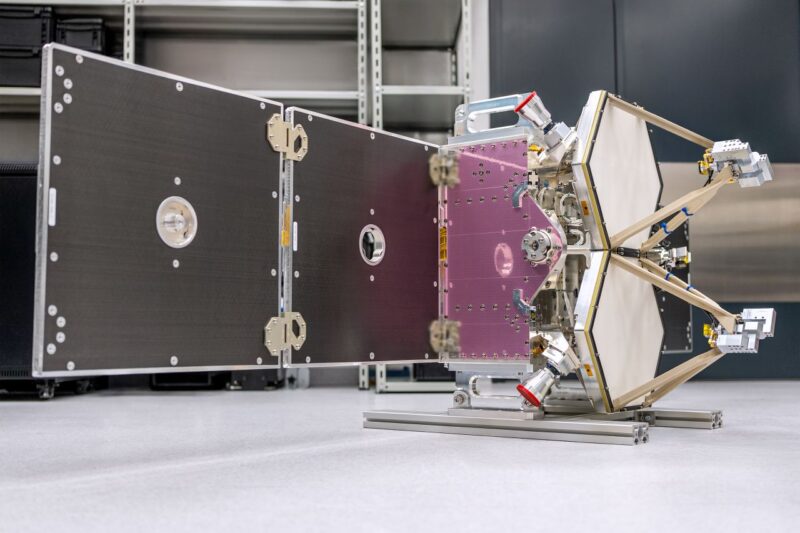
Pixxel is also working toward its next-generation hyperspectral constellation called Honeybee, which will expand into shortwave infrared (SWIR) and add new sensing technologies, including synthetic aperture radar (SAR) and ultra-high-resolution (UHR) optical imaging. Pixxel said the first Honeybee satellite, which is built in the United States, is expected to launch in 2027.
“Years ago, we set out to build a health monitor for the planet. Hyperspectral imaging gave us a fundamentally new way to see Earth,” said Pixxel founder and CEO Awais Ahmed. “This new investment gives us the scale to turn that vision into planetary infrastructure. More ways of sensing, more intelligence from every image, and more sovereign capability for nations. Our goal is to make a changing planet understandable in time to act.”