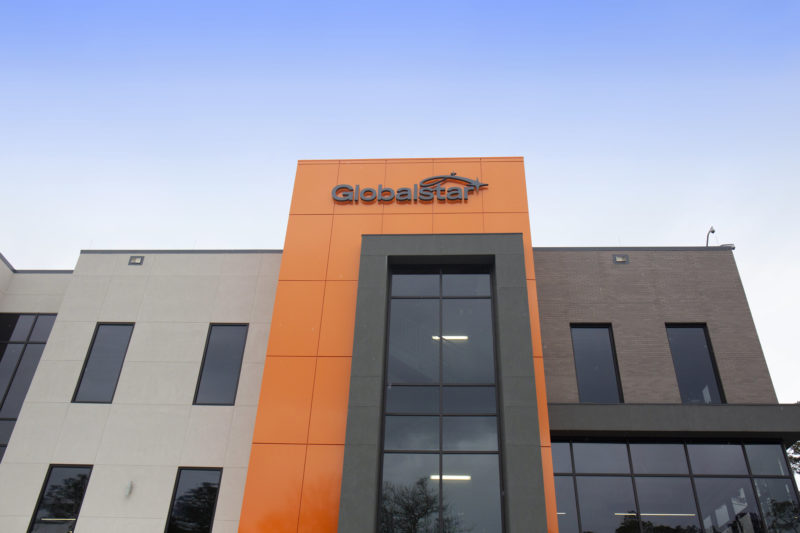
The FCC granted Amazon approval for the Globalstar acquisition on Tuesday, arguing the transaction will serve the public interest with improved satellite services.
Amazon moved in April to acquire Globalstar in a $10.8 billion deal, including Globalstar’s satellite operations, infrastructure, and spectrum. Amazon intends to enter the direct-to-device market with this acquisition.
Under the proposed transaction, Amazon will acquire 100% control of Globalstar and its subsidiaries and Globalstar will become a wholly-owned subsidiary of Amazon. It will operate as an affiliate of Kuiper Systems LLC (the business now known as Amazon Leo), while retaining the Globalstar corporate identity.
“We appreciate the FCC’s thorough review and approval of the transfer of control of Globalstar’s licenses. This brings us a step closer to bringing new connectivity capabilities to customers,” an Amazon spokesperson said in a statement to Via Satellite.
Amazon did not share an update on the timing of when the deal will close. When the deal was first announced, it was expected to close in 2027.
Competitive Analysis
The FCC’s analysis found the transaction will improve data coverage to unserved or underserved areas, improve emergency communications, and improve industrial and enterprise data services.
The FCC also pointed to the scale of investment that Amazon has put into its satellite services, and potential for further investment like this to benefit D2D services.
“The transaction would enable a well-financed operator to provide enhanced D2D service offerings to mobile service customers,” the FCC order states. “We also recognize the actions that Amazon has taken to date, including substantial investments in its satellite network and its pending license application for a D2D satellite system, indicate a high likelihood that Amazon would put the MSS spectrum to intensive use.”
That scale will be relevant to compete against SpaceX in the D2D market, as the FCC also recently approved SpaceX to deploy up to 15,000 D2D satellites in MSS spectrum.
Although both Amazon and Globalstar offer satellite services, the FCC’s competitive analysis found a lack of head-to-head competition. Globalstar is focused on MSS connectivity and wholesale satellite capacity for IoT, messaging, and tracking, while Amazon Leo is fixed satellite services (FSS) high-speed connectivity. The FCC stated the deal does not cause horizontal or vertical harms.
Only one entity filed against the acquisition. Yippy, a former tech company focused on enterprise search and data normalization that is in a contractual dispute with Globalstar, filed against the acquisition. The FCC dismissed Yippy’s concerns because the dispute between the companies is in arbitration.
More Satellites on Horizon
A number of important regulatory updates have come through while the transaction was under review.
In April, Amazon filed with the FCC to launch an Amazon Leo Direct-to-Device constellation using L-band and S-band spectrum that it will acquire from Globalstar. The filing is for up to 5,105 satellites.
Amazon stated this constellation will operate alongside the Amazon Leo first and second-generation broadband systems, as well as Globalstar’s current LEO constellation and the next-generation C-3 system.
Earlier this month, the FCC authorized Globalstar to operate the C-3 constellation of 48 LEO and satellites and six on-orbit spares. Globalstar filed for that constellation in February of 2025, and MDA Space is building the satellites. C-3 is designed to provide increased capacity and improved performance for Globalstar’s D2D services.
Globalstar called it a “critical step forward” for its LEO constellations.