 Digital TV solutions company Tandberg Television found itself as the center of attention in 2007 as a variety of suitors stepped up to the plate to try and acquire Tandberg.
Arris launched what would become a two-horse race with a $1.2 billion bid for Tandberg, which would have fulfilled “Arris’ long-term strategic goal of entering the video market and (would have) immediately established Arris as a market leader,” Arris CEO Bob Stanzione said at the time. However, Arris’ declaration of interest had the impact of bringing Ericsson into the mix, and in February, Ericsson won the battle for Tandberg with a bid of 9.8 billion Swedish krona ($1.5 billion).
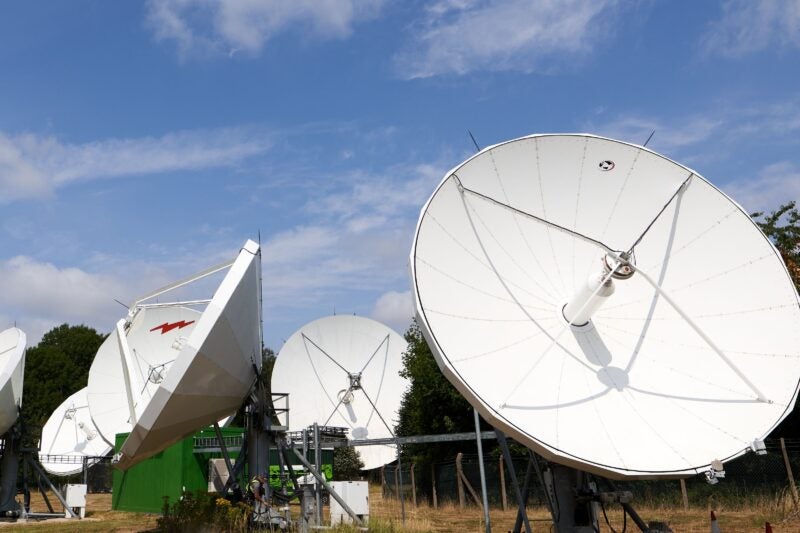
Tandberg works with a number of satellite operators to help them efficiently offer the latest TV and interactive services to customers, and by becoming part of the Ericsson Group, Tandberg now is in a much stronger position, says Eric Cooney, CEO of Tandberg.
Tandberg’s two most significant recent wins are in Asia. In September, it announced that Bharti Telemedia, a subsidiary of Bharti Airtel Ltd., had chosen Tandberg’s advanced IP headend for the launch of a new direct-to-home (DTH) satellite TV service in India. In June, Tandberg won a deal to provide a satellite headend system upgrade to Korean DTH operator Korea Digital Satellite Broadcasting Co. Ltd (SkyLife), which has around to 2 million subscribers in South Korea. Tandberg’s encoders will reduce the bandwidth required to broadcast HDTV, enabling an increased number of channels to be distributed over SkyLife’s satellite network.
Cooney talks with Via Satellite Associate Editor Mark Holmes about the hectic 2007 as well as the opportunities for the company in the satellite arena, and how Tandberg will look to grow revenues in 2008.
Via Satellite: What benefits will Tandberg derive from being part of Ericsson?
Cooney: We decided to put these two companies together because we have a strong belief in the one-plus-one-equals-three benefits. For Tandberg Television the most immediate benefit is in leveraging the scale, global presence and reputation of a technology leader that Ericsson provides. With more than 65,000 staff around the world and 2006 revenues over $27 billion, Ericsson’s market leadership position affords Tandberg Television a level of customer access and credibility to extend and accelerate our own growth plans. As part of the Ericsson Group we are already seeing benefits in terms of our access to customers and our credibility as a prime integrator beyond what we had been able to achieve as a stand-alone supplier.
In turn, and equally important, is the credibility Ericsson has attained through the addition of Tandberg Television and our digital video industry leadership. Prior to the acquisition, Ericsson was a leading supplier of technologies and services to enable voice and data traffic primarily for the world’s telecom operators. With Tandberg Television, the Ericsson Group has successfully expanded its technology offering to include voice, data and video solutions but also extended their addressable markets to include satellite, cable, terrestrial and broadcast TV operators.
Via Satellite: Has there been any change in the day-to-day running of the company?
Cooney: In terms of the day-to-day running of the company, the short answer is no. The reason for this is that Ericsson’s approach to integrating or adding Tandberg Television to the Ericsson Group has been based on the strong premise that Tandberg Television represents the digital video expertise core competency within the Ericsson Group. In many cases, our target customers and market drivers are separate and distinct from those facing the rest of the group. So I think Ericsson has wisely chosen not to break apart Tandberg Television and integrate it within the broader Ericsson structure. Of course, we have been absorbed within the broader economic structure and operate as a wholly owned subsidiary of the Business Unit Multimedia within the Ericsson Group.
In terms of my role as the CEO, my operational responsibilities as they relate to Tandberg Television are exactly as they were before, as is the case with all of the Tandberg Television employees. Many of us, myself included, have taken on incremental responsibilities that help ensure we achieve the synergies both companies expected going into the combination.
Via Satellite: How hard will it be to integrate the culture of the two companies?
Cooney: From a cultural perspective, the aim is absolutely to develop a common culture across the combined company. The good news is that is not much of a change from where Tandberg Television was prior to acquisition. We were both technology leaders in our markets and profitably growing companies. As far I am concerned, that sort of profile largely defines and anchors a culture within any organization. I have often said that I think you can walk the hallways of an organization and fairly quickly work out whether it is a successful, growing company or whether there are challenges facing the company. You won’t need a financial/corporate presentation to get a sense of the success of the company; it will be evident in the attitudes and the demeanors of the staff. What we have found with Ericsson/Tandberg is a lot of similarities in terms of the cultures of the two companies that is making the integration fairly straightforward.
Via Satellite: With new owners, do you still have the freedom to pick and choose acquisitions?
Cooney: We have demonstrated the vision and capability to drive the profitable growth of Tandberg Television using both organic initiatives and, where appropriate, strategic acquisitions. The only thing that has changed is instead of going to a board of directors based in Norway, I am now going to a steering group based in Sweden with recommendations for acquisitions. Ericsson clearly expects us to continue to deliver on our track record of profitable growth and as part of our long-term strategic plan we will continue to evaluate acquisition opportunities.
Via Satellite: What percentage of revenues did derive from the satellite market in 2007 and what are your expectations for?
Cooney: In general terms, we do about 50 percent of our business from the satellite market segment. It is Tandberg Television’s single largest segment. In 2007, our satellite revenues are definitely up, relative to 2006, and the satellite segment is our best performing segment in 2007. The main driver for that is the shift from MPEG-2 to MPEG-4 AVC. We are seeing increasing momentum in that space and not just in satellite DTH but also in the contribution/distribution segment where the move from SD to HD is also key.
In terms of the relative composition of our business, I expect satellite to remain the largest segment of Tandberg Television’s business in 2008. On a percentage growth basis, it is certainly possible that IPTV could exhibit a higher year-on-year percentage growth, but that is partly due to it growing from a much smaller base. So, satellite will remain our largest segment and we expect year-on-year double digit growth in 2008 relative to 2007, driven by HD and the move from MPEG-2 to MPEG-4 AVC.
Via Satellite: What types of deals are you expecting from satellite customers throughout the next year?
Cooney: As it relates to encoders, you can expect the shift from MPEG-2 to MPEG-4 AVC to continue. We are not expecting MPEG-4 AVC to move to an MPEG-X in the near future and see MPEG-4 AVC being the technology of choice for the better part of the next decade. That said, in exactly the same way as we saw with MPEG-2, there will be a long road of incremental performance enhancements. We have already started down that route. Since our launch two years ago, we are already on our third generation MPEG-4 AVC HD encoding platform and we will continue with development in this area to drive efficiency out of the new MPEG-4 AVC toolbox. We will see a very quick turnaround on next-generation technologies driven by performance enhancements with more efficient encoding, better quality video at a given bit rate and same quality video at a lower bit rate.
On the receive side — and I am referring to professional receivers and transcoders — you will also see onward development. We just recently launched our transcoding solution at IBC which is a key component for IPTV systems. IPTV operators typically need a MPEG-2 to MPEG-4 AVC transcode solution in their headend because their DTH service tends to be MPEG-4 AVC, while most of the content they are receiving is MPEG-2. The converse is the case in the satellite contribution and distribution space. For example, HBO who came out publicly with their move to an MPEG-4 AVC distribution path with both satellite and cable customers. At the receive point, there is an application for a professional receiver/transcode solution to take that MPEG-4 AVC and convert it to MPEG-2.
Either way, technology suppliers like Tandberg Television need to be able to provide professional receive solutions that do all of the above — either a transcode, MPEG-2 to MPEG-4 AVC or MPEG-4 AVC to MPEG-2, or a down conversion, HD to SD, if that is what is required. So, it really is a multi-purpose black box of professional receive functionality that I expect will drive significant revenues in the satellite space in 2008
Via Satellite: With numerous DTH players making the move to HD, and wanting to broaden how their content is digested, how does this impact a player like Tandberg TV?
Cooney: It is certainly a key driver for our business. There is increasing pressure for a better value proposition to the consumer, and HDTV is a key differentiator. I believe that operators such as DirecTV, EchoStar or BSkyB will continue to aggressively expand the number of HD channels in their service offering and drive to improve picture quality as they compete against the other television providers.
Via Satellite: How serious is the competitive threat to satellite posed by IPTV and cable provider?
Cooney: I think all of the operators —satellite, cable, IPTV — have unique potential offerings that they can bring to their subscribers. I think the differentiation really boils down to time to market and deployment of those advanced services. Whether that is more HD channels, DVR and on-demand services, or interactive television applications, the operators that are growing their subscriber bases aggressively are those who are successfully deploying new compelling consumer applications and offering a differentiated service. It is not about just offering basic SD television today. Look at the growth rates of IPTV. AT&T’s has announced their IPTV offering now has over 100,000 subscribers and Verizon’s Fios TV has announced over 700,000 subscribers. You can likely predict that all of those IPTV subscribers were receiving television services from another operator, likely cable or satellite, prior to switching to the IPTV offering. These customers likely made the move based on a more appealing set of services, features and functions relative to their original service provider.
If we go back to satellite, it is imperative that they continue to push the envelope. That is why you see someone like DirecTV, for example, launching an incredible number of HD channels. That is something that would be challenging for others to compete with and a compelling differentiator for them. I think you will continue to see operators push the envelope in search of creative ways to differentiate their service and create a better value proposition for their subscribers.
Via Satellite: What role do you see Tandberg playing on the satellite services landscape globally?
Cooney: I believe you will see Tandberg Television and Ericsson significantly increasing our market share and our presence in the satellite segment worldwide. We will do that based on unique differentiated technology offerings. Fundamentally, that is our core differentiation as a best in class technology provider. Our strategy before and after the Ericsson deal is reliant on being the first-to-market, best-in-class technology provider. We have certainly demonstrated our ability to consistently to do that over the last few years, and you should expect that we will continue that track record going forward and that we will use those differentiated technologies to expand our market share.